
What Is Reading Railroad
📖 Table of Contents
- What Exactly Is 'Reading Railroad'?
- How to Set Up a 'Reading Railroad' Activity
- Why 'Reading Railroad' Works for Young Learners
- How to Adapt 'Reading Railroad' for Different Ages
- The Benefits of 'Reading Railroad' for Literacy Development
- How to Make 'Reading Railroad' a Family Activity
- How to Extend the Learning with 'Reading Railroad'
- Make It Your Way
- Frequently Asked Questions
I remember the first time my son sat cross-legged on the living room floor, tracing letters with his fingers as we read aloud from a picture book. That was the moment I realized how powerful reading could be — not just for learning, but for connection, imagination, and even the occasional dramatic reenactment of a dragon’s roar. Over the years, I’ve tried countless methods to make reading engaging and effective for my children. One of the most unexpected yet successful ones came from a simple game I stumbled upon called 'Reading Railroad.'[1]
'Reading Railroad' is not a train track or a board game with cars and tracks — it's a dynamic, interactive way to build literacy skills by turning reading into a journey. I first discovered it while researching phonics activities for my 5-year-old, and I was immediately drawn to its simplicity and adaptability. It's a technique that blends reading, sequencing, and creativity, and it's especially effective for children who are just starting to recognize letters and simple words.[2]
What makes 'Reading Railroad' so special, though, is how it can be tailored to fit different learning styles and ages. Whether it's a toddler learning to match letters or a first-grader practicing sight words, the core idea remains the same: create a visual and tactile path that guides the reader through a story or a set of words. It's not just a tool; it's a way to bring the written word to life, one letter at a time.
Why You'll Love This Reading Technique
- It's a fun, hands-on way to build literacy skills
- It can be easily adapted for different ages and learning levels
- It encourages engagement and active participation from the child
- It allows for creative expression and storytelling
What Exactly Is 'Reading Railroad'?
As of September 2026, at its core, 'Reading Railroad' is about creating a visual and tactile journey that mirrors the movement of a train on tracks. The child follows this 'railroad' by reading aloud or pointing to words, letters, or images along the way. I've used everything from construction paper strips on the floor to digital apps that simulate the experience. The key is to make the path clear and engaging for the child.[3]
One of the most effective ways I've used this technique is with a set of picture cards. I arrange them in a straight line on the floor, and my child reads each one as they step from one to the next. This not only makes reading a physical activity but also helps them understand the flow of a story.
The beauty of 'Reading Railroad' is its flexibility. Whether it's a toddler learning to match letters or a first-grader practicing sight words, this technique can be adapted to fit their needs. It's about turning reading into a game, a journey, and a shared experience.
When introducing 'Reading Railroad' to a child, use simple words or pictures that are familiar to them. This helps build confidence and keeps them engaged.
Part of our Reading strategies guide.
How to Set Up a 'Reading Railroad' Activity
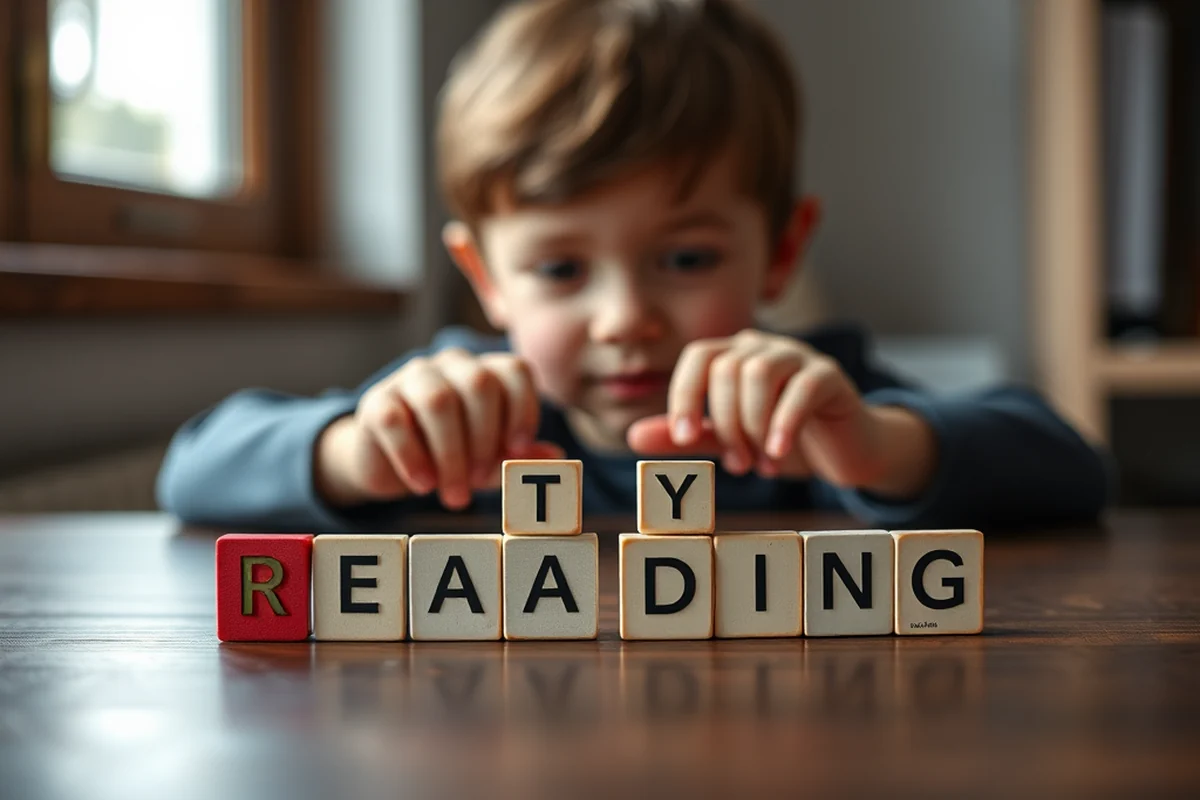
To create a 'Reading Railroad,' I usually use a long piece of paper or cardboard that I lay on the floor. I then write or print words, letters, or images along the path. For younger children, I use large, colorful letters or picture cards. For older kids, I use sight words or short sentences.
Once the path is ready, I ask my child to follow it by reading or pointing to each item. I often use a toy train to make the activity more engaging. My child loves pretending to be a train conductor, and it adds a fun element to the learning process.
I've also used this technique with a digital app that simulates a train moving along a track. This is a great option if you're short on space or materials. Either way, the goal is to make the learning experience as interactive and enjoyable as possible.
Reading becomes a journey, not just a task.
Related: Reading comprehension
Why 'Reading Railroad' Works for Young Learners
Young children learn best through play and hands-on activities, and 'Reading Railroad' provides both. When my son first tried this technique, he was hesitant to read aloud, but the physical movement of stepping along the path made him more confident. He would read each word or picture as he moved, and it felt like an adventure.
I've noticed that this technique also helps children understand the sequence of words and the flow of a story. When they follow the 'railroad,' they learn to read from left to right and understand the order of events. This is especially helpful for children who are just beginning to read.
Another benefit is that it helps children with attention and focus. By keeping them actively involved in the activity, they are less likely to get distracted or lose interest. It's a great way to introduce reading as a fun and engaging experience.
Using a small toy train or a sticker on the path can make the activity more engaging for young children. It adds a visual and tactile element that keeps them interested.
“I remember the first time my son sat cross-legged on the living room floor, tracing letters with his fingers as we read aloud from a…”— Teaching Reading to Homeschoolers editors
Related: Best books on reading comprehension
How to Adapt 'Reading Railroad' for Different Ages
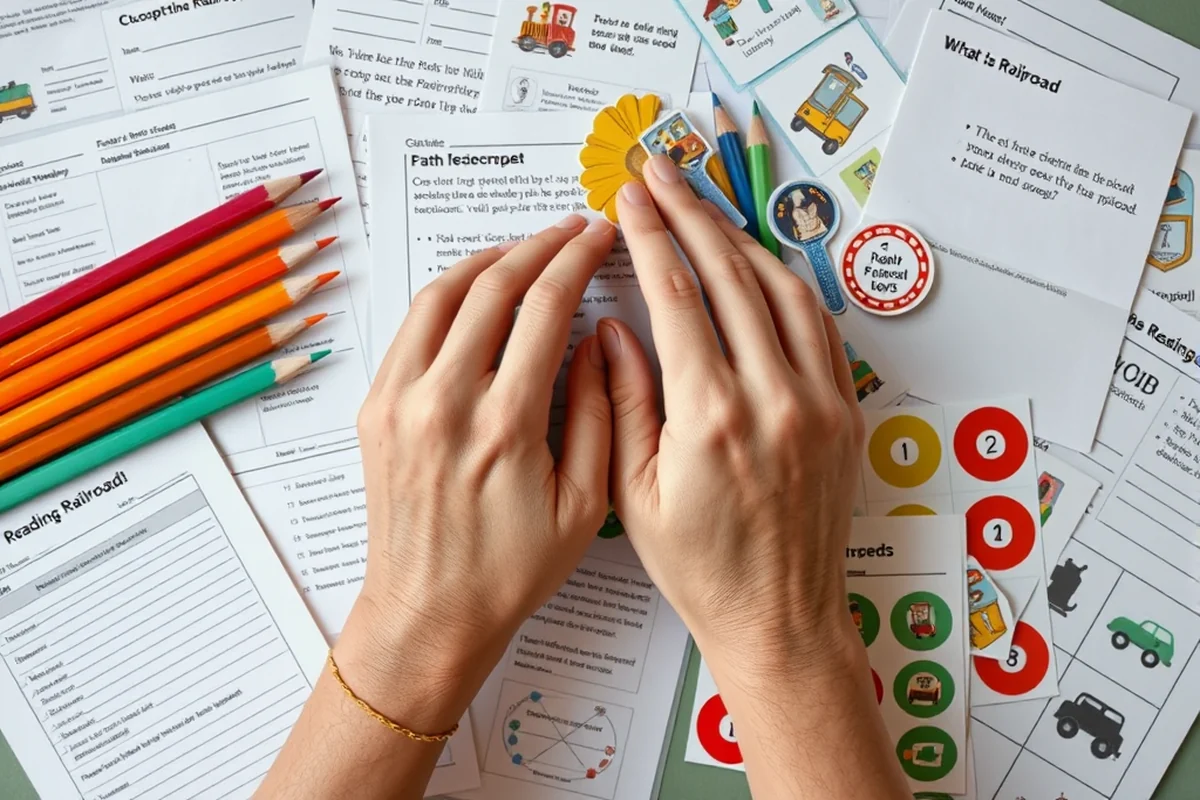
For toddlers, I use large, colorful letters or picture cards that are easy to recognize. I arrange them in a straight line on the floor, and my child follows the path by reading or pointing to each item. This helps them learn to match letters and recognize simple words.
For preschoolers, I use sight words or short sentences. I arrange them in a line and ask my child to read each one as they move along the path. This helps them practice reading fluency and understand the meaning of words.
For older children, I use more complex sentences or even short stories. I also introduce a timer to make the activity a game. My child loves racing against the clock to see how fast they can complete the 'railroad.'
Related: Burn after reading
The Benefits of 'Reading Railroad' for Literacy Development
'Reading Railroad' helps children develop a variety of literacy skills, including phonemic awareness, sight word recognition, and comprehension. When my son first started using this technique, he was struggling with recognizing simple words. After a few weeks of using 'Reading Railroad,' I noticed a significant improvement in his reading fluency.
One of the biggest benefits I've seen is how it helps children understand the flow of a story. When they follow the 'railroad,' they learn to read from left to right and understand the sequence of events. This is especially helpful for children who are just beginning to read.
I've also noticed that this technique helps children with attention and focus. By keeping them actively involved in the activity, they are less likely to get distracted or lose interest. It's a great way to introduce reading as a fun and engaging experience.
Related: What is reading the room
How to Make 'Reading Railroad' a Family Activity
I've used 'Reading Railroad' as a family activity by creating a path that everyone can follow. We take turns reading the words or pictures along the way, and it's a great way to encourage collaboration and teamwork. My son loves seeing his parents and siblings participate in the activity.
I've also used this technique to create a 'reading race' with my children. We set a timer and see who can complete the 'railroad' the fastest. It's a fun and competitive way to practice reading and build confidence.
Involving the whole family in 'Reading Railroad' not only makes it more engaging but also helps reinforce the importance of reading. It's a great way to create lasting memories and encourage a love for reading in the whole family.
Reading becomes a family affair, not just a solo task.
Related: What is reading quotes
How to Extend the Learning with 'Reading Railroad'
One of the best ways to extend the learning is by introducing new materials and activities. I've used flashcards, puzzles, and even digital apps to keep the experience fresh and exciting for my child. This helps prevent boredom and keeps them interested in reading.
Another way to extend the learning is by incorporating storytelling. I encourage my child to create their own stories as they follow the 'railroad.' This helps them practice writing and comprehension skills in a fun and interactive way.
I've also used 'Reading Railroad' to teach grammar and sentence structure. I arrange words in different orders along the path and ask my child to read them in the correct sequence. This helps them understand the structure of a sentence and the importance of word order.
👶 Toddler Version
Use large letters or picture cards on the floor for babies and toddlers to match or point to as they move along.
👦 Preschool Version
Use sight words or short sentences along a path to help preschoolers practice reading fluency and comprehension.
📄 No-Prep Version
Print a simple 'railroad' path on paper and use it as a quick and easy activity for on-the-go learning.
👥 Group Version
Create a large 'railroad' on the floor for a group of children to follow together, making it a collaborative and interactive experience.
📚 Extension Version
Use 'Reading Railroad' to teach grammar, sentence structure, or even storytelling as an advanced learning activity.
| The mistake | Why it happens | The fix |
|---|---|---|
| Using too many words or letters on the path | This can overwhelm the child and make the activity confusing or frustrating. | Start with a small number of words or letters and gradually increase the difficulty as the child becomes more confident. |
| Not allowing the child to take the lead in the activity | This can reduce the child's engagement and make the activity feel like a chore rather than a game. | Let the child choose the words or pictures to use and encourage them to take the lead in reading or pointing to each item. |
| Forcing the child to read without allowing them to explore the activity at their own pace | This can create anxiety and reduce the child's motivation to participate. | Allow the child to explore the activity at their own pace and provide support and encouragement as needed. |
| Not adapting the activity to the child's learning style | This can make the activity less effective and less engaging for the child. | Observe the child's learning style and adapt the activity to fit their needs, whether it's through movement, visual aids, or auditory input. |
What Is Reading Railroad
Common Questions
How long does a 'Reading Railroad' session take?
Can 'Reading Railroad' be used for children with learning disabilities?
What materials do I need to create a 'Reading Railroad'?
Is 'Reading Railroad' suitable for older children?
References
- Montana Driver Manual (opi.mt.gov)
- STAAR Spring 2026 Grade 8 Reading Language Arts Rationales (tea.texas.gov)
- IEP Guidance Document July 2018 (education.ky.gov)
Cite this guide
Teaching Reading to Homeschoolers (2026). What Is Reading Railroad. https://homeschoolread.com/what-is-reading-railroad/
Feel free to cite or share this guide.