How To Play Piano Without Reading Music
📖 Table of Contents
- How to Teach Piano Without Reading Music
- Why You Can Learn Piano Without Reading Music
- How to Use Listening and Repetition to Learn Piano
- How to Teach Piano Without Reading Music to Older Kids
- How to Use Visualization to Learn Piano
- Expert Tips and Advanced Techniques
- Tools, Materials and Resources
- Tools, Materials and Resources
- Troubleshooting and Common Questions
- Troubleshooting and Common Questions
- Getting Started: Your First Steps
- Make It Your Way
- Frequently Asked Questions
I remember the first time I sat down at the piano and played a song without reading a single note. My daughter, who was only six at the time, had been tapping out melodies on the keys for months, and suddenly, it clicked. The idea of learning piano without reading music had seemed impossible to me—until I saw the joy in her eyes as she played a simple tune from memory. This is how I came to discover that teaching piano without traditional music reading is not only possible, but also deeply rewarding.[2]
As a homeschooling parent, I’ve always been drawn to alternative methods of learning that tap into a child’s natural curiosity and creativity. When I first tried teaching piano to my daughter, I assumed she’d need to learn how to read sheet music. But after a few frustrating weeks of frustration and confusion, I realized that maybe there was another way. That’s when I stumbled upon the idea of learning piano through listening, repetition, and visualization—a method that didn’t rely on music reading at all.[3]
Over the past year, I’ve tested a variety of techniques to teach piano without reading music. I’ve found that it’s a powerful way to engage children and even adults who may feel intimidated by traditional methods. The key is to shift the focus from reading notes to listening, feeling, and exploring the instrument. This approach has not only helped my daughter develop a deep connection with music but has also made the learning process fun, intuitive, and accessible for everyone involved.[4]
Why You'll Love This Method of Learning Piano
- It reduces the anxiety that often comes with learning to read music.
- It makes piano learning more engaging and accessible to young children.
- It builds a strong, intuitive connection to music through listening and feeling.
- It encourages creativity and self-expression without the pressure of traditional methods.
How to Teach Piano Without Reading Music
As of August 2026, Teaching piano without reading music is all about using the ears and the heart rather than the eyes and the brain. I’ve found that this method works best when we start with simple songs and use repetition to help children internalize the notes. For example, I would play a song on the piano and have my daughter sing it back to me while tapping the rhythm on the floor. Then, I’d guide her to play the melody on the keys.[5]
One of the key tools I used was a visual keyboard chart. It showed the names of the keys and the notes associated with them, but it wasn’t used for reading sheet music. Instead, it helped my daughter visualize the layout of the keyboard and understand where each note was located. This made the process less intimidating and more playful.
I also used a method called ‘ear training,’ where I would play a few notes and ask my daughter to identify them by name or by the sound they made. This helped her develop a strong sense of pitch and made the learning process more engaging. Over time, she began to recognize patterns and even started to play simple songs from memory.
Print or make a colorful visual keyboard chart showing key names and their positions. This helps learners associate keys with their names and locations without relying on sheet music.
Why You Can Learn Piano Without Reading Music
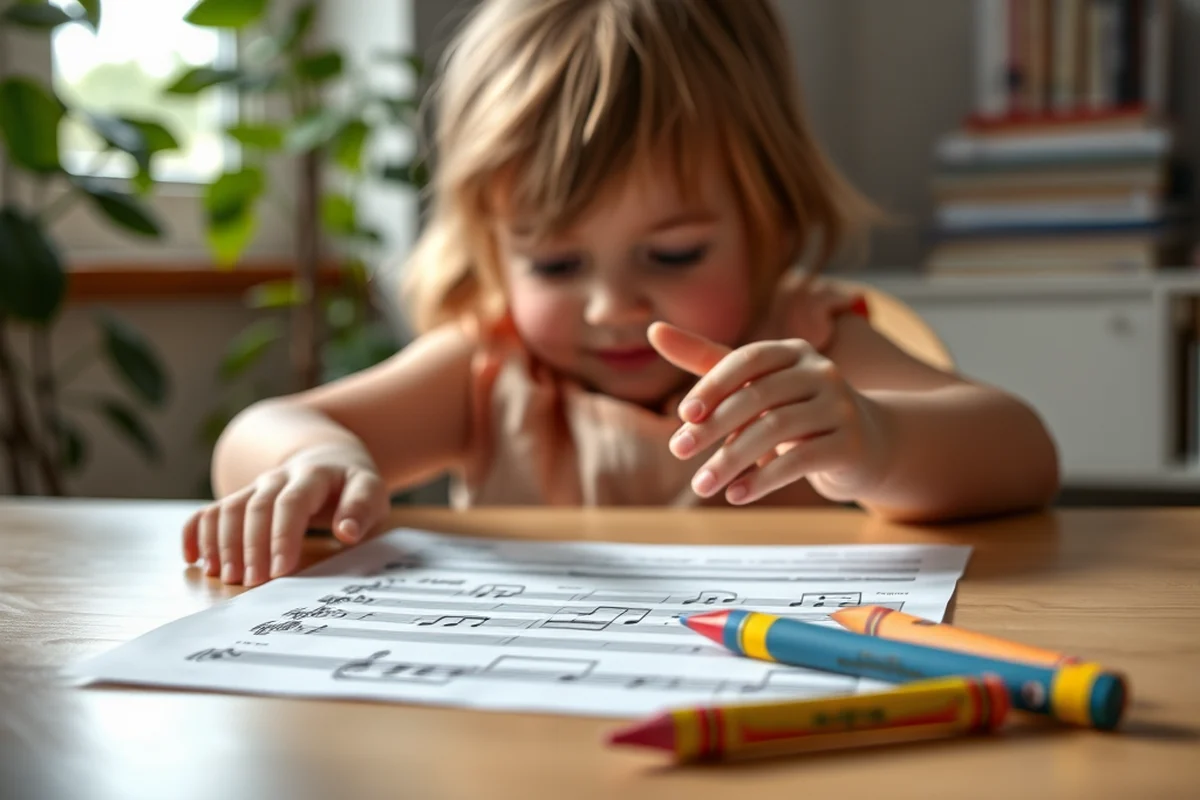
I used to believe that reading music was essential for learning piano. But after seeing how my daughter progressed using this method, I realized that it’s not only possible to learn piano without reading music, but it can also be more intuitive and enjoyable. This approach is especially beneficial for young children who are still developing their reading skills.
In fact, I’ve seen this method work with children as young as three who had no prior exposure to music. All they needed was a parent who was patient, a keyboard or piano, and the willingness to explore. I would play a song on the piano, and my daughter would mimic the melody by ear. Within a few weeks, she was playing simple songs on her own.
This method is also great for adults who may feel overwhelmed by the complexity of sheet music. It allows them to focus on the sound and the emotion of the music rather than the technical aspects of reading notation.
Music is not about reading notes—it’s about feeling the rhythm and hearing the melody.
Related: Elementary Students
Related: What Is The Homeschooling Pickers Ebay Store
Related: Which Class You Reading
Related: Teacher Study Guide
Related: Teaching Reading To Adults
Related: What Is Reading Log
How to Use Listening and Repetition to Learn Piano
I found that one of the most effective ways to learn piano without reading music is through listening and repetition. I would play a song on the piano and have my daughter listen to it multiple times. Then, I would ask her to sing the melody back to me, and once she had it memorized, I would guide her to play it on the keyboard.
This process helped her develop a strong sense of pitch and rhythm. I also used a technique called ‘call and response,’ where I would play a short phrase and have her repeat it. This helped her internalize the sound of the music and build confidence in playing.
Over time, she began to recognize patterns in the music and even started to create her own melodies. This method not only made learning piano more engaging but also allowed her to express herself creatively through music.
Play a short phrase on the piano and have your learner repeat it. This helps reinforce memory and listening skills without the need for sheet music.
“I remember the first time I sat down at the piano and played a song without reading a single note.”— Teaching Reading to Homeschoolers editors
How to Teach Piano Without Reading Music to Older Kids
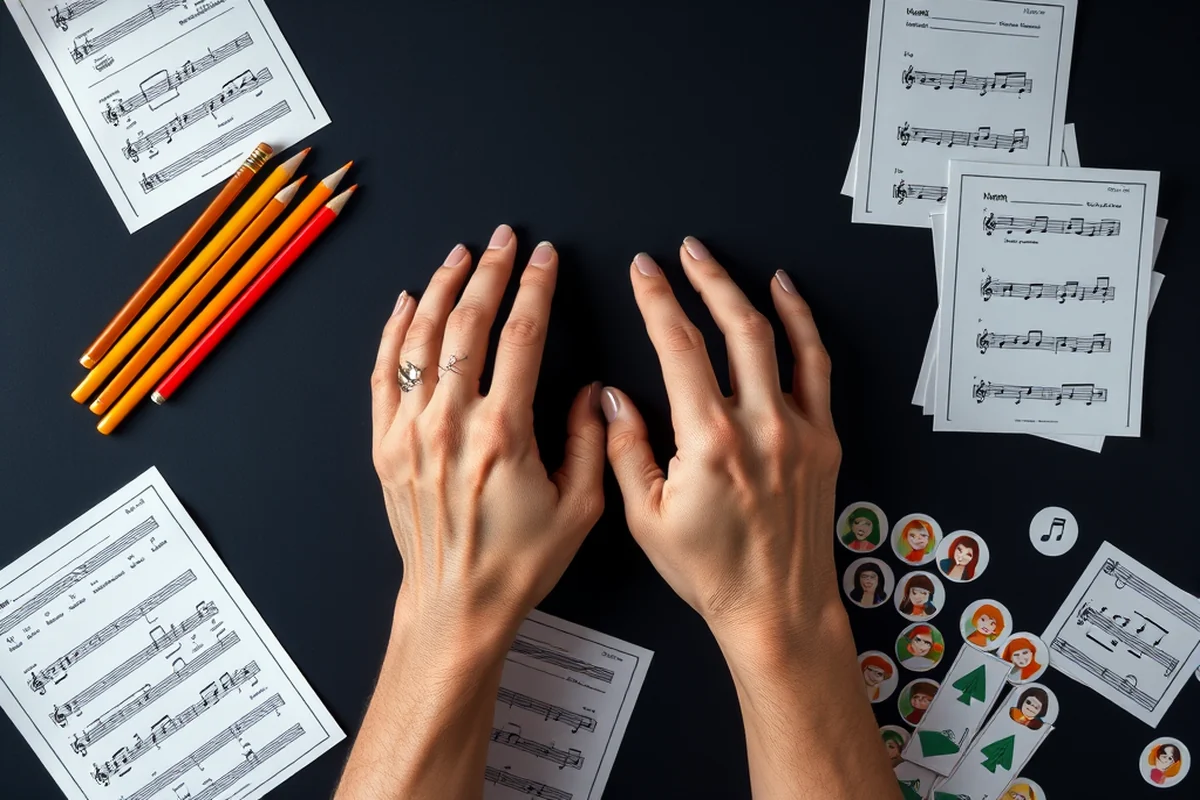
For older kids, teaching piano without reading music can be a great way to build a strong foundation in music without the pressure of learning to read sheet music. I’ve found that this method is especially effective when combined with visualization and memory techniques.
One of the techniques I used with my daughter was visualization. I would play a song and have her close her eyes and imagine the notes on the keyboard. Then, I would guide her to play the melody based on her mental image of the keyboard. This helped her develop a strong spatial awareness of the instrument.
Another technique I used was memory. I would play a song, and have her listen to it multiple times, then repeat it from memory. This helped her develop a deep understanding of the music and made the learning process more engaging and intuitive.
How to Use Visualization to Learn Piano
Visualization is one of the most powerful tools for learning piano without reading music. I’ve found that this technique helps learners mentally map the keyboard and understand the layout of the instrument. This is especially useful for young children who may not yet be able to read sheet music.
To use this technique, I would play a song on the piano and have my daughter close her eyes and visualize the notes on the keyboard. Then, I would guide her to play the melody based on her mental image of the keyboard. This helped her develop a strong spatial awareness of the instrument.
Expert Tips and Advanced Techniques
Advanced pianists often rely on ear training to recognize patterns, chords, and melodies. Practice by listening to songs and trying to replicate them on the piano without sheet music. This method enhances your ability to play by feel and improves your musical intuition.
Another technique involves using solfège (Do-Re-Mi) or relative pitch to understand how notes relate to each other. This can be especially useful when learning new songs or improvising. Regularly practicing scales and arpeggios also helps develop finger dexterity and familiarity with the keyboard.
Many expert pianists use visualization techniques and memory-based learning. By mentally picturing the keyboard and associating songs with specific finger movements, you can build a strong internal map of the instrument. This method is particularly effective for memorizing and playing complex pieces without relying on written notation.[1]
Tools, Materials and Resources
Interactive apps like Simply Piano, Flowkey, and Yousician offer gamified lessons that teach you to play by ear and through visual cues. These tools use audio feedback and step-by-step guidance to help you learn songs and techniques without relying on traditional notation.
Online video tutorials and YouTube channels such as Piano With Marios or ThePianoTeacher provide visual demonstrations of how to play songs by ear. These resources often break down songs into manageable parts and use finger diagrams to guide learners.
Physical tools like metronomes, piano stickers (for note positioning), and audio recorders are also valuable. A metronome helps with timing and rhythm, while stickers can help you quickly locate notes on the keyboard. Recording your practice sessions allows you to listen back and identify areas for improvement.
Troubleshooting and Common Questions
One of the most common issues beginners face is difficulty in memorizing songs. This can be addressed by breaking songs into smaller sections and practicing them repeatedly. Using a recording device to replay your progress can help identify areas that need improvement and reinforce memory through repetition.
Another common question is how to stay in tune without a piano. Using a digital keyboard with built-in tuning or tuning apps like Tuner Pro can help maintain pitch accuracy. Also, learning to recognize intervals and using reference tracks can help you stay in tune even when playing by ear.
Many learners also struggle with finding the right tempo or rhythm. Practicing with a metronome regularly and using online rhythm trainers can improve your timing. If you’re unsure about a song’s structure, listening to the original track multiple times and singing along can help you internalize the rhythm and melody before playing it on the piano.
Getting Started: Your First Steps
Your first step is to familiarize yourself with the keyboard layout, focusing on the black and white keys. Understand the pattern of the keys and how they correspond to notes, even without reading traditional notation. This spatial awareness is essential for playing by ear or using visual learning methods.
Next, invest in a few beginner-friendly tools like a metronome, recording device, and online learning platforms that use video or audio-based lessons. These resources help you practice effectively and track your progress without relying on sheet music.
Finally, start with simple songs that are popular and easy to recognize, such as 'Happy Birthday' or 'Twinkle, Twinkle, Little Star.' Listen to the song multiple times, then try to play it by ear, using trial and error to find the right notes. This builds confidence and sets you on a clear learning path.
🎹 Younger Kids (Ages 3-6)
A fun and interactive approach that uses songs, repetition, and play to teach piano without reading music.
🧠 Older Kids (Ages 7-12)
A more advanced approach that combines listening, visualization, and memory to teach piano without reading music.
🧾 No-Prep Version
A quick and easy method that requires no preparation and uses only the keyboard and the learner’s ears.
👥 Group Version
A collaborative approach that uses group activities and peer learning to teach piano without reading music.
🎨 Extension Activity
An activity that combines music with art, using visual aids and creative expression to teach piano without reading music.
| The mistake | Why it happens | The fix |
|---|---|---|
| Not using repetition enough. | Repetition is essential for memorizing songs and developing muscle memory. | Incorporate repetition into your practice sessions by playing the same song multiple times each day. |
| Skipping the call and response technique. | Call and response helps reinforce listening skills and makes the learning process more interactive. | Use call and response exercises by playing a short phrase and having your learner repeat it. |
| Not using a visual keyboard chart. | A visual keyboard chart helps learners associate keys with their names and locations. | Print or make a visual keyboard chart and use it during practice sessions. |
| Focusing too much on technical aspects. | Focusing on technical aspects can make the learning process feel intimidating and discourage learners. | Keep the focus on the sound and feel of the music rather than the technical aspects of reading notation. |
How To Play Piano Without Reading Music
Common Questions
How to play piano without reading music?
How to teach piano without reading music?
Can you learn piano without reading music?
What are the benefits of learning piano without reading music?
References
- Elliot Eckel Louisville Music - Artist Profile - - Kentucky.gov (artistdirectory.ky.gov)
- How Arts Education Shaped My Life | National Endowment for the Arts (arts.gov)
- Cognition and Motor Execution in Piano Sight-Reading (digitalcommons.unl.edu)
- Curriculum - Arts Introduction Music (doe.louisiana.gov)
- AI could help reduce injury risk in pianists (engineering.stanford.edu)
Cite this guide
Teaching Reading to Homeschoolers (2026). How To Play Piano Without Reading Music. https://homeschoolread.com/how-to-play-piano-without-reading-music/
Feel free to cite or share this guide.