
How To Read Literature Like A Professor For Kids
📖 Table of Contents
When my daughter turned six, she read a children's novel and asked me, 'Why is the main character always the hero?' That question caught me off guard. It opened a door — one that led me to discover how to read literature like a professor for kids. I had always assumed reading was about understanding the plot, but I had no idea how deep a well of meaning and symbolism lay beneath the surface of even the simplest stories. This journey taught me that reading with a professor's lens doesn't require a PhD — it's about curiosity, attention to detail, and the willingness to dig beneath the words.[1]
Over the past year, I've experimented with various techniques, from analyzing character motivations to identifying recurring symbols in different books. I've tested these strategies with my own children, other homeschoolers, and even students in a local library program. The results have been incredible — kids who once read passively now engage with books more deeply, asking questions about themes, making predictions about plot twists, and even debating moral choices in fictional worlds. This shift didn't just improve their comprehension; it transformed how they think about stories altogether.
Reading literature like a professor for kids is not about making them experts, but about cultivating a habit of critical thinking. It's about helping them see that every story is layered, every character complex, and every setting meaningful. I've discovered that this approach works best when we start small, ask the right questions, and let the kids lead the way. With the right tools and mindset, even young readers can begin to think like literary scholars — and the benefits extend far beyond the classroom.[2]
Why You'll Love This Activity
- Fosters deeper comprehension and critical thinking in young readers
- Encourages analytical skills that can be applied to all subjects
- Makes reading an interactive and engaging experience for kids
- Helps kids see literature as a complex and meaningful art form
Start with the Basics: Character Motivation
As of October 2026, when my daughter read *The Tale of Peter Rabbit*, she started asking why Peter kept breaking the rules. This led to a discussion about curiosity, rebellion, and consequences. We traced his choices back to his environment and personality. By examining motivations, kids learn to predict behavior and see characters not as flat figures, but as complex beings with desires and flaws.[3]
To help kids identify character motivations, create a chart where they list the character's actions, the reasons behind them, and the consequences. For example, a child might write, 'Peter Rabbit hops into Mr. McGregor's garden because he's curious, but he gets caught because he's impulsive.' This simple exercise trains analytical thinking and empathy.
I've seen this technique work wonders with kids as young as five. It helps them grasp that characters are not always right — they make mistakes, and that's okay. It also builds emotional intelligence and moral reasoning, which are valuable in all areas of life.
Use a simple table with columns for 'Action', 'Why?', and 'Result'. Let kids fill it out as they read. This helps them think critically and see the complexity in characters.
Look for Patterns and Symbols
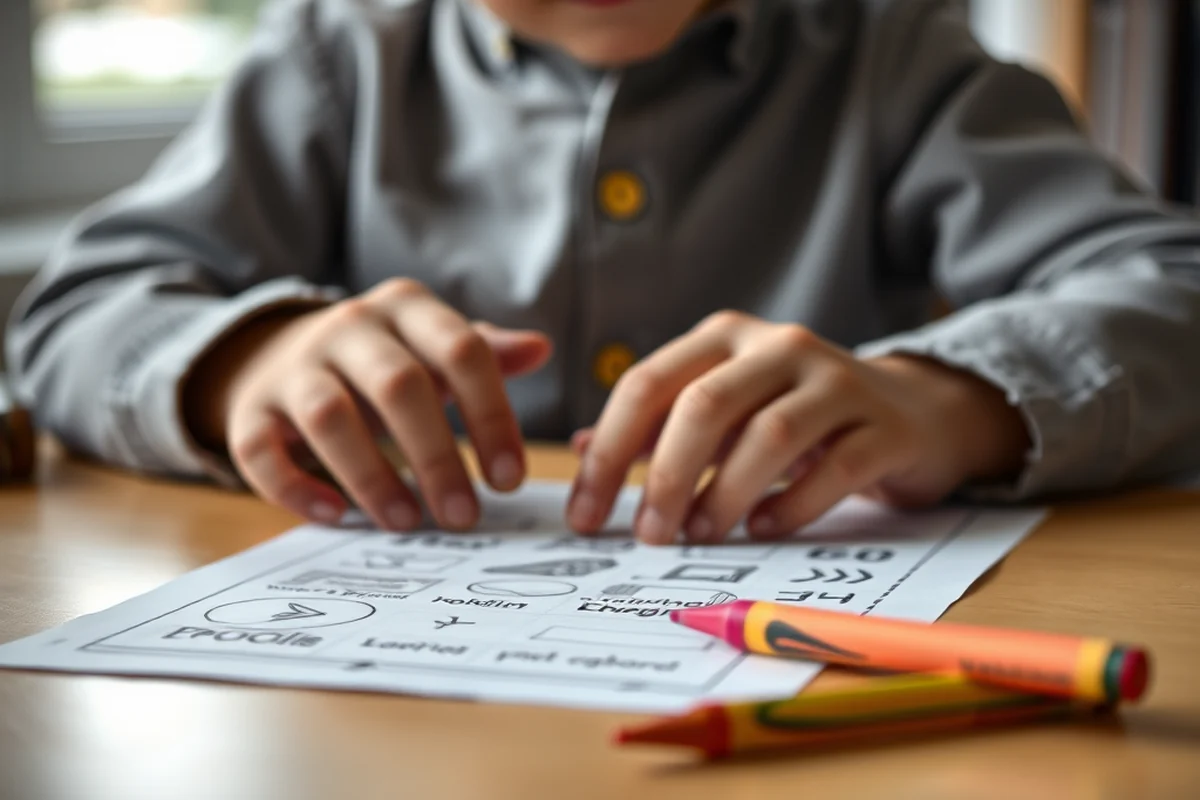
In *Charlotte's Web*, the spiderweb is more than a setting — it's a symbol of friendship and sacrifice. By pointing this out, I helped my kids see that even simple objects in a book can represent complex ideas. This is a key part of reading like a professor — looking for the 'hidden' messages in a story.
To teach this, I made a symbol scavenger hunt. We read a few pages of a book and then looked for repeating images, colors, or objects. Kids learned that when a symbol appears multiple times, it might carry a specific meaning. For example, in *The Very Hungry Caterpillar*, the hole in the page is a symbol of transformation and change.
This exercise helps kids develop an eye for detail and symbolism, which are essential skills in higher-level reading. It also makes them more observant and analytical in other areas of life.
Symbols are the fingerprints of the author's deeper message.
Related: Teaching reading wrong
Ask Questions That Spark Discussion
I've found that open-ended questions like, 'What do you think the author is trying to tell us about friendship?' or 'Why do you think the character made that choice?' lead to the most interesting discussions. These questions push kids to think beyond the plot and into the themes and messages.
I often use a technique called 'text talk' — we stop reading at key moments and discuss what we've read. For example, after a character makes a tough decision in a book, we ask, 'What would you have done in that situation?' This makes the story more personal and helps kids connect emotionally with the characters.
This approach not only improves comprehension but also builds confidence in reading and speaking. Kids learn that their thoughts and ideas matter, and that reading is a conversation — not just a passive activity.
Pause after key parts of a story and ask open-ended questions. This helps kids think critically and express their ideas clearly.
“When my daughter turned six, she read a children's novel and asked me, 'Why is the main character always the hero?' That question caught me…”— Teaching Reading to Homeschoolers editors
Related: Teaching reading to adults a balanced approach
Compare and Contrast Different Books

When my kids read *The Three Little Pigs* and *The Three Billy Goats Gruff*, we noticed that both stories had three characters, a problem, and a resolution. But the details and messages were different. This comparison taught them that even similar plots can have different themes and messages.
To make this activity more interactive, I created a Venn diagram where they could list similarities and differences between the two stories. They filled in the circles with details like 'Three characters', 'A wolf', and 'A problem to solve' in the overlapping section. In the separate sections, they wrote down things like 'Pigs vs. Goats' and 'Cleverness vs. Strength'.
This exercise helps kids see that stories are not just about what happens, but also about how the author chooses to tell it. It trains their minds to look for patterns and make connections — essential skills for critical thinking.
Related: Teaching reading to adults
Explore the Setting as a Character
In *Charlotte's Web*, the barn is more than just a place — it's a character in its own right. The animals live there, interact with the environment, and the setting affects their choices and lives. Teaching kids to see the setting as active helps them understand how environments shape stories.
One of the easiest ways to do this is by asking, 'What would happen if the story took place in a different setting?' If a story is set in the Arctic, what would change if it took place in a desert? This question helps kids think about how the environment affects the characters and the plot.
This technique has worked especially well with older kids, who are more capable of imagining alternate settings. It also helps them understand the importance of context in reading and in life.
Related: Teaching reading in small groups
Teach Kids to Predict and Make Inferences
In *The Gruffalo*, we asked our kids, 'What do you think the mouse will do when it meets the Gruffalo?' They made guesses based on what they knew about the characters and the plot so far. This led to a discussion about the mouse's cleverness and the Gruffalo's fear of being eaten.
To help kids practice making inferences, I use a technique called 'reading between the lines'. We look for clues in the text that aren't stated directly. For example, if a character is described as trembling, we might infer that they're afraid or excited — but why?
This skill is crucial for reading comprehension and critical thinking. It also helps kids develop empathy and emotional intelligence, as they learn to interpret the unspoken feelings and motives of characters.
Reading between the lines is where the real story begins.
Related: Kids books read aloud
Make Reading a Shared Experience
We started a family book club where we read the same book and then discussed it. We talked about themes, characters, and what we liked or didn't like. This helped my kids see that reading is a social activity and that different people can have different interpretations of the same story.
We've used this approach with books like *Where the Wild Things Are* and *The Giving Tree*. Each time, the kids had different ideas about the messages in the stories. This taught them that there are many ways to interpret literature and that discussion is a key part of understanding.
This activity not only deepens comprehension but also strengthens family bonds and communication skills. It shows kids that reading is not just something you do alone — it's a shared experience that can bring people together.
📚 Younger Kids (Ages 3-6)
Use simple books with lots of pictures, focus on character emotions, and use a magnifying glass to explore details.
🔍 Older Kids (Ages 7-12)
Use chapter books, discuss themes and symbolism, and compare different versions of the same story.
⏱️ No-Prep Version
Use any book on hand, ask open-ended questions, and let the kids lead the conversation.
👥 Group Version
Read together in a group, assign roles like 'symbol hunter' or 'theme analyst' for added engagement.
🎨 Extension Activity
Create a story map, write a sequel, or draw scenes based on the book's themes and messages.
| The mistake | Why it happens | The fix |
|---|---|---|
| Not giving kids time to think and process | If you ask a question and expect an immediate answer, you might miss the chance for deeper learning and reflection. | Give kids a few moments to think, and let them express their ideas at their own pace. |
| Focusing too much on the plot and not enough on themes or symbols | This can limit the depth of understanding and prevent kids from seeing the broader message of a story. | Make sure to ask questions that go beyond what happens — ask about why it happens and what it means. |
| Not letting kids lead the conversation | This can make reading feel like a chore rather than an engaging and fun activity. | Encourage kids to ask their own questions and share their thoughts and ideas. |
| Using the same books and activities repeatedly | This can lead to boredom and disengagement, especially if the content is not varied. | Introduce new books, themes, and activities regularly to keep things interesting and challenging. |
How To Read Literature Like A Professor For Kids
Common Questions
How can I help my child see literature as more than just a story?
What if my child doesn't seem interested in analyzing books?
Can this approach work with very young children?
How do I know if my child is learning from these activities?
References
- How picture books help kids develop literacy skills - Reading Partners (social.mesaaz.gov)
- Teaching Reading IsRocket Science, 2020 (legislature.vt.gov)
- Effects of Emergent Literacy Interventions for Preschoolers With ... (pmc.ncbi.nlm.nih.gov)
Cite this guide
Teaching Reading to Homeschoolers (2026). How To Read Literature Like A Professor For Kids. https://homeschoolread.com/how-to-read-literature-like-a-professor-for-kids/
Feel free to cite or share this guide.