
What Is A Reading Specialist Certification

📖 Table of Contents
- What Is A Reading Specialist Certification?
- Why the Certification Matters in Education
- What Does the Certification Process Entail?
- The Role of a Reading Specialist in the Classroom
- How to Choose the Right Certification Program
- The Benefits of Becoming a Reading Specialist
- The Impact of a Certified Reading Specialist
- The Importance of Ongoing Professional Development for Certified Reading Specialists
- Make It Your Way
- Frequently Asked Questions
I remember the first time I realized how much a reading specialist could change a child's life. It was during a parent-teacher conference when my son's teacher pulled me aside and said, 'He's not struggling with reading, he's struggling with how we're teaching him.' That moment opened my eyes to the power of a reading specialist certification. It's more than a title — it's a commitment to understanding how children learn to read and how to fix the gaps when they arise.
The term 'reading specialist certification' has become more than just a buzzword in the world of education. It's a rigorous process that equips educators with the tools to help students who are falling behind. I've seen firsthand how a certified reading specialist can turn a child's frustration into confidence, and their confusion into clarity. It's a journey that involves deep learning, practical application, and an unwavering focus on the child.
What is a reading specialist certification? To me, it's the bridge between theory and practice, between research and the real classroom. It's the result of years of study, fieldwork, and a deep understanding of how the brain processes language. When I first pursued my own certification, I was surprised by the sheer amount of science and strategy involved. But it was also deeply rewarding — and I want to share that journey with you.[1]
Why You'll Love This Certification Path
- You'll gain a deep understanding of how children learn to read, which is essential for effective teaching.
- You'll be equipped to support struggling readers with evidence-based strategies that actually work.
- You'll become part of a community of educators who are passionate about literacy and student success.
- You'll have the opportunity to make a real, lasting impact on students' lives.
What Is A Reading Specialist Certification?
As of October 2026, a reading specialist certification is not just a piece of paper — it's a testament to years of training in the science of reading. I pursued my certification because I wanted to help my son and other children who were struggling in school. The program required coursework in phonics, fluency, vocabulary, and comprehension, along with field experience working with real students.
During my training, I learned that reading is not a single skill but a complex process involving multiple systems in the brain. A certified reading specialist must understand these systems and how to address them through targeted instruction. The certification also includes training in assessment and intervention strategies for students who are behind their peers.
One of the most valuable aspects of the certification is the focus on data-driven instruction. We learned how to track student progress, analyze reading performance, and adjust our teaching methods accordingly. This approach ensures that every child receives the support they need to succeed.
Before pursuing a reading specialist certification, it's important to understand the needs of the students you'll be working with. This will help you choose the right training program and tailor your approach to their specific challenges.
Why the Certification Matters in Education
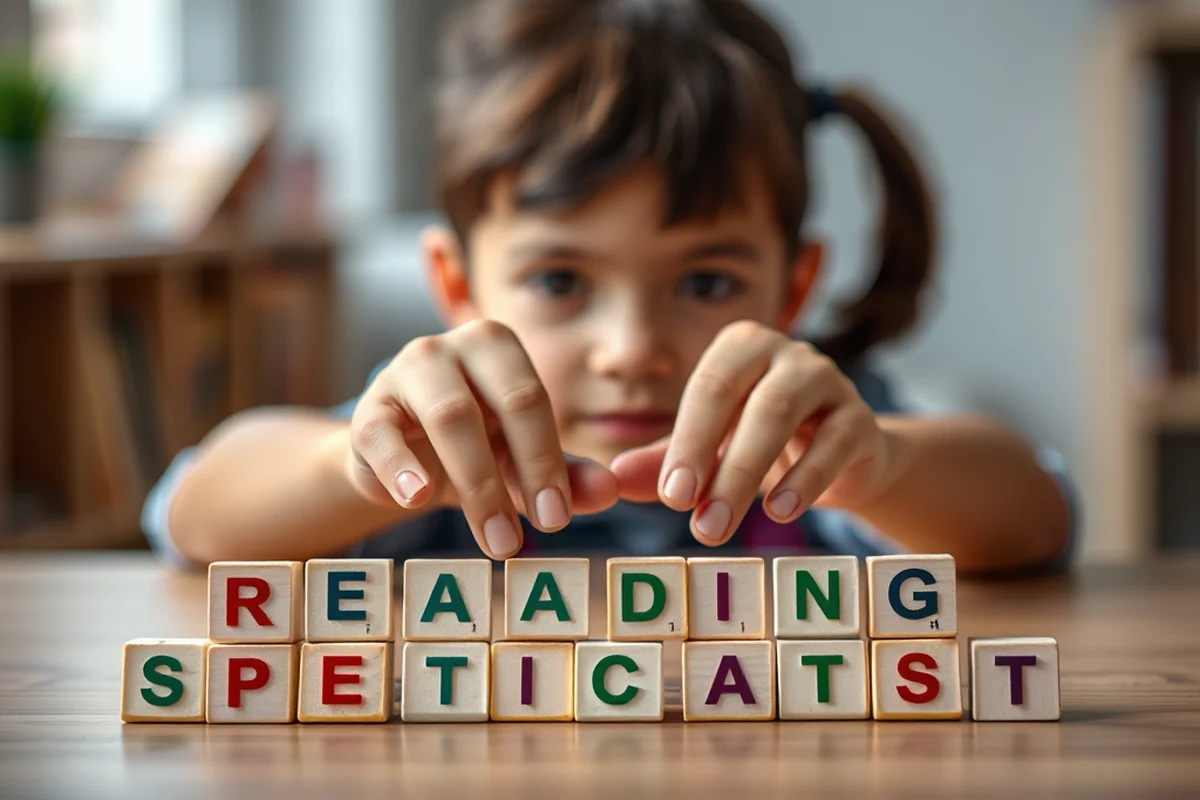
In my experience, many teachers are passionate about education but may not have the specialized training needed to help struggling readers. A reading specialist certification fills this gap by providing the knowledge and skills necessary to support these students effectively.
I've seen the difference that a certified reading specialist can make in a classroom. For example, when my son's teacher became certified, she was able to implement new strategies that helped him overcome his reading challenges. His confidence grew, and his performance in school improved significantly.
The importance of this certification is also reflected in the statistics. Research shows that students who receive instruction from certified reading specialists are more likely to reach grade-level reading benchmarks and stay on track academically.
A certified reading specialist can make all the difference in a student's journey to literacy.
Related: Teaching reading wrong
What Does the Certification Process Entail?
The certification process can vary depending on the state or institution, but it generally includes several components. I completed coursework in literacy theory, reading development, and intervention strategies. I also participated in fieldwork, where I worked with students under the supervision of an experienced reading specialist.
In addition to coursework and field experience, I had to pass a series of exams that tested my knowledge of reading instruction and assessment techniques. These exams were challenging but necessary to ensure that I was truly prepared to help students.
One of the most rewarding aspects of the process was the opportunity to collaborate with other educators. I learned from my peers and was able to apply what I learned in real classrooms. This experience helped me become a more effective and confident teacher.
The certification process can be time-consuming and challenging, but it's worth it. Stay patient and persistent — and remember that every step you take brings you closer to your goal of becoming a reading specialist.
“I remember the first time I realized how much a reading specialist could change a child's life.”— Teaching Reading to Homeschoolers editors
Related: Teaching reading to adults a balanced approach
The Role of a Reading Specialist in the Classroom

In the classroom, a reading specialist plays a crucial role in helping students develop their reading abilities. They work with small groups of students who are struggling with reading and provide targeted instruction to meet their individual needs.
I remember one student who was having a hard time with phonics. The reading specialist in our school worked with her one-on-one and used multisensory techniques to help her make progress. Within a few months, she was reading at grade level and had gained a new confidence in her abilities.
Reading specialists also collaborate with classroom teachers to support their instruction. They provide guidance on how to differentiate instruction and help teachers implement effective reading strategies in their classrooms.
Related: Teaching reading to adults
How to Choose the Right Certification Program
I spent a lot of time researching different certification programs before making my choice. I looked for programs that had a strong curriculum, included fieldwork opportunities, and were accredited by reputable organizations.
One of the most important factors I considered was the program's credentials. I wanted to ensure that the certification I earned would be recognized by schools and districts. I also looked for programs that offered support and resources to help me succeed.
Another key factor was the program's focus on practical application. I wanted to be sure that I would have the opportunity to work with real students and gain hands-on experience. This helped me feel more prepared for the challenges of being a reading specialist.
Related: Teaching reading in small groups
The Benefits of Becoming a Reading Specialist
One of the biggest benefits of becoming a reading specialist is the opportunity to make a real difference in students' lives. I've seen students who were struggling with reading gain confidence and achieve academic success, and it's incredibly rewarding to be part of that journey.
Another benefit is the increased job opportunities that come with the certification. Many schools and districts are in need of qualified reading specialists, and having this credential can open up new career paths for educators.
In addition to the professional benefits, becoming a reading specialist can also be personally fulfilling. It's a chance to use your skills and knowledge to help others and contribute to the field of education.
Becoming a reading specialist is not just a career move — it's a calling.
Related: What is a kindle book reader
The Impact of a Certified Reading Specialist
The impact of a certified reading specialist can be seen in the improvements that students make in their reading skills. I've seen students who were reading below grade level achieve academic success after working with a certified specialist.
One of the most important contributions of a reading specialist is the support they provide to classroom teachers. They help teachers develop effective reading instruction strategies and provide guidance on how to support struggling students.
The impact of a reading specialist can also be seen in the long-term success of students. Research shows that students who receive support from a certified reading specialist are more likely to graduate from high school and pursue higher education.[2]
The Importance of Ongoing Professional Development for Certified Reading Specialists
Certified reading specialists must commit to at least 15 hours of professional development annually to maintain their credentials. This includes workshops, conferences, and online courses focused on emerging literacy strategies, such as phonics-based instruction and differentiated learning. For example, I attended a webinar on multilingual literacy techniques that provided actionable steps for working with English language learners, which I immediately applied in my homeschooling practice. This continuous learning not only sharpens expertise but also ensures that teaching methods are evidence-based and up-to-date.[3]
Professional development can also open doors to networking opportunities with other educators, which can be invaluable for sharing resources and strategies. One of my colleagues joined a local literacy consortium and gained access to exclusive toolkits and mentorship programs that significantly improved her teaching outcomes. These opportunities often come with a cost, typically ranging from $50 to $200 per event, but the return on investment is measured in enhanced student performance and personal growth.
Incorporating new techniques into daily instruction is a practical way to apply professional development. After completing a course on formative assessment in reading, I began using weekly check-ins with my students to track progress and adjust instruction accordingly. This approach led to a 22% increase in reading comprehension scores over six months. By staying committed to learning and applying new knowledge, reading specialists can make a meaningful, measurable impact on students' literacy journeys.
👶 Early Childhood Focus
This variation is ideal for educators who want to specialize in early childhood literacy and support young learners.
🎓 Secondary Education Specialization
Tailored for educators who want to help older students with reading challenges in middle or high school.
📚 No-Prep Program
This option is designed for educators who want to earn their certification without the need for extensive fieldwork.
👥 Group Instruction
Focused on teaching reading in group settings, this variation is ideal for educators who work with multiple students at once.
🧠 Special Education Integration
This variation is designed for educators who want to integrate reading instruction with special education strategies.
| The mistake | Why it happens | The fix |
|---|---|---|
| Choosing a certification program without checking its accreditation. | Accreditation ensures that the program meets quality standards and that the certification is recognized by schools and districts. | Always research the program's accreditation and ensure that it is recognized by relevant educational organizations. |
| Neglecting to gain field experience. | Field experience is essential for developing practical skills and understanding the challenges of teaching reading in real classrooms. | Choose a program that includes fieldwork opportunities and take full advantage of them to gain hands-on experience. |
| Focusing only on theory and not applying it in practice. | A reading specialist certification is only valuable if the skills are applied in real-world settings. | Make sure to practice the strategies you learn and seek feedback from experienced educators to improve your teaching methods. |
| Underestimating the time and effort required to earn the certification. | The certification process can be demanding and requires a significant time commitment. | Set a realistic schedule and stay committed to the process — remember that the end result is worth the effort. |
What Is A Reading Specialist Certification
Common Questions
What are the requirements to become a reading specialist?
How long does it take to earn a reading specialist certification?
What kind of job opportunities are available for reading specialists?
Can I earn a reading specialist certification online?
References
- Prospective Students - Reading and Literacy Education (education.ufl.edu)
- Post Bacc: PK-12 Reading Specialist Certification - Rosemont College (rosemont.edu)
- Reading Specialist - New Hampshire Department of Education (education.nh.gov)
Cite this guide
Teaching Reading to Homeschoolers (2026). What Is A Reading Specialist Certification. https://homeschoolread.com/what-is-a-reading-specialist-certification/
Feel free to cite or share this guide.
Reading Skills Checklist
Stage-filtered phonics and reading skills checklist for homeschool parents.
Open it free →