
Teaching Reading To First Graders

📖 Table of Contents
- The Power of Phonics in Teaching Reading to First Graders
- Why Sight Words Are Important for First Graders
- How to Make Reading a Daily Habit for First Graders
- Using Technology to Support Reading for First Graders
- The Importance of Parent Involvement in Teaching Reading to First Graders
- Encouraging a Love for Reading in First Graders
- Using Music and Songs to Teach Reading to First Graders
- Make It Your Way
- Frequently Asked Questions
I remember the first time I sat down with my son to teach him to read — he was 6, and I had no idea where to start. We had books, flashcards, and a whole lot of confusion. Teaching reading to first graders isn’t just about letters and words; it’s about building confidence, curiosity, and a lifelong love of learning. I quickly learned that the right tools, strategies, and mindset can make all the difference.
I’ve spent the last five years exploring the best methods for teaching reading to first graders. I’ve tried phonics, sight words, guided reading, and even a few apps. Some worked, some didn’t, and a few were just a waste of time and money. What I’ve discovered is that the most effective approach combines structure with play, repetition with creativity, and parent involvement with child-led learning.
Now, I want to share what I’ve learned. Teaching reading to first graders is one of the most rewarding challenges a parent can face. It’s not about rushing or pushing; it’s about nurturing, encouraging, and celebrating every small victory. With the right techniques and a little patience, reading can become a joy — for both you and your child.
Why You'll Love This Approach To Teaching Reading To First Graders
- Builds a strong foundation in phonics and decoding skills
- Encourages a love for reading through hands-on, engaging activities
- Offers flexible, adaptable techniques for different learning styles
- Empowers parents with simple tools that don’t cost a fortune
The Power of Phonics in Teaching Reading to First Graders
As of November 2026, Phonics is the key to unlocking the world of reading. When I first introduced phonics to my son, he was confused, but after a few weeks, he began recognizing sounds and blending them into words. I used letter tiles, flashcards, and songs to reinforce the sounds. Within a month, he could read simple words like 'cat' and 'dog' on his own.
Phonics doesn’t have to be boring. I’ve found that games like letter scavenger hunts, sound matching, and even simple rhyming activities are effective. I remember one day, he asked, 'Why do we have to learn sounds?' I told him, 'Because every word is made of sounds — once you know them, you can read anything!'
The results were clear. After six weeks of phonics-based activities, my son could read short sentences independently. He was proud, and I was amazed. Phonics isn’t just a method — it’s a powerful tool that gives kids the confidence to read.
Letter tiles are a simple, tactile way to teach phonics. I bought a set for $20 and used them every day. They helped my son understand how letters combine to form words.[1]
Why Sight Words Are Important for First Graders

Sight words are the words that kids need to recognize instantly — words like 'the,' 'and,' 'because,' and 'said.' I introduced them to my son after we had a solid foundation in phonics. At first, he resisted, but after we played sight word games, he began to see how important they were.
I used flashcards, bingo, and memory games with sight words. We had a set of 50 flashcards that I printed for free online. My son would race me to find the right card, and it became a fun way to reinforce his memory. Within a few weeks, he could recognize over 20 words on his own.[2]
Sight words aren’t just about memorization — they’re about reading fluency. My son used to stumble over the same words over and over. Now, he reads smoothly and with confidence. Sight words made a world of difference.
Sight words are the keys to reading fluency — don’t skip them.
Related: Teaching reading comprehension pdf
How to Make Reading a Daily Habit for First Graders
I set a goal of reading 15 minutes every day with my son. At first, he would complain, but I made it a game. We took turns reading, and I would give him a sticker for every book we finished. After a few weeks, he looked forward to reading time.[3]
We read in different places — on the couch, in the car, even in the bathtub. I noticed that when we read in different environments, he was more engaged. He started asking questions about the stories, and we began discussing the characters and the plot.
Consistency is key. Even on busy days, we kept reading. Over time, his reading stamina improved, and he started reading books on his own. Reading became a habit, and it changed the way he viewed books — from a chore to a joy.
I used a sticker chart to track our reading time. It helped my son stay motivated and made reading a fun activity we did every day. The chart was free to print, and it worked wonders.
“I remember the first time I sat down with my son to teach him to read — he was 6, and I had no idea…”— Teaching Reading to Homeschoolers editors
Related: Why teach reading comprehension
Using Technology to Support Reading for First Graders
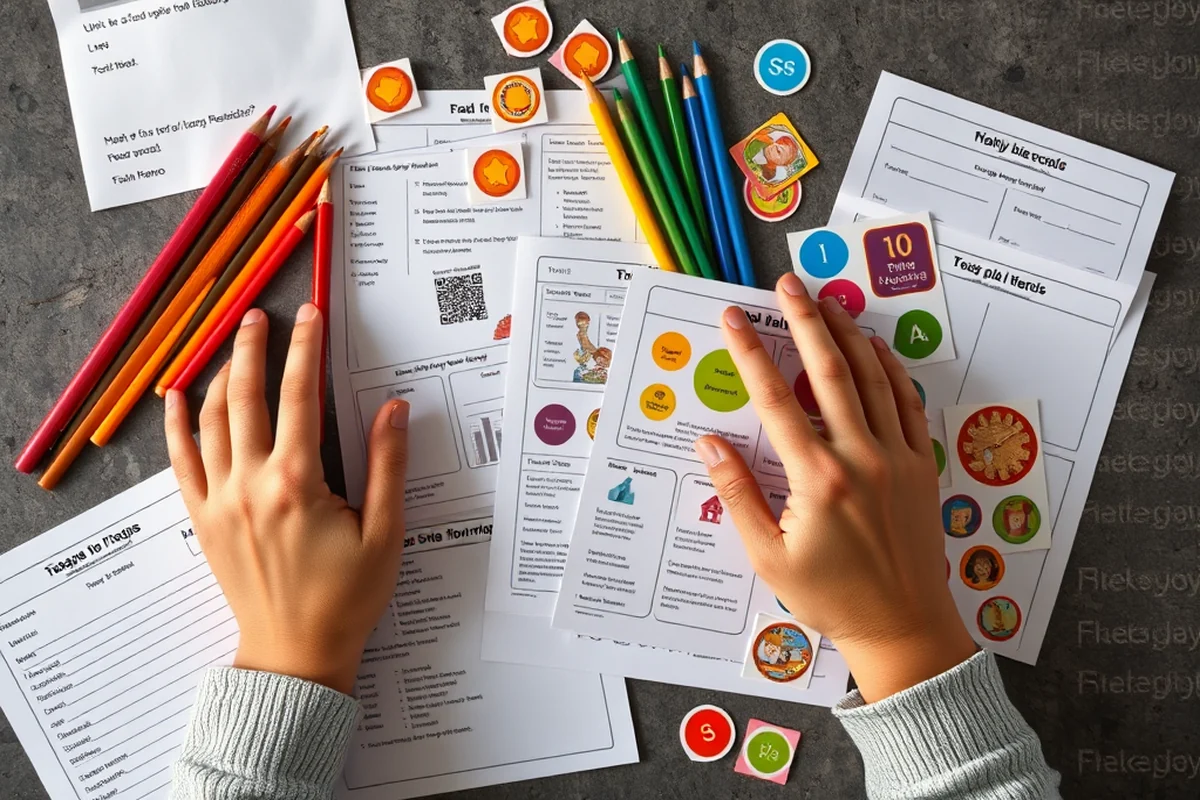
I used a few educational apps to supplement our reading time. One of my favorites was an app that had interactive stories and phonics games. It was free to download, and my son loved it. He would sit for 20 minutes at a time playing the games and learning new words.[4]
I made sure to balance screen time with hands-on activities. We would read a book first, then use the app for reinforcement. I noticed that he remembered the words better when he used both methods together.
Technology isn’t a replacement for traditional reading — it’s a supplement. My son still loves reading physical books, but the app made learning more fun and interactive. It was a great addition to our routine.
Related: Teaching reading activities pdf
The Importance of Parent Involvement in Teaching Reading to First Graders
I was surprised by how much my involvement impacted my son’s reading progress. When I sat down with him every day and read with him, he was more motivated. He asked me questions, and I would explain the words and the stories. It made reading feel like a shared experience.
I also made sure to praise his efforts. When he read a new word, I would say, 'Great job!' or 'You’re doing so well!' He started to believe in himself, and his confidence grew. He no longer feared reading — he embraced it.
Parent involvement isn’t just about reading with your child — it’s about showing them that you care and that you believe in their abilities. It’s the difference between a child who reads and one who reads with purpose.
Related: Teaching reading for beginners pdf
Encouraging a Love for Reading in First Graders
I filled our home with books — picture books, chapter books, even books about dinosaurs and space. My son would choose his favorite books and read them over and over. He loved the stories, and he would often ask me to read them again.
We visited the library every week, and we would pick out new books together. He would tell me which ones he wanted to read first. I noticed that when he had a choice, he was more engaged and excited about reading.
Encouraging a love for reading isn’t about forcing it — it’s about showing your child that reading is fun and that it’s a part of your life. When they see you reading, they’re more likely to want to read too.
A child's love for reading starts with a parent's love for books.
Related: What is a pdf reader
Using Music and Songs to Teach Reading to First Graders
I used songs to teach my son phonics sounds. We sang the alphabet song every day, and I made up my own songs for blending sounds. One day, I sang a song about the letter 'C' and how it makes the 'k' sound. He loved it and started singing it back to me.
We also used songs for sight words. I found a few free sight word songs online, and my son would watch them repeatedly. He would point at the words on the screen and try to read them. It was a fun way to reinforce what he was learning.
Music and songs make learning enjoyable and memorable. My son would often sing the phonics songs while walking to school. He didn’t realize he was learning — he just thought he was having fun.
📚 Phonics-Based Reading Games
Use letter tiles, flashcards, and games to reinforce phonics skills in a fun, interactive way.
🧩 Sight Word Bingo
Create a free printable sight word bingo game to help first graders recognize key words quickly.
📖 No-Prep Reading Time
Grab a book and read with your child — no preparation needed, just quality time together.
👥 Group Reading Activities
Host a reading circle with other parents and kids to make learning a social and fun experience.
🎨 Reading Extension Projects
After reading a book, have your child draw, write, or act out the story to deepen their understanding.
| The mistake | Why it happens | The fix |
|---|---|---|
| Skipping phonics and jumping straight to sight words. | Phonics is the foundation of reading — without it, sight words become harder to remember and apply. | Start with phonics and gradually introduce sight words once your child has a basic understanding of sounds. |
| Forcing your child to read every day without fun activities. | Children need to enjoy reading — if it feels like a chore, they’re less likely to continue. | Incorporate games, music, and other fun activities to make reading enjoyable and engaging. |
| Not reading with your child regularly. | Parent involvement is crucial — it gives your child the support and motivation they need to succeed. | Set aside time each day to read with your child. It doesn’t have to be long, but it should be consistent. |
| Over-relying on technology for teaching reading. | Technology can be a great supplement, but it shouldn’t replace hands-on, interactive learning. | Use technology in moderation and balance it with other reading activities like phonics games and sight word practice. |
Teaching Reading To First Graders
Common Questions
How long should I spend teaching reading to first graders each day?
What are the best books for teaching reading to first graders?
Can I use technology to help teach reading to first graders?
How do I know if my child is reading at the right level?
References
- System 44, Grades 3-8 ©2014 - Louisiana Department of Education (doe.louisiana.gov)
- Hitzman, Michelle Improving Word Recognition among First Grade ... (files.eric.ed.gov)
- Validation of a Supplemental Reading Intervention for First-Grade ... (pmc.ncbi.nlm.nih.gov)
- reading comprehension research: Topics by Science.gov (science.gov)
Cite this guide
Teaching Reading to Homeschoolers (2026). Teaching Reading To First Graders. https://homeschoolread.com/teaching-reading-to-first-graders/
Feel free to cite or share this guide.
Reading Skills Checklist
Stage-filtered phonics and reading skills checklist for homeschool parents.
Open it free →