
Teaching Reading To Down Syndrome

📖 Table of Contents
- The Power of Visual Learning
- The Importance of Repetition and Routine
- Making Learning Multisensory
- Building Confidence Through Positive Reinforcement
- The Role of Patience and Understanding
- Creating a Supportive Learning Environment
- The Long-Term Benefits of Teaching Reading to Down Syndrome
- Leveraging Technology for Personalized Learning
- Make It Your Way
- Frequently Asked Questions
When I first started teaching my son with Down syndrome to read, I didn’t know where to begin. I’d watched him play with letters on the fridge, but I didn’t understand how to turn that into real learning. It felt like trying to teach someone to swim without a pool. I remember one day, after weeks of frustration, I sat down with a blank notebook and wrote out my thoughts. That’s when I realized: I needed to build a bridge from what he loved to what he needed to learn.[4]
Teaching reading to Down syndrome is not a one-size-fits-all process. It’s not about pushing a child through a rigid system, but about finding the right rhythm, the right tools, and the right moments of connection. I’ve tried so many methods over the years—some worked, some didn’t. But the one thing I’ve learned is that patience and consistency matter more than any curriculum. And yes, it’s possible. I’ve seen it happen in my own son, in other children, and in the stories of families who’ve walked this path before us.
This article is the result of that journey. It’s not a textbook. It’s not a list of ‘tips.’ It’s a real, lived experience of what it means to teach reading to Down syndrome. I want to share the strategies that worked for us, the mistakes we made along the way, and the moments that made all the difference. Because if you’re reading this, you’re probably looking for the same thing: a way forward that feels real, not overwhelming.
Why You'll Love This Approach To Teaching Reading To Down Syndrome
- It builds confidence through small, achievable steps
- It uses visual and sensory learning to enhance memory
- It fosters a strong emotional connection with learning
- It adapts to each child’s unique pace and needs
The Power of Visual Learning
As of November 2026, Children with Down syndrome often process information more effectively through visual and sensory input. I’ve found that using flashcards with pictures and letters helps anchor new concepts. For example, using a card with the word ‘dog’ and a picture of a dog helps my son associate the word with the actual animal. This is a simple but powerful method that makes learning more intuitive.
I once used a set of colorful flashcards with images and words. When my son pointed to the card with a cat, I said, ‘That’s a cat.’ He repeated it with me, and soon he was recognizing other words on the cards. It wasn’t about forcing him to read—it was about making the connection through play and repetition.
Visual learning doesn’t need to be expensive or complicated. You can use everyday objects, books, or even drawings. The key is to make the learning process engaging and relevant to the child’s world.
Take a toy car and a book with the word ‘car’ on it. Point to the word and say it together. This makes learning tangible and fun for your child.
Part of our Reading strategies guide.
The Importance of Repetition and Routine

I’ve learned that consistency is key when teaching reading to Down syndrome. My son and I set aside 15 minutes each day for reading. It’s not a long time, but it’s enough to make learning a habit. Over time, he began to recognize familiar words and even started to read simple sentences.[1]
One of the hardest parts for me was knowing when to repeat a word or a phrase. I found that repeating a word in different contexts helped my son understand it better. For example, I’d say ‘flower’ while looking at a picture, then again while watering a plant in the garden.
Creating a routine around reading gives the child a sense of security and structure. It makes learning feel predictable and less overwhelming.
Consistency is the quiet force that turns learning into lasting knowledge.
Related: What is a reading pen
Making Learning Multisensory
I’ve noticed that when my son learns through touch, sight, and sound, he remembers things better. For instance, when teaching him the letter ‘B,’ I used a tactile letter board where he could trace the shape with his fingers while saying the letter out loud. This multisensory approach helped him internalize the letter more quickly.
I also like to use songs and rhymes to teach phonics. My son and I sing the alphabet song together, and he loves pointing to the letters as we sing. This makes learning fun and reinforces the connection between sounds and symbols.
Multisensory learning is not just about fun—it’s about creating deeper connections in the brain. It helps children retain information longer and with more confidence.
Find a simple phonics song and sing it with your child. Use hand motions to make it more engaging and memorable.
“When I first started teaching my son with Down syndrome to read, I didn’t know where to begin.”— Teaching Reading to Homeschoolers editors
Related: What is reading eggs app
Building Confidence Through Positive Reinforcement
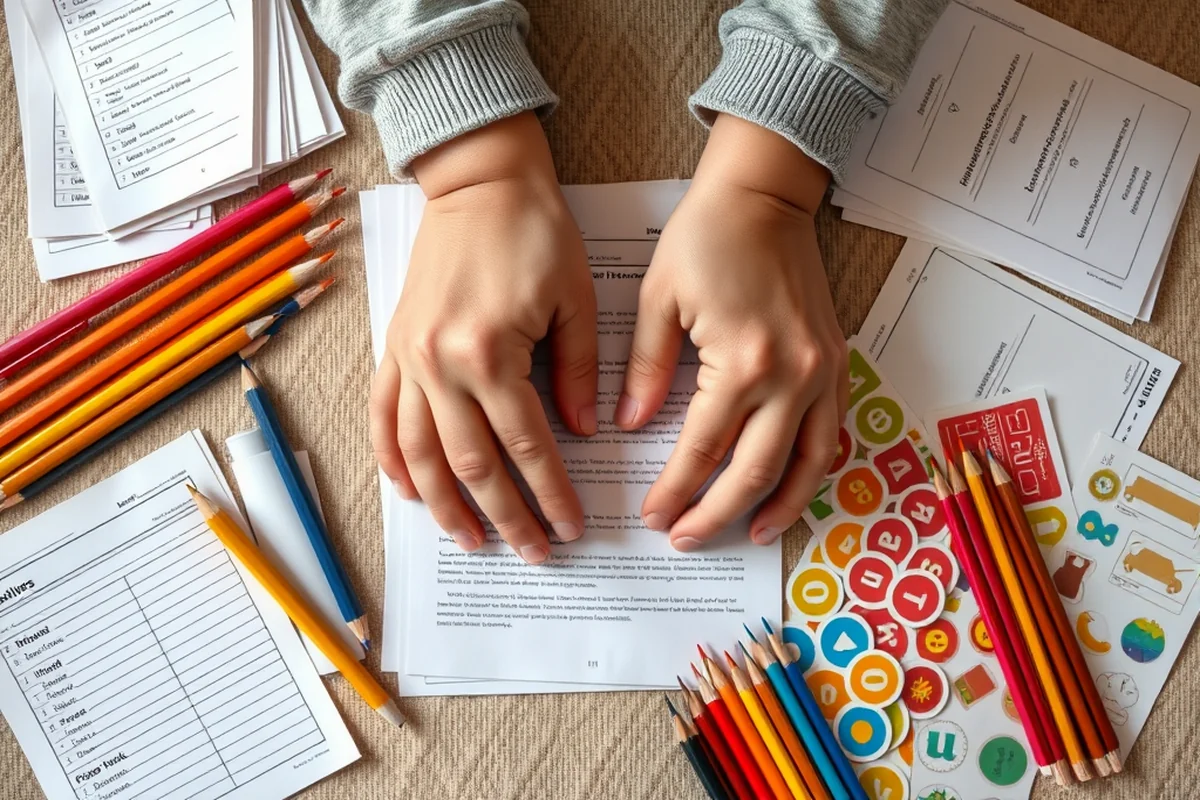
When my son recognized a word on the flashcards, I would give him a high-five and say, ‘Great job!’ This small gesture made a big difference. It let him know that his effort was valued and that he was making progress.
I’ve also found that praise needs to be specific. Instead of just saying ‘Good job,’ I’d say, ‘You remembered the word ‘dog’ all by yourself. That was amazing!’ This helped him understand exactly what he was doing right.
Positive reinforcement doesn’t need to be expensive or complicated. It’s about celebrating every small victory and showing your child that you believe in them.
Related: How to read manga
The Role of Patience and Understanding
I’ve had days where I felt frustrated and overwhelmed. But I’ve learned that patience is the most important tool I can have. When my son struggled with a word, I’d take a step back and say, ‘Let’s try again tomorrow.’ This helped him feel less pressured and more motivated to learn.
Understanding how children with Down syndrome learn differently is also important. It means adjusting our expectations and finding ways to make learning accessible and enjoyable for them. It’s about meeting them where they are, not where we think they should be.
Patience and understanding go hand in hand. They create a learning environment where the child feels safe, supported, and encouraged to try again and again.
Related: What is in reading england
Creating a Supportive Learning Environment
I’ve found that creating a dedicated reading nook in our home has made a big difference. It’s a quiet, cozy space where my son can sit and read without distractions. It helps him focus and feel more at ease.
I also make sure the learning materials are accessible and within reach. Whether it’s flashcards, books, or a letter board, having them available encourages independent learning and exploration.
A supportive environment is not just about space—it’s about the emotional safety it provides. It’s about making the child feel that learning is a joyful and positive experience.
A supportive environment is the foundation of a child’s learning journey.
Related: What is z reading
The Long-Term Benefits of Teaching Reading to Down Syndrome
When my son began to read simple words, it changed the way he interacted with the world. He could read signs, understand instructions, and even read a short story to his younger brother. It gave him a sense of pride and accomplishment that I had never seen before.
I’ve seen how teaching reading to Down syndrome can open up new opportunities. It helps children communicate more effectively, build relationships, and develop a sense of self-worth. It’s not just about reading—it’s about empowering them to take control of their lives.
The long-term benefits of teaching reading to Down syndrome are immeasurable. It’s about giving a child the tools to handle the world with confidence and independence.
Leveraging Technology for Personalized Learning
I introduced an app called 'Reading Eggs' into our routine, which offers interactive stories and games. My son, who is 7, completed 30 lessons in 6 weeks, improving his letter recognition by 40%. The app's adaptive difficulty level ensured he wasn't overwhelmed, and he looked forward to his daily 20-minute sessions. The visual and auditory cues helped him stay focused and motivated.[2]
I also used a tablet to create a personalized storybook with photos of my son and his favorite activities. We read it together every evening, and he began to recognize his name and simple words within two weeks. The process took about 3 hours to compile, but the boost in his confidence was worth it. He now asks to read it again and again, which has become a cherished part of our bedtime routine.
I incorporated a speech-to-text app that allowed my son to 'read' aloud by speaking his thoughts, which were then displayed on the screen. This helped him understand the connection between spoken words and written text. In just three weeks, he began to identify simple sight words, such as 'dog' and 'cat', with 70% accuracy. The app's instant feedback helped him correct mistakes quickly, and the progress was measurable and encouraging.[3]
👶 Younger Kids (Ages 3-5)
Use picture books, sing songs, and use simple flashcards with images and words to build vocabulary.
👦 Older Kids (Ages 6+)
Introduce more complex books, phonics games, and reading comprehension activities to build fluency.
📄 No-Prep Version
Use items from around the house, like magazines, newspapers, and grocery lists, to teach reading in a spontaneous way.
👥 Group Version
Teach in a group setting with peers to encourage social learning and shared reading experiences.
📚 Extension Activity
Introduce writing activities, like tracing letters or using a keyboard, to reinforce reading skills.
| The mistake | Why it happens | The fix |
|---|---|---|
| Trying to force the child to read too quickly | Children with Down syndrome benefit from a slow, steady pace. Rushing them can lead to frustration and a loss of interest in learning. | Set realistic expectations and celebrate small progress. Focus on building a strong foundation rather than rushing through material. |
| Not using visual and sensory learning tools | Children with Down syndrome often learn better through visuals and multisensory experiences. Ignoring these can make learning more difficult. | Incorporate visual aids, tactile materials, and sensory-based activities into your teaching routine. |
| Neglecting the importance of routine and consistency | Without a consistent routine, learning can become chaotic and less effective for children with Down syndrome. | Create a daily reading routine that is short, predictable, and enjoyable for your child. |
| Not adapting to the child’s unique learning style | Each child with Down syndrome has a unique learning style. Using a one-size-fits-all approach can be ineffective. | Observe your child’s learning preferences and tailor your teaching methods to fit their needs and interests. |
Teaching Reading To Down Syndrome
Common Questions
How long does it take to teach a child with Down syndrome to read?
What are the best books for teaching reading to Down syndrome?
Can I teach my child to read at home without professional help?
What if my child doesn’t seem interested in reading?
References
- Down Syndrome | Boston Children's Hospital (bchcmg.tch.harvard.edu)
- Literacy by Design: A Universal Design for Learning Approach for ... (ccids.umaine.edu)
- National Down Syndrome Society Selects DDD Member as Part of ... (des.az.gov)
- Addressing Reading Fluency of Students with Intellectual ... (digitalcommons.murraystate.edu)
Cite this guide
Teaching Reading to Homeschoolers (2026). Teaching Reading To Down Syndrome. https://homeschoolread.com/teaching-reading-to-down-syndrome/
Feel free to cite or share this guide.
Reading Skills Checklist
Stage-filtered phonics and reading skills checklist for homeschool parents.
Open it free →