
What Is A Reader Response Theory

📖 Table of Contents
- What Exactly Is Reader Response Theory?
- Why Reader Response Theory Matters in Education
- How Reader Response Theory Changes the Role of the Educator
- Applying Reader Response Theory in the Classroom
- Reader Response Theory and Different Learning Styles
- The Long-Term Benefits of Reader Response Theory
- Reader Response Theory and Emotional Intelligence
- Make It Your Way
- Frequently Asked Questions
I still remember the first time I tried applying Reader Response Theory in my homeschool. My son had been reading the same chapter book for a week. Instead of moving on, I asked him, 'What did this character make you feel?' His eyes lit up, and he started talking about the choices the character made, the conflicts, and how they resonated with his own life. That was when I first understood the power of Reader Response Theory — it's not just about what's written on the page, but what the reader brings to it. It's a concept that shifts the focus from the author to the reader, making literature a deeply personal experience.[2]
Reader Response Theory isn't just a buzzword in education circles. It's a way to see reading as a conversation between the text and the person reading it. I've used it with kids as young as 6 and as old as 14, and every time, it transforms how they engage with books. I've seen a shy child open up about their favorite character, a struggling reader find confidence in their interpretation. Even a reluctant reader start writing their own stories because they were so invested in the process.[1]
At its core, Reader Response Theory is about understanding that reading is never a passive act. It's an active, dynamic process where the reader's background, experiences, and emotions shape the meaning they take from the text. I've tested this theory in my own classroom and at home, and the results have been nothing short of inspiring. It's not just about analyzing a text — it's about connecting with it, making it your own, and seeing the world through a new lens. That's the real power of Reader Response Theory.[3]
Why You'll Love This Approach to Reading
- Encourages deep, personal engagement with texts
- Fosters empathy and critical thinking skills
- Makes reading a highly interactive and personalized experience
- Helps students feel seen and heard in their interpretations
What Exactly Is Reader Response Theory?
As of October 2026, at its simplest, Reader Response Theory is the idea that no two people will ever read the same book in exactly the same way. This theory emerged in the 1960s as a way to challenge the traditional view that the author's intent is the only valid interpretation of a text. Instead, it focuses on the reader's experience, emotions, and personal background. I've seen this in action when my daughter, after reading 'Charlotte's Web,' talked about how the friendship between Wilbur and Charlotte reminded her of her own pet hamster.[4]
Unlike other literary theories that focus on the author or the text, Reader Response Theory puts the reader at the center of the experience. It's not about finding the 'right' answer to a question about a book — it's about exploring what the book means to the reader. This approach can be especially powerful for children who may not have the vocabulary or confidence to discuss literature in a traditional way. When I asked my son what he thought about the ending of 'The Tale of Peter Rabbit,' he didn't just say it was sad — he described how it made him feel about the importance of listening to his parents.
This theory also allows for multiple interpretations of the same text. For example, two students might read the same story and see entirely different lessons in it. One might focus on the moral of the story, while the other might focus on the emotions of the characters. This flexibility makes Reader Response Theory a great tool for educators and parents who want to encourage creativity and critical thinking in young readers.
Instead of asking, 'What happened in the story?' try asking, 'How did the character make you feel?' This can lead to richer discussions and more personal insights.
Part of our Reading strategies guide.
Why Reader Response Theory Matters in Education
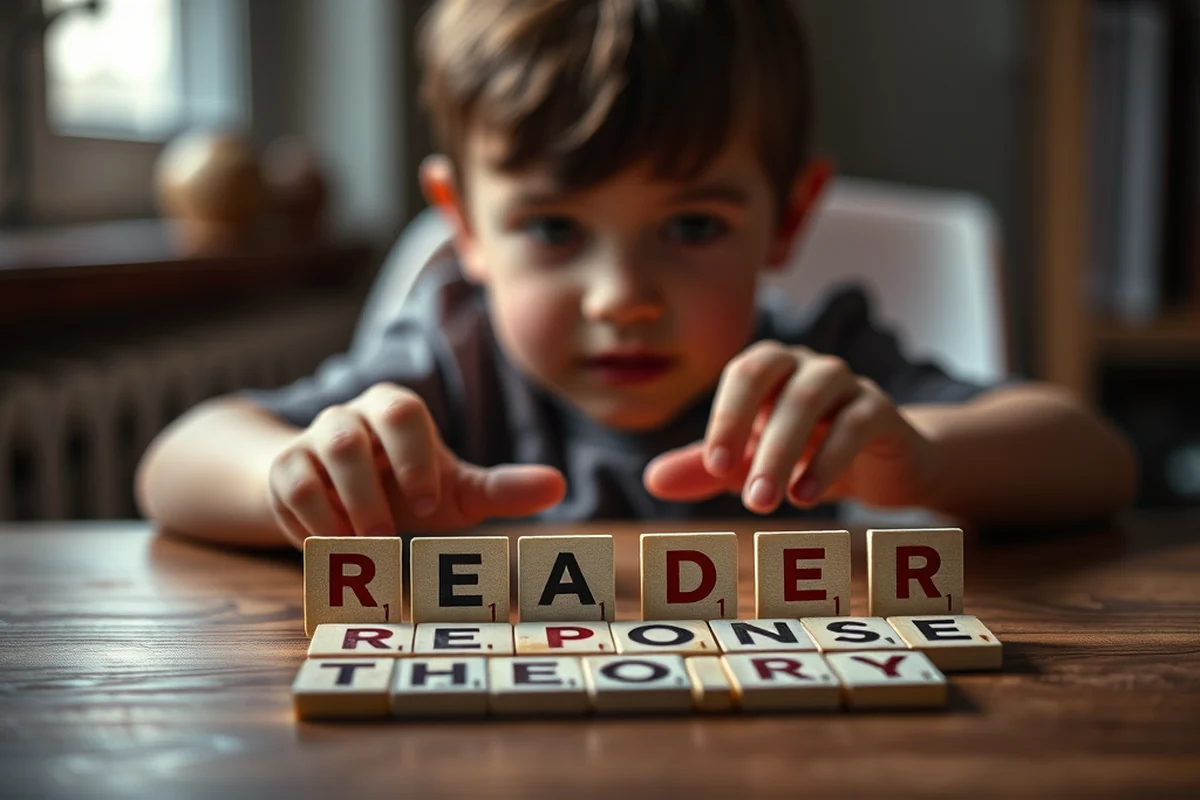
One of the most powerful aspects of Reader Response Theory is its ability to make literature feel relevant to students. When a student is asked to relate a story to their own life, they're more likely to remember it and engage with it. I've seen this happen when my daughter, after reading 'The Secret Garden,' started talking about how she felt when she was in a new place — a connection that wouldn't have surfaced if we had just discussed the plot.
This theory also allows for a more inclusive classroom environment. Students from different backgrounds can see their experiences reflected in the literature they read. I remember one time when a student from a different cultural background shared how a certain story reminded her of her family's traditions. This kind of personal connection makes learning more meaningful and engaging.
Also, Reader Response Theory encourages students to think critically about the texts they read. Instead of just identifying the main idea, students are encouraged to explore why a story might have a certain message and how it resonates with them. This kind of thinking is essential for developing strong reading comprehension and analytical skills.
Literature is not a mirror — it's a window and a door.
Related: How to read aloud books for kids
How Reader Response Theory Changes the Role of the Educator
Traditional reading instruction often focuses on the teacher explaining the text and students absorbing the information. But with Reader Response Theory, the teacher's role shifts to one of guidance and support. Instead of telling students what a book means, the teacher asks questions that encourage students to explore their own interpretations. This approach allows students to take ownership of their learning and express themselves in ways that are meaningful to them.
I've noticed that when I use this approach, my students are more engaged in discussions and more willing to share their thoughts. It's not about finding the 'correct' answer — it's about exploring different perspectives and understanding that there is no single way to interpret a text. This kind of environment encourages creativity and critical thinking, which are essential skills for lifelong learning.
The teacher also acts as a bridge between the text and the student's personal experience. By creating a safe and supportive environment, the teacher helps students feel comfortable sharing their thoughts and connecting with the literature in a meaningful way. This shift in the teacher's role can make a huge difference in how students engage with reading and how they see themselves as learners.
Encourage all students to share their thoughts without judgment. This helps build a classroom environment where every student feels heard and valued.
“I still remember the first time I tried applying Reader Response Theory in my homeschool.”— Teaching Reading to Homeschoolers editors
Related: What is to read aloud
Applying Reader Response Theory in the Classroom

One of the simplest ways to apply Reader Response Theory in the classroom is through discussion-based activities. I often use group discussions where students share their interpretations of a text and explain why they feel that way. This not only encourages critical thinking but also helps students learn from each other's perspectives.
Another effective method is journaling. Students can write about their thoughts and feelings after reading a story. This gives them a chance to reflect on what they've read and express their ideas in their own words. I've found that this is especially helpful for students who are more introverted or who need extra time to process what they're reading.
Visual activities can also be a powerful way to apply Reader Response Theory. For example, students can create drawings or collages that represent their understanding of a story. This allows for a more creative and personal expression of their thoughts, which can be especially beneficial for younger students or those who struggle with traditional writing tasks.
Related: What is reading plus
Reader Response Theory and Different Learning Styles
One of the strengths of Reader Response Theory is its flexibility. Since it encourages personal interpretation, it can be adapted to different learning styles. For example, visual learners can benefit from activities that involve drawing or creating visual representations of their understanding. Auditory learners might enjoy discussions or oral presentations.
Kinesthetic learners can engage with the theory through hands-on activities, such as acting out scenes from a story or creating props that represent their interpretation of the text. This kind of active engagement can help students who struggle with traditional reading or writing tasks.
By tailoring activities to different learning styles, educators can ensure that all students have the opportunity to engage with literature in a way that suits them best. This inclusivity is one of the key benefits of Reader Response Theory in the classroom.
Related: What is in reading terminal market
The Long-Term Benefits of Reader Response Theory
One of the most important long-term benefits of Reader Response Theory is that it helps students develop a lifelong love of reading. When students are encouraged to explore their own interpretations of a text, they're more likely to continue reading for pleasure. I've seen this happen in my own home, where my children now choose books based on how they feel about the characters or themes, rather than just on the author or genre.
This approach also helps students develop strong critical thinking skills. By encouraging them to think about what a story means to them, students learn to analyze texts in a more thoughtful and reflective way. These skills are essential not only for reading but for all areas of learning.
In the long run, Reader Response Theory helps students see reading as a personal and meaningful experience rather than just a school subject. This shift in perspective can have a lasting impact on their academic and personal lives, making them more confident and curious learners.
Reading is not just about what's on the page — it's about what's in your heart.
Related: Read manga online
Reader Response Theory and Emotional Intelligence
One of the most unexpected but powerful benefits of Reader Response Theory is its impact on emotional intelligence. When students are encouraged to explore their own feelings and the emotions of the characters they read about, they develop a deeper understanding of themselves and others. I've seen this in action when my daughter, after reading a story about a character who was afraid, started talking about her own fears and how she coped with them.
This kind of emotional exploration is essential for developing empathy and social skills. By seeing the world through the eyes of characters in a story, students learn to understand and relate to different perspectives. This can be especially beneficial for students who may be struggling with social interactions or emotional regulation.
In addition to building empathy, Reader Response Theory helps students recognize and manage their own emotions. By reflecting on their own responses to literature, students can learn to identify their feelings and express them in a healthy way. This emotional awareness is a key component of emotional intelligence and can have a lasting impact on students' personal and academic lives.
🎨 Younger Kids Version
Use drawings and simple questions to help younger children explore their feelings about a story.
🧠 Older Kids Version
Encourage in-depth discussions and written reflections to help older students analyze the meaning of a text.
📚 No-Prep Version
Use open-ended questions and spontaneous discussions to apply Reader Response Theory without any planning.
👥 Group Version
Create collaborative activities where students work together to explore their interpretations of a text.
📖 Extension Activity
Invite students to write their own stories based on their interpretation of a classic text.
| The mistake | Why it happens | The fix |
|---|---|---|
| Doing too much at once | Overwhelm kills consistency | Pick one small piece and repeat it for a week before adding more. |
| Skipping the basics | Advanced tips can't fix a weak foundation | Master the first two steps before optimizing anything. |
What Is A Reader Response Theory
Common Questions
How can I introduce Reader Response Theory to my child?
Can Reader Response Theory be used with young children?
How does Reader Response Theory help with reading comprehension?
What are some common mistakes when using Reader Response Theory?
References
- Reader Response Theory Research Papers - Academia.edu (academia.edu)
- Table of contents for Critical theory today - Library of Congress (catdir.loc.gov)
- The Turns of Reader-Response Criticism (digitalcommons.lmu.edu)
- Ohio English Language Proficiency Screener (OELPS) FAQ (education.ohio.gov)
Cite this guide
Teaching Reading to Homeschoolers (2026). What Is A Reader Response Theory. https://homeschoolread.com/what-is-a-reader-response-theory/
Feel free to cite or share this guide.
Reading Skills Checklist
Stage-filtered phonics and reading skills checklist for homeschool parents.
Open it free →