
How To Learn To Read Lips

📖 Table of Contents
- What is Lip-Reading and Why Does It Matter?
- The Science Behind Lip-Reading and How It Helps Learning
- How to Get Started: A Simple Guide for Parents
- Creating a Fun and Interactive Learning Environment
- How to Use Technology to Enhance Lip-Reading Skills
- The Role of Consistency in Teaching Lip-Reading
- Tips for Parents: How to Encourage and Support Your Child
- Make It Your Way
- Frequently Asked Questions
I remember the first time my daughter tried to read my lips while I was on a video call. She was only four, and the way she tilted her head and squinted at my mouth was both endearing and a bit alarming. It was the first time I realized just how much of our communication happens without words — and how crucial it is to teach children how to read lips, even if they’re not deaf or hard of hearing. It's a skill that blends visual and auditory learning, and it's one I've come to value for its role in language development and empathy.[3]
I had no formal training in lip-reading when my daughter first asked, 'What are you saying?' That question launched me into a journey of discovery, where I learned about the science behind lip-reading and the practical steps to teach it. The process wasn't easy, but it was rewarding. I discovered that it's not just about watching mouths move — it's about connecting with people in a more profound way, and it's a skill that can be taught to children at an early age.[4]
So, how do you actually learn to read lips? The answer is more involved than it seems. It requires a mix of visual focus, auditory awareness, and a little bit of patience. I've tried various techniques, from using videos to practicing in real-life scenarios, and I've found that consistency and creativity are key. If you're wondering how to learn to read lips — or how to teach your child — this article is for you. We'll cover everything from the basics to the most advanced strategies.
Why You'll Love This Activity
- Strengthens language and listening skills in a fun, interactive way
- Improves visual and auditory processing abilities
- Encourages empathy and communication
- Can be adapted for different ages and learning styles
What is Lip-Reading and Why Does It Matter?
As of October 2026, Lip-reading isn't just for people who are deaf or hard of hearing — it's a valuable skill for everyone. When my daughter first started learning to read lips, I was amazed at how it helped her understand the connection between spoken words and written language. She began to notice that certain mouth shapes corresponded to specific sounds, which made reading more intuitive for her.
I've noticed that children who practice lip-reading tend to be better at picking up new words and sounds. It's like a puzzle — they're learning to match the shape of a mouth with the sound it makes. This skill isn't just useful for communication; it also helps with pronunciation and speech development.
The benefits go beyond just language acquisition. Children who engage in lip-reading often show increased empathy and social skills because they're learning to pay close attention to others. It's a unique way to foster understanding and connection, which is especially important for young learners.
Begin with words your child knows well — like 'mama' or 'dada.' Use a mirror to help them see their own mouth moving when they say these words.
Part of our Reading strategies guide.
The Science Behind Lip-Reading and How It Helps Learning
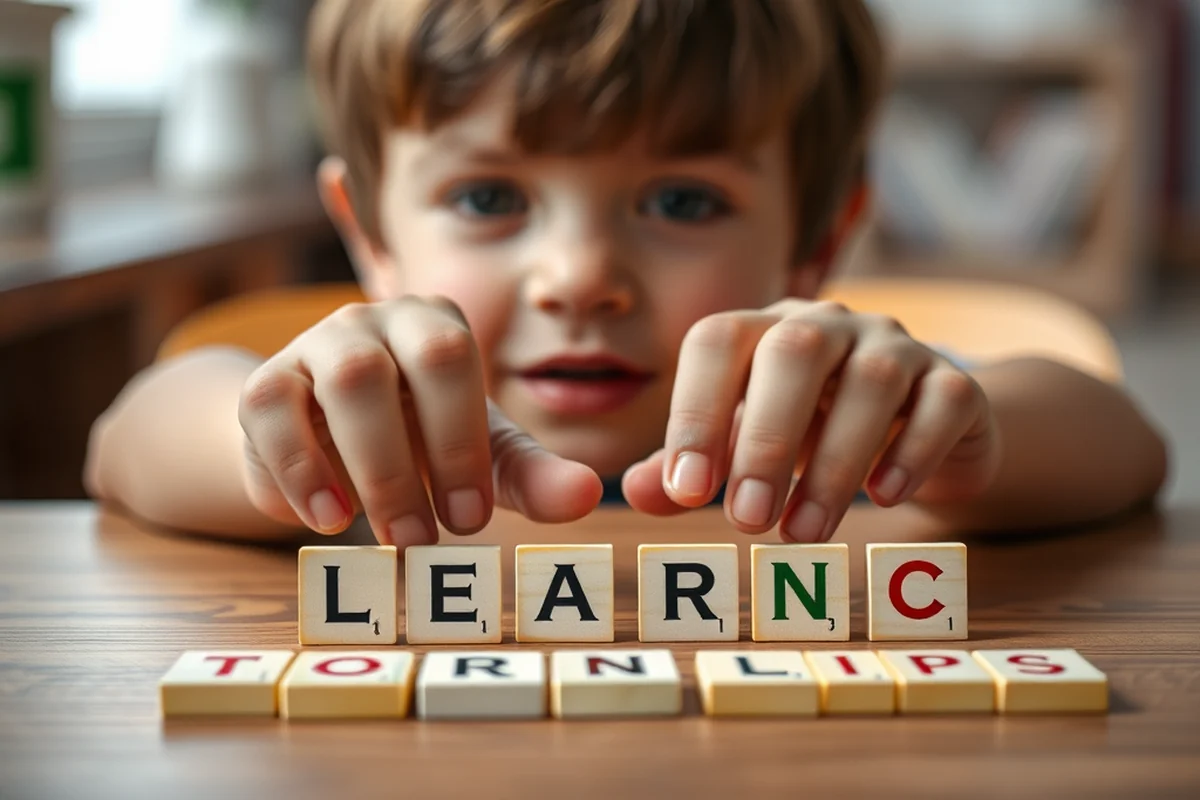
When I first started teaching my daughter to read lips, I didn't realize how much of her brain was being activated. She was not only watching my mouth but also listening intently, which helped her process words more effectively. Over time, I noticed that her ability to focus and follow conversations improved significantly.
Research shows that combining visual and auditory input can enhance memory and comprehension. I've found this to be true in my own experience. For instance, when my daughter watched a video of me saying the word 'cat,' she was more likely to remember it than if I had just said it to her.[1]
This cross-sensory approach to learning is especially beneficial for children who are visual learners or who struggle with traditional reading methods. It can be a game-changer for kids who are just beginning to explore language.
Lip-reading bridges the gap between hearing and seeing, making learning more accessible and engaging.
Related: Teaching reading grade 2
How to Get Started: A Simple Guide for Parents
One of the easiest ways to begin is by using a mirror. I found that letting my daughter watch her own mouth while saying words helped her understand the connection between what she said and how it looked. It's a fun way to introduce the concept of lip-reading and makes the learning process more engaging.
I also use short, clear videos to demonstrate words and their corresponding mouth shapes. I've found that videos where the speaker's face is clearly visible and the words are spoken slowly make the most impact. My daughter enjoys watching these videos and mimicking the movements as she learns.
Another helpful tool is a printable chart that shows the shapes of different letters and sounds. I’ve created one that's free and easy to use, which has been a big hit with my daughter and her friends. It's a great way to reinforce what she's learning in a structured way.
Encourage your child to use a mirror while practicing lip-reading. Watching their own mouth move can help them understand how speech works in a more personal way.
“I remember the first time my daughter tried to read my lips while I was on a video call.”— Teaching Reading to Homeschoolers editors
Related: Teaching reading topics
Creating a Fun and Interactive Learning Environment
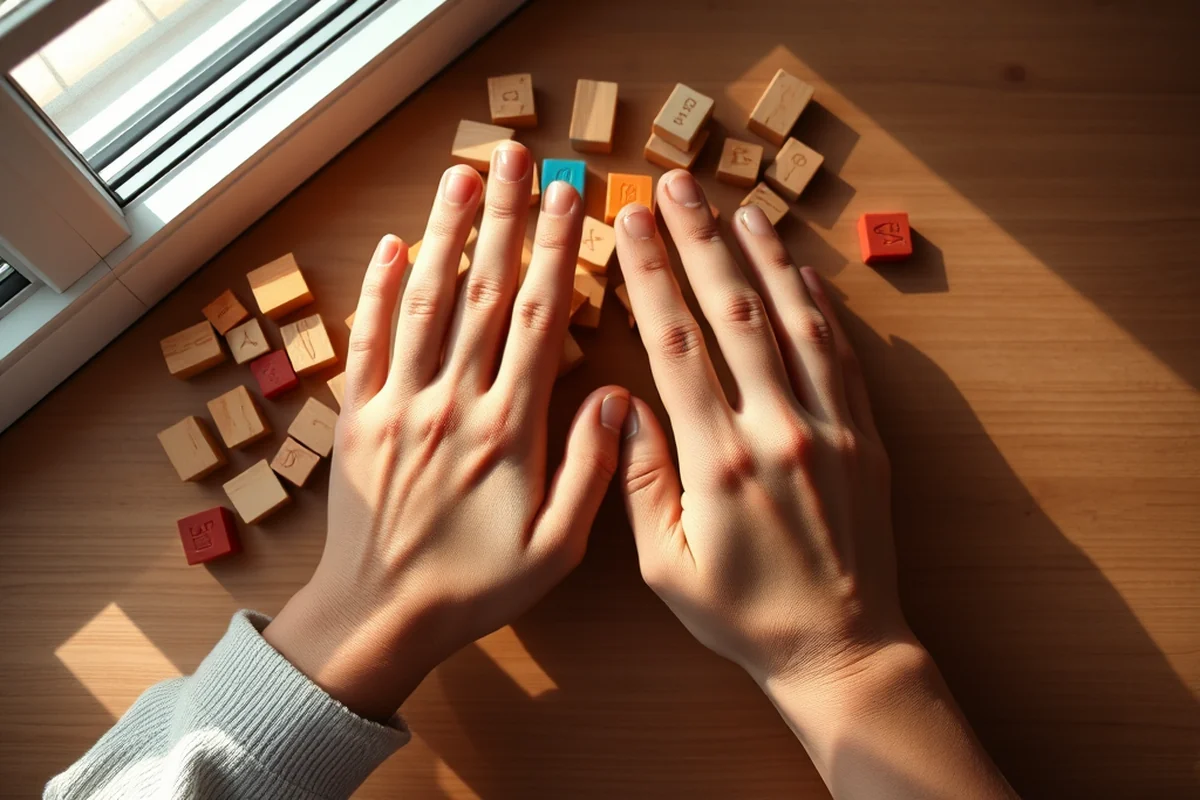
I’ve made a game out of lip-reading by using flashcards with simple words and having my daughter guess the word based on the mouth shape. It's surprising how quickly children pick up on the visual cues when the game is framed as a challenge rather than a task.
I also use a simple voice recorder to capture my voice and play it back for my daughter while showing the corresponding mouth movements. It helps her connect the spoken word with the visual cue, which is essential in building her understanding of language.
Another fun activity is to watch cartoons or videos together and pause when the characters are speaking. We talk about what we see and guess what they’re saying. My daughter loves this and has become more confident in her ability to read lips over time.
Related: Teaching reading activities
How to Use Technology to Enhance Lip-Reading Skills
I’ve found that using an app that shows slow-motion videos of people speaking can be incredibly helpful. The app I use has a feature that highlights the mouth and facial movements, which makes it easier for children to see the details. My daughter especially enjoys the interactive elements of the app, which keep her engaged and focused.
I also use a simple video editor to create short clips of myself saying words, which I then play for my daughter. She likes to watch the clips multiple times, and I can see her progress as she becomes more accurate in guessing the words.
In addition to apps and videos, I've used a screen-sharing platform to practice with my daughter. I show her a video and ask her to repeat what I say, which helps her practice both listening and lip-reading in a structured environment.
Related: Teacher s guide reading and writing
The Role of Consistency in Teaching Lip-Reading
I've learned that practicing a few minutes a day is more effective than trying to do it all at once. My daughter and I have a routine where we practice lip-reading for about 10 minutes every morning. This short, daily practice has been more effective than any long, sporadic sessions.[2]
I also make a point to practice in different environments to help her adapt to real-life situations. We practice at the kitchen table, on the couch, and even while walking outside. This helps her understand that lip-reading is a skill she can use anywhere.
Consistency also helps build her confidence. My daughter now feels more confident in conversations and is more willing to try new words. The progress is slow but steady, and I can see the difference in her ability to understand and communicate more clearly.
Practice makes progress — and consistency makes the difference.
Related: Epic reading app
Tips for Parents: How to Encourage and Support Your Child
I always make sure to praise my daughter when she gets a word right, even if it's just one letter. Positive reinforcement is essential in building confidence and encouraging her to keep trying. I’ve found that even a simple 'You did great!' goes a long way in keeping her motivated.
I also use a reward system, like a sticker chart, to keep her engaged. She gets a sticker for every successful attempt, and after a certain number, she gets to choose a small reward. This has been a great way to maintain her interest and encourage consistent practice.
It's also important to be patient and avoid frustration. I’ve learned that my daughter makes mistakes, and that’s okay. I try to stay calm and help her learn from them rather than getting upset. This has made the learning process more enjoyable for both of us.
👶 Younger Kids (Ages 3-5)
Use simple words and games to introduce lip-reading in a fun and engaging way for younger children.
👦 Older Kids (Ages 6-10)
Incorporate more complex vocabulary and use technology to challenge and enhance the learning experience.
📚 No-Prep Version
Use everyday conversations and mirror practice to teach lip-reading without any extra materials.
👥 Group Version
Involve multiple children in a collaborative activity to make learning lip-reading more social and interactive.
🎓 Extension Activity
Combine lip-reading with other language skills like spelling and pronunciation for a more comprehensive learning approach.
| The mistake | Why it happens | The fix |
|---|---|---|
| Trying to teach too many words at once | This can overwhelm the child and make the learning process frustrating. | Start with a small number of familiar words and gradually introduce new ones as the child becomes more comfortable. |
| Not providing enough visual feedback | Children need clear and consistent visual cues to understand how speech works. | Use videos, mirrors, or slow-motion clips to help them see the details of mouth and facial movements. |
| Focusing only on the mouth and ignoring the eyes and other facial expressions | Facial expressions and eye movement are also important in understanding speech. | Encourage your child to pay attention to the whole face, not just the mouth. |
How To Learn To Read Lips
Common Questions
How long does it take to learn to read lips?
Can lip-reading help with reading and spelling?
What if my child is shy or reluctant to participate?
Are there any apps or tools that can help with teaching lip-reading?
References
- Deaf and Individuals with Hearing Loss - Penn State | Accessibility (accessibility.psu.edu)
- Communicating with People Who Are Deaf or Hard of Hearing (ada.gov)
- Linguistic Neglect of Deaf Children in the United States - Ballard Brief (ballardbrief.byu.edu)
- alcb 400a: lip-reading: simple consonant sounds - Foothill Catalog (catalog.foothill.edu)
Cite this guide
Teaching Reading to Homeschoolers (2026). How To Learn To Read Lips. https://homeschoolread.com/how-to-learn-to-read-lips/
Feel free to cite or share this guide.
Reading Skills Checklist
Stage-filtered phonics and reading skills checklist for homeschool parents.
Open it free →