
What Is Reading League

📖 Table of Contents
- What Is Reading League and How Does It Work?
- Why Reading League Is a Game-Changer for Homeschooling Parents
- How Reading League Makes Learning to Read Fun and Interactive
- How Reading League Helps Build Confidence in Young Readers
- How Reading League Adapts to Different Learning Styles
- Why Reading League Is Trusted by Educators and Parents Alike
- How Reading League Supports Long-Term Reading Success
- Make It Your Way
- Frequently Asked Questions
I remember the first time I sat down with my son for a reading session, unsure of what to expect. We had a stack of books, some flashcards, and a vague idea of what 'reading readiness' meant. That was before I discovered Reading League, a program that transformed my chaotic and often frustrating attempts into a structured, joyful journey for both of us. Reading League isn't just another educational tool—it's a lifeline for parents who want to teach their children to read without the stress, confusion, or overwhelm that comes with trial-and-error methods.[1]
What is Reading League, you might be asking? For me, it was a revelation. It’s a comprehensive, research-based approach to literacy that guides parents through each stage of learning, from phonemic awareness to fluency. I had tried other programs, but none of them felt as intuitive or as engaging. With Reading League, I could finally see the progress my son was making, and it all made sense. The way it breaks down reading into small, manageable steps made it less intimidating and more encouraging for both of us.[2]
In the weeks that followed, my son began to recognize letters, blend sounds, and even read simple words on his own. It felt like magic, but it wasn’t—it was the result of a well-structured program that finally aligned with what I needed as a parent. Today, I’m not just proud of my son’s progress; I’m also confident in the methods I used to get us here. Reading League is more than a curriculum—it’s a roadmap that takes you from confusion to competence, step by step.
Why You'll Love This Reading Program
- It’s built on proven educational research and techniques.
- It’s easy to implement with minimal supplies and preparation.
- It adapts to your child’s learning style and pace.
- It keeps kids engaged and excited about learning to read.
What Is Reading League and How Does It Work?
As of November 2026, at its core, Reading League is a series of activities and lessons designed to help children build reading skills from the ground up. The program uses a multi-sensory approach that incorporates sight, sound, and touch to reinforce learning. This means that kids aren’t just memorizing letters—they’re learning how to recognize them, blend them, and use them to form words.
What makes Reading League so effective is its focus on phonics and systematic instruction. Instead of jumping from one activity to another without a clear purpose, each step builds on the previous one. For example, after recognizing individual letters, kids move on to blending sounds to form simple words, and eventually, reading whole sentences.
I found that the program’s step-by-step format made it easy for me to see where my son was and what he needed next. It didn’t feel overwhelming, and it gave me a clear sense of direction in what I was trying to achieve. I didn’t have to guess at what to do next—Reading League told me exactly what to do.
Before diving into more complex activities, spend time on phonemic awareness and letter recognition. This sets the foundation for everything else.
Part of our Reading strategies guide.
Why Reading League Is a Game-Changer for Homeschooling Parents
As a homeschooling parent, I often felt like I was winging it when it came to teaching my son to read. I had no formal training, and I worried I was missing key concepts or not providing enough support. Reading League changed all that. It gave me a clear roadmap of what to teach, when to teach it, and how to make it fun.
One of the biggest advantages of the program is that it’s designed to be used by parents, not just teachers. It doesn’t require any special training or expertise—just a willingness to follow the steps and spend time with your child. That’s a huge relief for parents who are juggling a variety of responsibilities.
I also loved the variety of activities in the program. From hands-on letter building to interactive games, there was always something new and engaging to do. This kept my son interested and motivated, which made learning feel like a natural part of our daily routine.
Reading League doesn’t just teach kids to read—it helps parents teach them confidently.
Related: What is reading passage
How Reading League Makes Learning to Read Fun and Interactive
One of the best things about Reading League is that it doesn’t feel like a traditional lesson. Instead of sitting at a table with a book, kids are playing games, building letters, and using their whole bodies to learn. This makes the process of learning to read feel like play, which is far more effective for young learners.
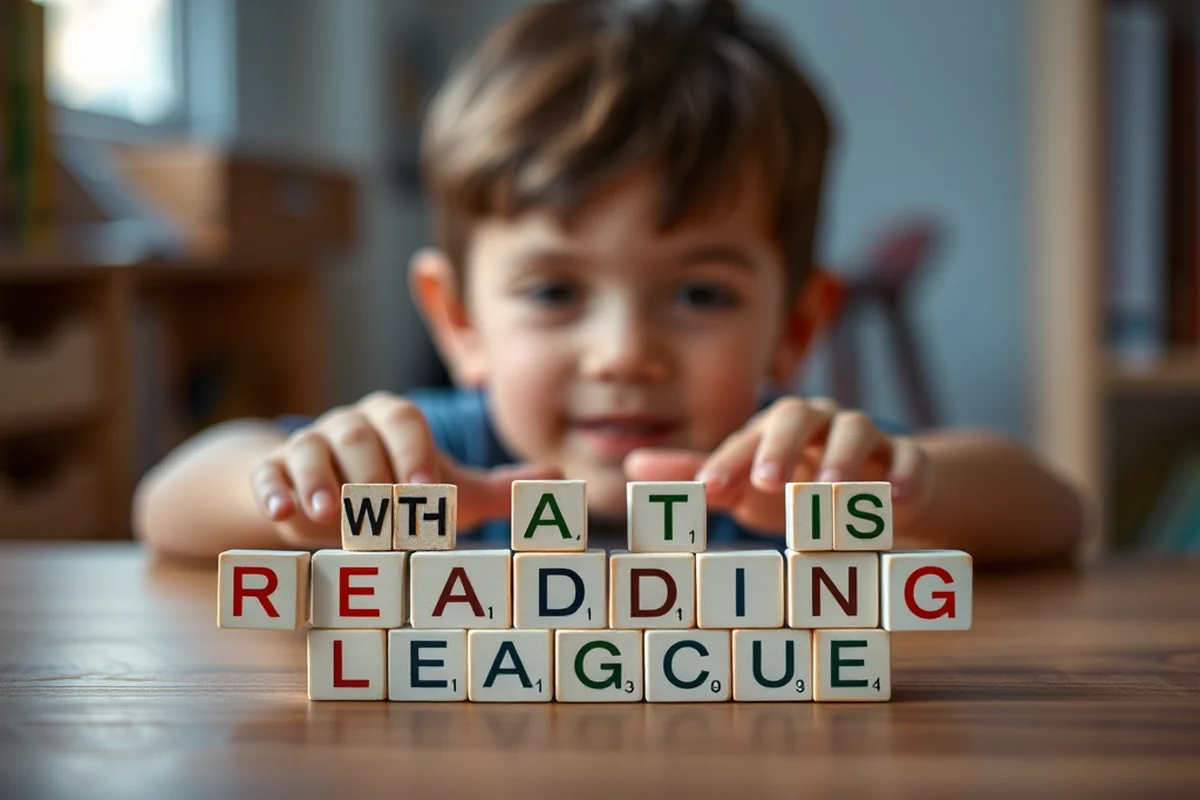
For example, one of my favorite activities involved using letter tiles to create words. It was a simple game, but it helped my son understand how letters work together to form words. The more he played with the tiles, the more confident he became in recognizing and spelling simple words.
Another activity involved using flashcards and a timer to practice reading words quickly. It was a fun way to build speed and fluency, and it kept my son engaged for much longer than I ever expected.
Incorporate hands-on materials like letter tiles, magnetic letters, or even playdough to help kids physically manipulate letters and words.
“I remember the first time I sat down with my son for a reading session, unsure of what to expect.”— Teaching Reading to Homeschoolers editors
Related: What is kindle first reads
How Reading League Helps Build Confidence in Young Readers

Confidence is a key factor in learning to read, and Reading League does a great job of fostering that. By breaking reading into small, achievable steps, the program helps children see progress and feel accomplished along the way. This is especially important for young learners who can easily become discouraged if they feel they’re not making progress.
One of the ways the program builds confidence is through repetition and reinforcement. For example, after learning a new letter or sound, the program includes multiple opportunities to practice it in different contexts. This repetition helps solidify learning and makes it more likely that the child will remember it in the long run.
I noticed a big difference in my son’s confidence after a few weeks of using Reading League. He was no longer hesitant to try reading new words—he was eager to show off what he had learned. This sense of accomplishment made a huge difference in his overall attitude toward learning.
Related: What to do in a tarot reading
How Reading League Adapts to Different Learning Styles
Every child learns differently, and Reading League is designed with that in mind. Whether your child is a visual learner, an auditory learner, or a kinesthetic learner, the program provides a variety of activities that can be adjusted to suit their needs.
For example, visual learners can benefit from flashcards and picture-based activities, while auditory learners can use songs and rhymes to reinforce learning. Kinesthetic learners, on the other hand, can engage with hands-on activities like letter building or movement-based games.
I found that this flexibility made it easier to keep my son engaged, even on days when he was more restless or distracted. By adjusting the activities to match his learning style, I was able to keep him interested and focused for longer periods of time.
Related: How to teach your monster to read
Why Reading League Is Trusted by Educators and Parents Alike
One of the things that immediately caught my attention about Reading League was the fact that it was developed by educators and literacy experts. This meant that the program was not just a collection of activities, but a well-researched and effective approach to teaching reading.
I’ve spoken to several other parents who have used Reading League, and many of them have shared similar experiences. They’ve all noticed improvements in their children’s reading skills, confidence, and overall attitude toward learning. Some have even reported that their children are now reading independently, which is a huge milestone.
In addition to parent testimonials, Reading League has also been used by teachers in classrooms and by tutors who work with struggling readers. This wide range of support and success stories makes it a program that I trust and recommend to other parents.
Education is about more than just knowledge—it’s about building confidence and a lifelong love of learning.
Related: What is reading manga
How Reading League Supports Long-Term Reading Success
One of the biggest advantages of Reading League is that it doesn’t stop after a child can read simple words. Instead, it continues to build on those skills, gradually introducing more complex concepts like sight words, syllables, and reading fluency.
I noticed that as my son progressed through the program, he wasn’t just learning to read—he was becoming a more confident and capable reader. He was able to read longer sentences, understand more complex stories, and even start writing his own sentences. This was a huge shift in his overall learning experience.
The program also includes activities that help reinforce reading skills even after the initial learning phase. This means that kids don’t lose the skills they’ve learned—they continue to build on them over time. This kind of long-term support is exactly what parents need to help their children become strong, independent readers.
🎒 Youth Version
A simplified version for younger kids with more hands-on activities and visual aids.
🎓 Teen Version
A more advanced version for older kids that focuses on fluency, comprehension, and reading for pleasure.
✨ No-Prep Version
A streamlined version of the program that requires no preparation and is ideal for busy parents.
🤝 Group Version
A version designed for small group settings, such as in a co-op or with siblings.
🚀 Extension Version
An advanced version that adds more complex activities and challenges for older or more advanced readers.
| The mistake | Why it happens | The fix |
|---|---|---|
| Skipping the phonemic awareness step | Phonemic awareness is a foundational skill that helps children understand how sounds work in words. Skipping this step can lead to gaps in learning later on. | Always start with phonemic awareness activities, such as segmenting and blending sounds, before moving on to letter recognition and reading. |
| Trying to cover too much at once | Trying to introduce too many concepts at once can overwhelm children and make the learning process confusing and frustrating for them. | Follow the program’s step-by-step structure and focus on mastering one skill at a time before moving on to the next. |
| Not reinforcing learning consistently | Consistency is key in learning to read. If you don’t reinforce skills regularly, children may forget what they’ve learned and fall behind. | Set a regular routine for reading activities and make sure to review concepts regularly to reinforce learning. |
| Not adapting the program to the child’s learning style | Every child learns differently, and failing to adapt the program to their learning style can make it harder for them to grasp new concepts. | Use the variety of activities provided in the program and adjust them to match the child’s learning style and preferences. |
What Is Reading League
Common Questions
Is Reading League suitable for kids who are already reading?
Do I need any special training to use Reading League?
Can I use Reading League with multiple children?
Is Reading League aligned with educational standards?
References
- ELA/ELD Framework Figures, Chapters 3-7 (cde.ca.gov)
- The Science of Reading: What It Is vs. What People May Think It Is (baypath.edu)
Cite this guide
Teaching Reading to Homeschoolers (2026). What Is Reading League. https://homeschoolread.com/what-is-reading-league/
Feel free to cite or share this guide.
Reading Skills Checklist
Stage-filtered phonics and reading skills checklist for homeschool parents.
Open it free →