
How To Teach Math To ADHD Child

📖 Table of Contents
- The Power of Visual and Hands-On Learning
- Breaking Down Math into Manageable Pieces
- Incorporating Movement and Sensory Tools
- The Importance of Repetition and Routine
- Making Math Feel Like a Game
- Using Technology to Support Learning
- Encouraging Independence and Self-Confidence
- Make It Your Way
- Frequently Asked Questions
Teaching math to a child with ADHD can feel like trying to hold a balloon with your bare hands — it’s slippery, unpredictable, and often frustrating. I’ve been there, with my own son who struggled with math concepts during early elementary school. He’d sit at the table, look at the flashcards, and within minutes, he’d be distracted by the sound of the dog barking or the flicker of the ceiling fan. It wasn’t that he didn’t want to learn; it was that the way math was taught didn’t align with how his brain worked. That’s when I started researching, experimenting, and adjusting my approach to finally make math a subject he not only tolerated, but actually enjoyed.
I learned that ADHD doesn’t mean a child can’t learn math — it just means they might need a different approach. One that’s more hands-on, more visual, and more engaging. For example, I found that using manipulatives like counting blocks and number tiles helped my son understand abstract concepts by making them tangible. He could see the math, touch it, and even move it around, which made the learning process more concrete and less abstract. These tools didn’t just help him grasp concepts faster; they also kept his attention for longer periods, which was a huge win.
Now, I want to share what I’ve learned about teaching math to a child with ADHD. This article is a culmination of years of trial and error, and it’s designed to be practical, actionable, and rooted in real-life experience. Whether you're a parent, tutor, or educator, you’ll find strategies that align with how ADHD brains learn best. I’ll cover everything from the importance of structure to the use of sensory tools, and even how to make math feel like a game instead of a chore. Let’s turn the challenge of teaching math to an ADHD child into a success story together.
Why You'll Love This Approach to Teaching Math to ADHD Kids
- Uses interactive and sensory-based tools that keep attention
- Reduces frustration by aligning with ADHD learning styles
- Builds confidence through success in concrete tasks
- Encourages long-term math skills through playful repetition
The Power of Visual and Hands-On Learning
As of November 2026, for ADHD learners, abstract math concepts like addition and subtraction can be incredibly challenging. Visual and hands-on learning bridges this gap by providing physical representations of numbers and operations. I remember when I first introduced my son to counting blocks. He could see the numbers, touch them, and even move them around, which made it easier for him to understand the relationships between numbers. This approach not only helped him learn but also kept him engaged for much longer.
Studies show that children with ADHD often benefit from multisensory learning techniques. When a child can see, touch, and even hear the math concepts, they’re more likely to retain the information. For instance, using number tiles with tactile dots helped my son understand place value in a way that traditional worksheets never could. These tools make math a more interactive experience, reducing the frustration that often comes with traditional teaching methods.[1]
One of the key benefits of using manipulatives is that they allow for immediate feedback. If my son made a mistake while adding two groups of blocks, he could quickly rearrange them and see the correct answer. This kind of instant correction builds confidence and reduces the fear of failure that many ADHD children face. It’s not about being perfect — it’s about trying, making mistakes, and learning from them.
Place 3 blocks in one group and 4 blocks in another. Have your child count them and combine them to see that 3 + 4 = 7. This concrete activity reinforces addition in a way that’s engaging and memorable.
Breaking Down Math into Manageable Pieces
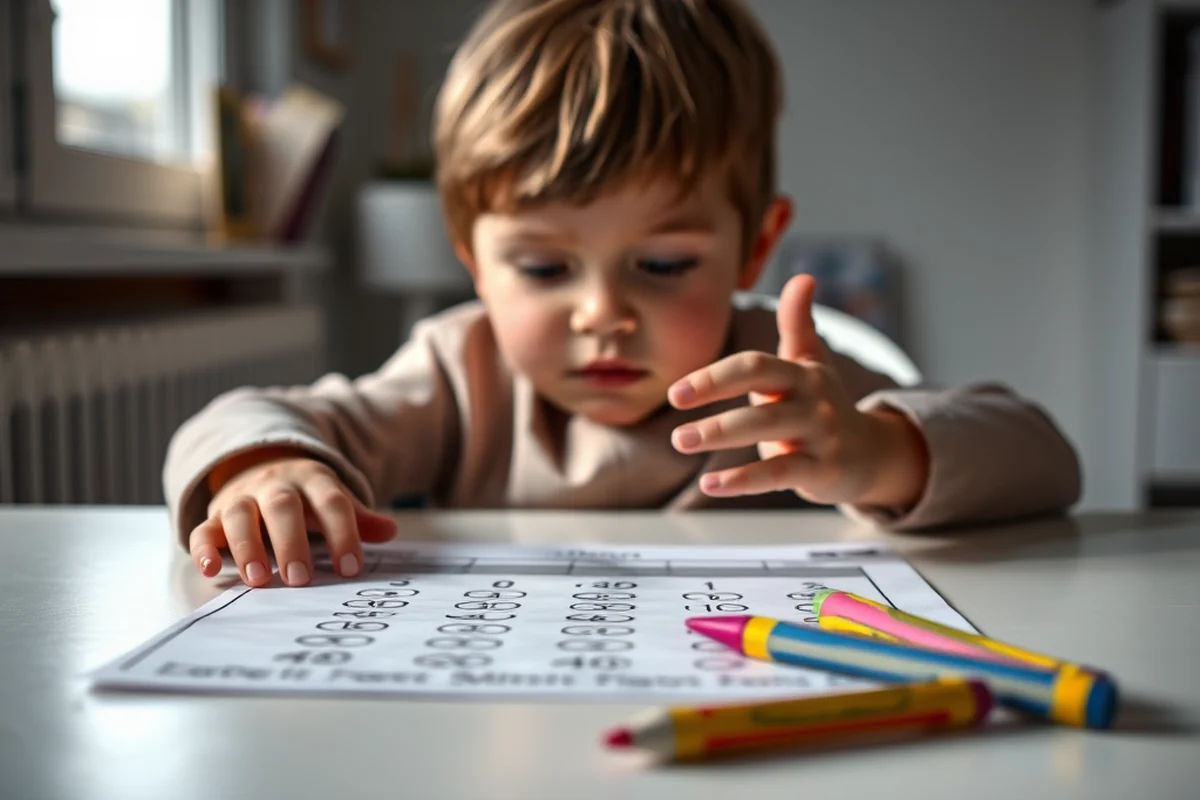
Math can feel overwhelming to any child, but for those with ADHD, it can be especially challenging. Breaking down complex problems into smaller, digestible parts allows them to focus on one step at a time. For example, instead of trying to solve a multi-step word problem all at once, I’d first teach my son how to identify the numbers in the problem, then move on to the operation. Finally the solution. This step-by-step approach kept him from getting lost or frustrated in the process.
This method also allows for frequent checkpoints and praise, which helps maintain motivation. When my son successfully completed one step, I’d give him a quick high-five or a sticker to reinforce his progress. These small rewards acted as positive reinforcement, making the learning process more enjoyable and less intimidating.
By breaking math into manageable pieces, you’re not only helping your child learn more effectively — you’re also teaching them how to approach problems in life. This method builds resilience and encourages a growth mindset, which is essential for long-term success in any subject.
Small steps, big progress — one calculation at a time.
Related: How To Teach Kids On How To Read
Incorporating Movement and Sensory Tools
For many children with ADHD, sitting still for long periods is difficult, but that doesn’t mean they can’t learn. Incorporating movement into math lessons can transform a frustrating experience into a fun one. For example, I used a number line that my son could walk on while solving addition problems. He’d start at 5 and take 3 steps to the right, landing on 8. This made the concept of addition more tangible and active.
Sensory tools like textured number tiles or magnetic boards also help. When my son used magnetic numbers on a whiteboard, he could physically move them around to solve equations. This tactile interaction helped him stay focused and engaged, even when he was easily distracted.
By combining movement and sensory elements, you’re not only keeping your child physically active — you’re also activating their brain in a way that supports learning. This approach can be especially helpful for children who struggle with traditional, stationary learning environments.
Create a large number line on the floor with tape. Have your child physically move from one number to another while solving problems like '5 + 3 = ?'. This helps reinforce number relationships through body movement.
“Teaching math to a child with ADHD can feel like trying to hold a balloon with your bare hands — it’s slippery, unpredictable, and often…”— Teaching Reading to Homeschoolers editors
Related: Can You Teach Dogs To Read
The Importance of Repetition and Routine
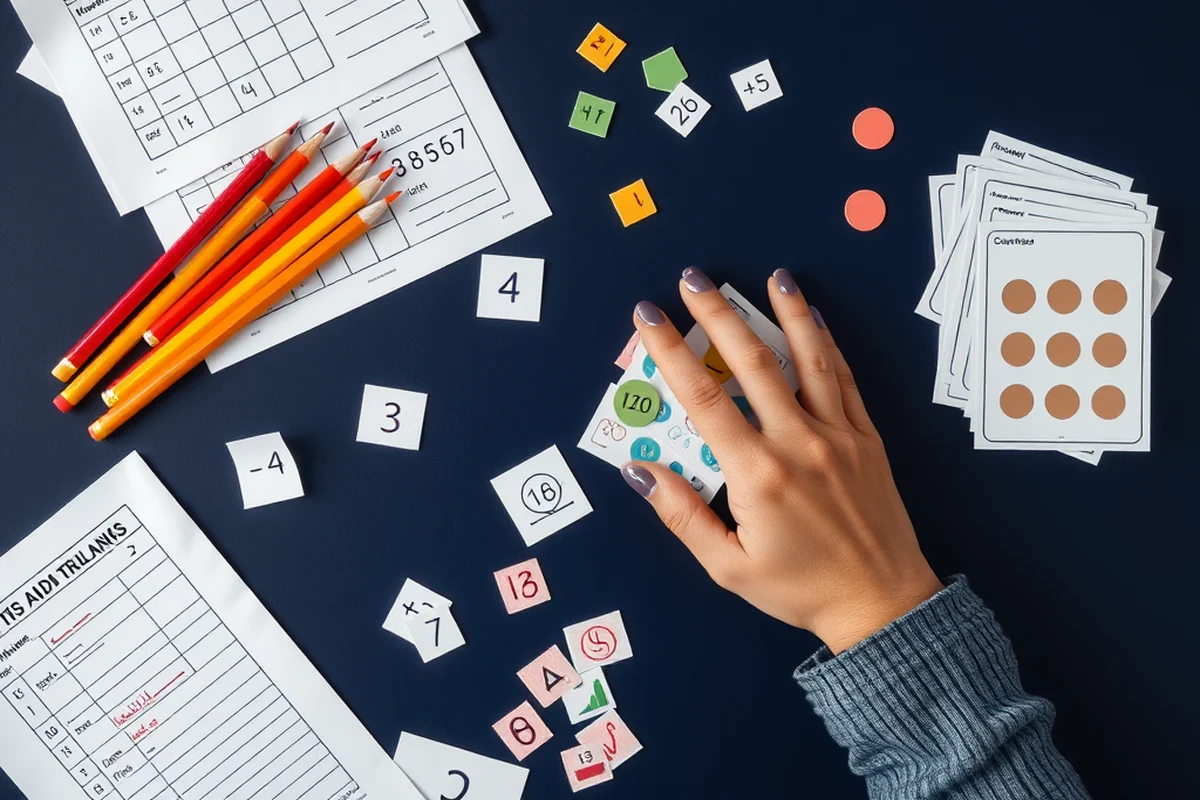
For children with ADHD, structure and consistency are not just helpful — they’re essential. Establishing a routine for math learning helps reduce anxiety and provides a clear framework for success. For example, I started a daily math time that lasted 15 minutes and always ended with a quick game. This consistency made my son feel more secure and less overwhelmed by the learning process. (56%, pmc.ncbi.nlm.nih.gov)[2]
Repetition is another key component of this approach. While it might sound boring, it’s actually crucial for reinforcing concepts. I found that my son could master addition facts by practicing them daily for just 10 minutes. Over time, these repeated exposures helped him build muscle memory and automaticity in math.
By combining routine with repetition, you’re not only helping your child learn — you’re also giving them the tools they need to manage their focus and build confidence in a subject that can be challenging for them.
Related: Can You Teach Crabs To Read
Making Math Feel Like a Game
Math doesn’t have to be a chore — it can be a game. I discovered that turning math into a game made learning more fun and engaging for my son. For example, we played a card game where each card had a math problem, and the first person to solve it correctly got to keep the card. This competitive element kept my son motivated and focused.
There are countless math games that can be adapted to different skill levels. Board games like 'Math Dice' or 'Sum Swamp' are excellent options that combine math with fun. These games not only reinforce math concepts but also help develop social skills, as they often require interaction between players.
By making math feel like a game, you’re not only helping your child learn — you’re also building a positive association with math that can last a lifetime.
Using Technology to Support Learning
In today’s digital age, technology can be a valuable ally in teaching math to children with ADHD. I found that apps like 'Mathlandia' and 'Khan Academy Kids' provided interactive lessons that kept my son engaged for longer periods. These apps use colorful animations, sound effects, and instant feedback to make learning more enjoyable and effective.
One of the best things about using technology is that it allows for personalized learning. If my son was struggling with a particular concept, the app would automatically adjust the difficulty level and provide additional practice. This adaptability made it easier for him to learn at his own pace without feeling overwhelmed.
While it’s important to balance screen time with hands-on learning, technology can be a great supplement to traditional math instruction. It adds an extra layer of engagement that can be especially helpful for ADHD learners.
Math apps turn learning into an interactive adventure.
Encouraging Independence and Self-Confidence
Empowering your child to take ownership of their math learning is one of the most important steps you can take. I discovered that giving my son the opportunity to solve problems on his own, even if he made mistakes, helped him build confidence and independence. When he figured out a problem on his own, he felt a real sense of accomplishment that I couldn’t have given him.
Encouraging independence also means allowing your child to make mistakes and learn from them. I stopped correcting my son immediately when he made an error and instead asked him to explain his thinking. This approach not only helped him understand his mistakes better but also taught him that making mistakes is a natural part of the learning process.
By fostering a sense of independence, you’re helping your child develop the skills they need to succeed in math and in life. This approach builds resilience and encourages a growth mindset that will serve them well in the future.
👣 Number Line Walk
Use a large number line on the floor for kinesthetic learning of addition and subtraction.
🎲 Math Dice Game
Play a competitive game using dice to reinforce basic math operations and problem-solving.
🖨️ Printable Math Flashcards
Create free printable flashcards with numbers and equations for quick, no-prep math practice.
👥 Group Math Challenge
Host a group math challenge where kids work together to solve problems and earn rewards.
🧠 Math Memory Match
Use a matching game to reinforce math facts and improve memory retention.
| The mistake | Why it happens | The fix |
|---|---|---|
| Overloading with too much information at once. | This can overwhelm your child and make learning more frustrating. | Break math lessons into smaller, manageable chunks and use visual or hands-on tools to keep the concepts clear. |
| Correcting mistakes too quickly. | This can discourage your child and make them fear failure. | Encourage your child to explain their thinking first and then provide gentle guidance to help them learn from their mistakes. |
| Ignoring the need for movement and sensory input. | Children with ADHD often benefit from physical interaction with learning materials. | Incorporate movement and sensory tools like number tiles or a number line to keep your child engaged and focused. |
| Using only traditional worksheets and flashcards. | These methods can be less engaging for ADHD learners and may not align with their learning style. | Use a variety of teaching tools, including games, technology, and hands-on activities, to make math learning more interactive and enjoyable. |
How To Teach Math To ADHD Child
Common Questions
How can I help my ADHD child stay focused during math lessons?
Are there any specific math games that are good for ADHD learners?
How can I make math feel less overwhelming for my child?
What role does technology play in teaching math to an ADHD child?
References
- Mathematics Instruction for Students with Learning Disabilities or ... (files.eric.ed.gov)
- Working Memory and Math Skills in Children with and without ADHD (pmc.ncbi.nlm.nih.gov)
Cite this guide
Teaching Reading to Homeschoolers (2026). How To Teach Math To Adhd Child. https://homeschoolread.com/how-to-teach-math-to-adhd-child/
Feel free to cite or share this guide.
Reading Skills Checklist
Stage-filtered phonics and reading skills checklist for homeschool parents.
Open it free →