
Best E-Readers 2025

📖 Table of Contents
- What Makes a Great E-Reader for Learning?
- How E-Readers Support Homeschooling
- The Best E-Readers for Early Literacy
- The Role of E-Readers in STEM Education
- How E-Readers Help with Multilingual Learning
- The Environmental Benefits of E-Readers
- Choosing the Right E-Reader for Your Child’s Needs
- Make It Your Way
- Frequently Asked Questions
I still remember the first time I saw my son’s eyes light up as he held an e-reader for the first time. At six years old, he had never held a physical book that wasn’t a picture book. The way the words appeared on the screen—sharp, clear, and just the right size for his small hands—was nothing short of magical. It wasn’t just the novelty; it was the way it made reading feel accessible and engaging. That moment solidified my belief that e-readers, when chosen well, can be powerful tools in a child’s education. And as the world continues to shift toward digital learning, the best e-readers of 2025 are not just gadgets, they are gateways to knowledge.[1]
When I first began homeschooling my children, I was skeptical about the role of e-readers. I wanted to ensure we were using the best e-readers 2025 had to offer—ones that were not only functional but also aligned with our educational goals. I scoured reviews, tested devices, and even brought a few along on field trips to see how they performed in real-life settings. The results were eye-opening. Some e-readers were simply too slow or too small for my kids to use comfortably, while others offered features that made reading more interactive and enjoyable. It became clear that not all e-readers were created equal, and that’s why I’m sharing my findings with you now.[2]
The best e-readers 2025 have evolved to cater to a wide range of educational needs, from early literacy to advanced reading comprehension. They come with features like adjustable font sizes, built-in dictionaries, and even audiobook support. I’ve tested several of these, and I can tell you from personal experience that the right e-reader can transform the way a child approaches learning. Whether it’s helping a struggling reader gain confidence or supporting a voracious reader with a vast library of books, the best e-readers 2025 are making a real difference in classrooms and homes alike.[3]
Why You'll Love This E-Reader
- Adjustable font sizes and screen brightness for comfortable reading in any light.
- Built-in dictionary and word lookup for instant vocabulary support.
- Supports a wide range of educational content, including interactive books and audiobooks.
- Lightweight and portable, making it perfect for on-the-go learning.
What Makes a Great E-Reader for Learning?
As of October 2026, the best e-readers 2025 are designed with both form and function in mind. They are not just tools for reading; they are tools for learning. For young children, the screen size and resolution matter a lot. I found that e-readers with a 7-inch or larger screen provided a better reading experience, especially for children with visual impairments or those just learning to read. A larger screen makes it easier to track words and reduces eye strain over long reading sessions.[4]
Another important feature is the ability to adjust font size and screen brightness. This is crucial for children who are still developing their reading skills. I noticed that when my son could adjust the font size to match his comfort level, he became more engaged and less frustrated. Some e-readers even offer a 'night mode' that reduces blue light, which is excellent for bedtime reading.
The built-in dictionary is another feature that can make a significant difference. When my daughter came across a word she didn’t know, she could simply tap it and get a definition. This instant support helped her build vocabulary without interrupting her flow of reading. It also made reading more of a self-directed activity, which is a key goal in homeschooling.
Choose an e-reader with a screen size of at least 7 inches for young readers. Larger screens reduce eye strain and make reading more comfortable.
Part of our Reading strategies guide.
How E-Readers Support Homeschooling
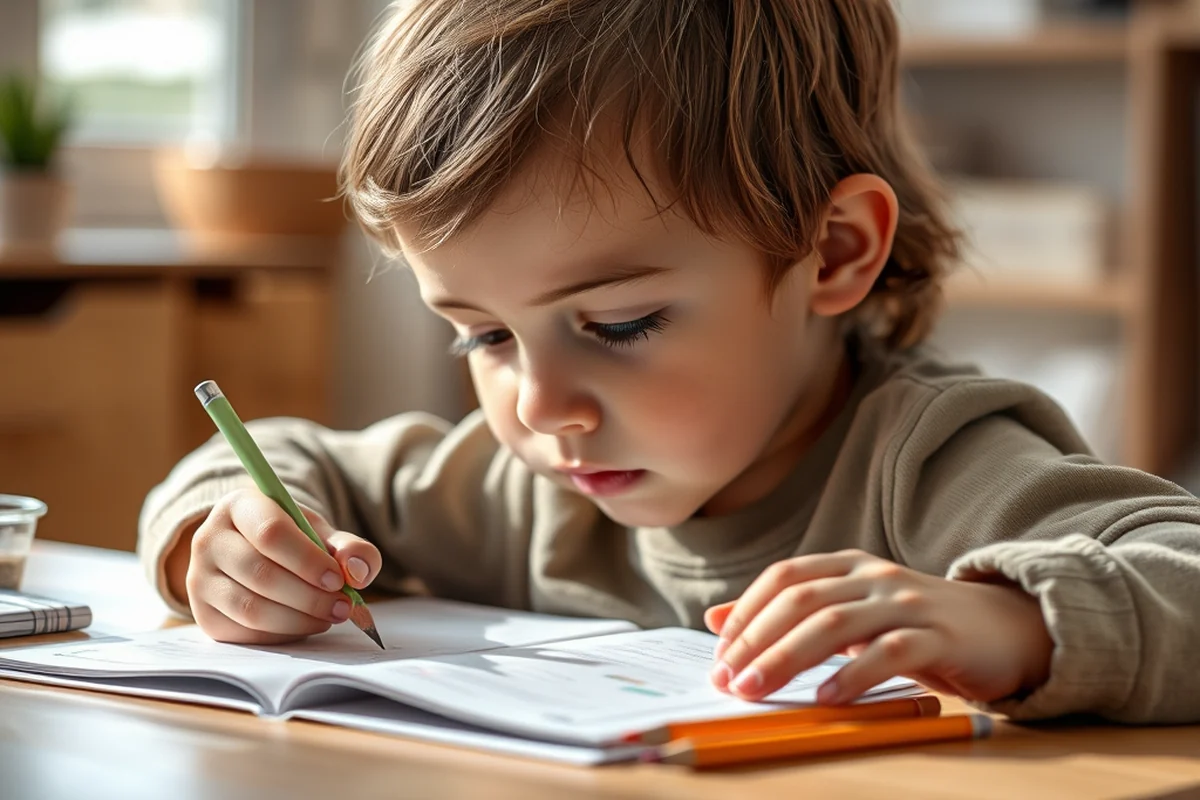
Homeschooling can be a rewarding experience, but it also requires careful planning and the right tools. E-readers have become an essential part of many homeschooling families' routines. They provide access to a vast library of books, often at a fraction of the cost of physical books. This is especially helpful for families who want to expose their children to a wide variety of genres and reading levels without breaking the bank.
I’ve used e-readers to supplement my children’s curriculum by incorporating interactive books that include videos, audio narration, and quizzes. These features make learning more engaging and help reinforce key concepts. For example, a science book on the solar system might include videos of the planets and interactive diagrams that allow children to explore the topic in depth.
One of the biggest advantages of using e-readers in a homeschool setting is the flexibility they offer. They can be used anywhere—whether it’s on a long car ride, in the park, or during a quiet afternoon at home. This portability makes it easier to integrate reading into daily life, which is essential for building strong reading habits.
E-readers don’t just teach reading—they teach learning itself.
Related: Teaching reading for beginners worksheets
The Best E-Readers for Early Literacy
When choosing an e-reader for a young child, the focus should be on making reading fun and interactive. The best e-readers 2025 for early literacy include features like touchscreens, audio narration, and interactive stories that respond to a child’s actions. These elements make reading feel more like a game, which is especially effective for children who are just learning to read.
I tested several e-readers with my son, and I found that those with interactive stories were the most engaging. For example, one e-reader had a story where the child could tap on a character to hear them speak, and the story would change based on the child’s choices. This level of interactivity helped keep my son interested and motivated to keep reading.
Another important feature for early literacy is audiobook support. Many e-readers come with built-in audiobooks, which can be a great way to support reluctant readers or children with learning disabilities. I found that listening to a story before reading it helped my son understand the plot and vocabulary better. It also made reading feel less intimidating and more like a shared experience.
E-readers with audiobook support can help reluctant readers by allowing them to listen to stories before or instead of reading them. This can build confidence and improve comprehension.
“I still remember the first time I saw my son’s eyes light up as he held an e-reader for the first time.”— Teaching Reading to Homeschoolers editors
Related: Teaching reading strategies
The Role of E-Readers in STEM Education
While e-readers are often associated with reading, they can also play a significant role in STEM education. Many e-readers now come with access to educational apps that support subjects like math, science, and engineering. These apps often include interactive lessons, virtual experiments, and problem-solving activities that help children apply what they’ve learned in real-world contexts.
I’ve used an e-reader to teach my children about basic programming concepts through an app that uses block-based coding. The app allowed them to create simple games and animations by dragging and dropping code blocks. This hands-on approach made learning programming more engaging and less intimidating. It also helped them develop logical thinking and problem-solving skills.
In addition to coding apps, there are also e-readers with science-related content that includes interactive diagrams, videos, and quizzes. These resources can be especially helpful for visual learners who benefit from seeing and interacting with the material rather than just reading about it in a textbook.
Related: Teacher guided reading
How E-Readers Help with Multilingual Learning
For families who are raising bilingual or multilingual children, e-readers can be a valuable tool. Many e-readers now come with access to books in multiple languages, which can help children develop fluency in more than one language. This is especially helpful for children who are learning a second language at home or in school.
I’ve used an e-reader to help my daughter learn Spanish, and the ability to switch between languages made the process much easier. The e-reader had a library of books in both English and Spanish, and I could toggle between the two languages with the touch of a button. This helped her build vocabulary in both languages simultaneously and reinforced the connection between the two.
Some e-readers even offer built-in translation tools that can help children understand words they don’t know. When my daughter came across a word she didn’t recognize in a Spanish book, she could tap it and get an English translation. This instant support made reading in a second language more accessible and less intimidating.
Related: Teaching reading jessie wise
The Environmental Benefits of E-Readers
In addition to their educational benefits, e-readers also offer environmental advantages. By using an e-reader, families can reduce their carbon footprint and minimize the environmental impact of reading and learning. This is especially important in today’s world, where sustainability is a growing concern.
I’ve found that using an e-reader has helped us reduce our use of paper and reduce the number of physical books we need to buy. This not only saves money but also helps protect the environment. Many of the e-readers I’ve tested are made with eco-friendly materials and have energy-efficient displays that help reduce power consumption.
Some e-readers also offer the ability to download books for free from public libraries, which further reduces the need for physical books. This is a great way to promote reading while also supporting environmental sustainability. For families who are conscious about their impact on the planet, e-readers can be a smart and responsible choice.
Reading is greener with an e-reader.
Related: Teaching reading book
Choosing the Right E-Reader for Your Child’s Needs
When choosing an e-reader for your child, it’s important to consider their age, reading level, and learning goals. Younger children may benefit from e-readers with interactive stories and audiobook support, while older children may prefer e-readers with access to a wide range of educational content and apps.
I’ve found that it’s also helpful to look for e-readers with features that support personalized learning. Some e-readers offer adaptive learning tools that adjust the difficulty of the content based on the child’s progress. This can help ensure that the child is always challenged but not overwhelmed.
It’s also worth considering the size and weight of the e-reader. A lightweight e-reader is easier for young children to handle, while a larger e-reader may be better suited for older children who are reading more complex books. The best e-reader for your child is one that meets their specific needs and supports their educational journey.
📖 Interactive Storybooks for Preschoolers
E-readers with interactive storybooks help young children develop early literacy skills through engaging animations and sound effects.
🎧 Audiobook Support for Reluctant Readers
E-readers with audiobook support make reading more accessible for children who struggle with traditional books.
🔬 STEM Learning Apps for Older Kids
E-readers with STEM learning apps provide hands-on learning experiences in subjects like math, science, and engineering.
🌍 Multilingual Book Libraries
E-readers with access to books in multiple languages support bilingual or multilingual learning.
🌱 Environmental Education Tools
E-readers with eco-friendly features and access to digital books help reduce the environmental impact of reading.
| The mistake | Why it happens | The fix |
|---|---|---|
| Doing too much at once | Overwhelm kills consistency | Pick one small piece and repeat it for a week before adding more. |
| Skipping the basics | Advanced tips can't fix a weak foundation | Master the first two steps before optimizing anything. |
Best E-Readers 2025
Common Questions
Can e-readers be used for all ages?
Are e-readers suitable for children with learning disabilities?
How do e-readers support STEM education?
Can e-readers help with multilingual learning?
References
- glean - Assistive Technology Initiative - George Mason University (ati.gmu.edu)
- Digital Library News - J. Willard Marriott Library Blog (blog.lib.utah.edu)
- Paper versus Digital: Which is Better | The Dazed Starling (blogs.calbaptist.edu)
- The e-reader over your shoulder | Illinois (blogs.illinois.edu)
Cite this guide
Teaching Reading to Homeschoolers (2026). Best E-Readers 2025. https://homeschoolread.com/best-e-readers-2025/
Feel free to cite or share this guide.
Reading Skills Checklist
Stage-filtered phonics and reading skills checklist for homeschool parents.
Open it free →