
Learning To Read

📖 Table of Contents
- What is the Best Way to Start Learning to Read?
- How Can I Help My Child Understand Sounds and Letters?
- What are Some Simple Activities for Teaching Reading?
- How Can I Support My Child's Reading Development?
- What Are Some Common Challenges in Learning to Read?
- How Can I Help My Child Overcome These Challenges?
- What Are Some Signs That My Child Is Ready to Read?
- Make It Your Way
- Frequently Asked Questions
I remember the exact moment my daughter held up a book, her eyes wide with wonder as she pointed at the word 'dog.' That simple act was the beginning of her journey into the world of reading. It was messy, loud, and full of mistakes, but it was also magical. Learning to read is not just about decoding letters and sounds — it's about unlocking a world of possibilities.[1]
As a homeschooling parent, I quickly learned that teaching a child to read requires more than just flashcards and worksheets. It's about building a foundation of curiosity, patience, and engagement. I tried everything from phonics-based programs to interactive storytime sessions, and each approach had its own unique strengths. Eventually, I found a rhythm that worked — one that didn't just teach reading, but made it something my daughter looked forward to every day.[2]
Now, I want to share what I've learned. Learning to read is a journey that can be tailored to each child's unique needs and interests. Whether your child is just beginning to recognize letters or is ready to tackle more complex texts, there are techniques and tools that can make the process both effective and enjoyable. Let's explore how we can help our children learn to read with confidence and joy.[3]
Why You'll Love This Approach to Learning to Read
- It's tailored to your child's interests and learning style.
- It builds confidence and a lifelong love of reading.
- It makes use of everyday items and activities.
- It works for kids of all ages and reading levels.
What is the Best Way to Start Learning to Read?
As of October 2026, I began with simple letter recognition games and short books with repetitive text. My daughter would sit with me for 10-15 minutes each day, pointing out letters and sounds. We read books like 'Brown Bear, Brown Bear, What Do You See?' and 'The Very Hungry Caterpillar' over and over again. These books have predictable patterns that help children make connections between words and meanings.[4]
I noticed that she started recognizing the word 'cat' on her own after just a few weeks. This was a big milestone, and it showed me the power of repetition and consistency. I also started using letter tiles to create simple words, which helped her understand how letters combine to make real words.
The key is to keep the process light and playful. If your child is excited about reading, they are more likely to retain what they learn. Don't be afraid to make it a game — every moment spent together is an opportunity to teach.
Use items around the house — like a spoon, a cup, or a toy — to spell out simple words. It makes learning tangible and engaging for your child.
Part of our Reading strategies guide.
How Can I Help My Child Understand Sounds and Letters?

Phonics is the foundation of reading, and it's something I focused on heavily with my daughter. I used a variety of methods — from singing the alphabet song to playing sound-matching games. We would listen to the sounds of animals, cars, and household items, and then try to find the corresponding letters.
One of the most effective tools I used was magnetic letter tiles. They allowed my daughter to move the letters around and spell out words in a tactile way. I would say a word, like 'dog,' and then we would find the letters 'd,' 'o,' and 'g' together. This helped her connect the sound of the word with the letters that make it up.
I also used online resources and apps that made learning phonics fun. The key is to keep the activities short and varied — no child can focus for long periods of time, especially when they're just starting out. If they lose interest, simply move on to something else and come back to it later.
Phonics is the key to unlocking the world of reading — make it fun and interactive.
Related: Teaching reading book
What are Some Simple Activities for Teaching Reading?
One of the most effective activities I used was storytelling. I would create simple stories using the letters and words my daughter had learned. She would sit with me and help me make up the plot, which helped her practice using the words in context. This made the learning process feel natural and not forced.
Another activity was the letter hunt. We would go through the house and look for letters on signs, boxes, and even food packaging. This helped her recognize letters in the real world and understand that they are everywhere. Sometimes, we would even write letters on paper and scatter them around the house for her to find.
Reading aloud was also a big part of our routine. I would read to her every day, pointing out the words as I went. This helped her develop a strong vocabulary and an understanding of how stories work. The most important thing was to make reading a shared, enjoyable experience.
Read aloud to your child every day and make it a time to bond. This helps them develop a love for reading and strengthens your relationship.
“I remember the exact moment my daughter held up a book, her eyes wide with wonder as she pointed at the word 'dog.' That simple…”— Teaching Reading to Homeschoolers editors
Related: Teaching reading books
How Can I Support My Child's Reading Development?
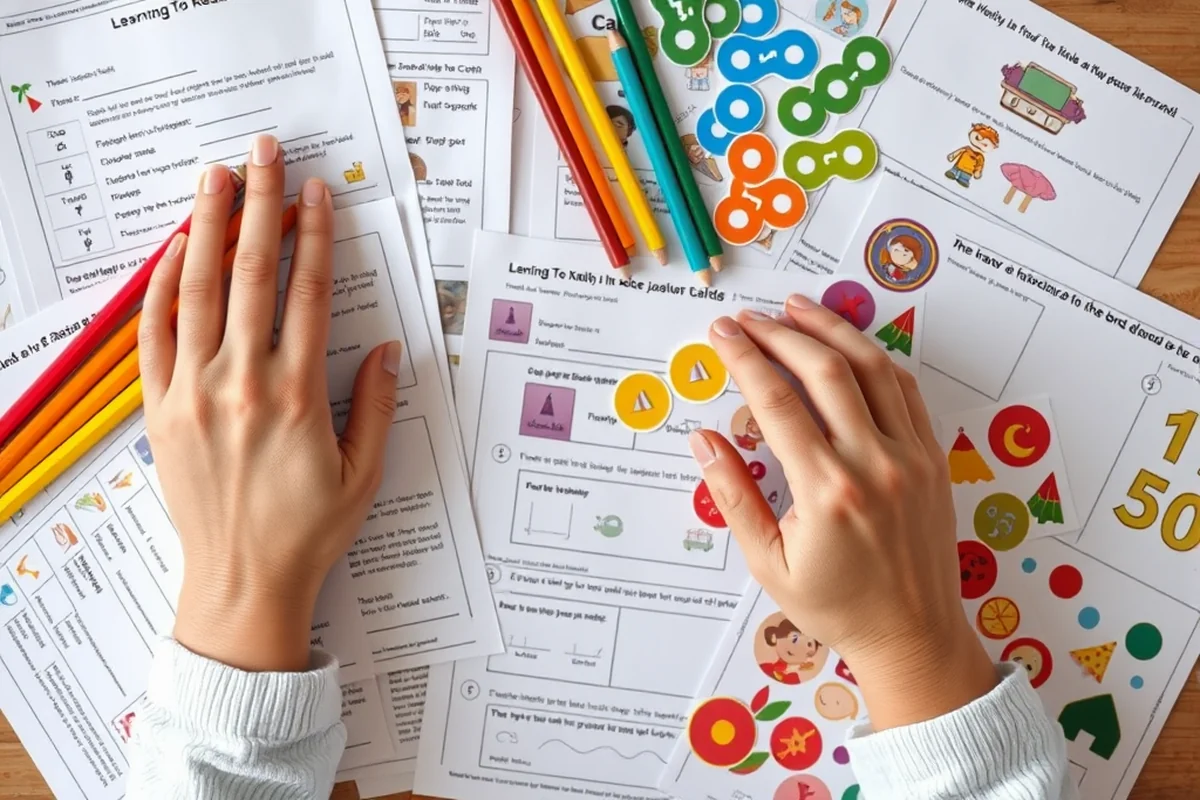
Creating a consistent reading routine was one of the most important steps in my daughter's learning journey. We set aside a specific time each day for reading, and we made it a non-negotiable part of our schedule. This helped her understand that reading was an important activity that we both valued.
I also made sure to offer plenty of encouragement and praise. When my daughter made progress, I celebrated it with words and small rewards, like a sticker or a special treat. This helped build her confidence and motivation to keep learning.
Another key aspect of supporting your child's development is being patient. Learning to read takes time, and it's important to remember that every child learns at their own pace. If your child is struggling with a concept, don't push too hard — take a break and come back to it later with a fresh perspective.
Related: Teaching reading grade 2
What Are Some Common Challenges in Learning to Read?
I faced several challenges with my daughter as we worked on learning to read. One of the biggest was her difficulty with phonics — especially the sounds that are harder to pronounce, like the 'th' sound. She would get frustrated and sometimes refuse to try, which was heartbreaking to see.
Another challenge was keeping her motivated. There were days when she would sit with her books and just stare at the pages, not making any progress. I had to find ways to keep the activities fun and engaging, even on the hardest days.
Fear of failure was also a challenge for her. She would sometimes worry that she was doing something wrong or that she wasn't as good at reading as other children. I worked hard to build her confidence by celebrating even the smallest victories and reminding her that learning is a process.
Related: Teaching reading topics
How Can I Help My Child Overcome These Challenges?
Patience is essential when helping your child overcome reading challenges. I learned that pushing too hard could make things worse — it's important to let your child take their time and not feel pressured.
Creativity is also important. I started using different types of materials to help her learn — from flashcards to videos and interactive games. I found that when she was engaged with the activity, she was more likely to make progress.
Encouragement is the final piece of the puzzle. I made sure to praise her efforts, even when she didn't get everything right. This helped her build confidence and stay motivated, even on the hardest days.
Patience, creativity, and encouragement are the keys to helping your child overcome reading challenges.
Related: Teaching reading activities
What Are Some Signs That My Child Is Ready to Read?
I noticed several signs that my daughter was ready to read, and they helped me know when to start. One of the biggest signs was her ability to recognize letters. She would point at letters in books and tell me what they were, which showed she was beginning to understand their purpose.
Another sign was her understanding of sounds. She would start to make the sounds of letters and even try to blend them together to form simple words. This was a big step in her learning journey and showed that she was ready to move beyond just recognizing letters.
Finally, I noticed that she was showing a strong interest in books. She would ask me to read to her every day and even try to read on her own with simple books. This was the clearest sign that she was ready to take the next step in her reading development.
📚 Younger Kids (Ages 3-5)
Use picture books, letter tiles, and simple rhymes to build early reading skills.
📖 Older Kids (Ages 6-8)
Introduce chapter books, spelling games, and reading comprehension activities.
⏰ No-Prep Version
Use books you already have and spend time reading together — no extra materials needed.
👫 Group Version
Host a reading circle with other kids to practice reading together and share stories.
🎯 Extension Activity
Create a reading journal where your child can track their progress and write short stories.
| The mistake | Why it happens | The fix |
|---|---|---|
| Forcing your child to read too much at once. | Children can get overwhelmed if they are pushed too hard. This can lead to frustration and a loss of interest in reading. | Break reading sessions into short, manageable chunks and take frequent breaks. |
| Ignoring your child's learning style. | Every child learns differently, and ignoring their learning style can make it harder for them to grasp reading concepts. | Observe your child and adapt your teaching methods to their unique needs and preferences. |
| Not celebrating progress. | Children need encouragement and recognition for their efforts. Failing to celebrate progress can make them feel like their efforts are not valued. | Make sure to praise your child and celebrate even the smallest victories. |
| Using too many different materials at once. | Too many different materials can overwhelm your child and make it harder for them to focus on one concept at a time. | Use one or two materials at a time and introduce new ones gradually. |
Learning To Read
Common Questions
How long should I spend reading with my child each day?
Can I use technology to help my child learn to read?
What should I do if my child is struggling with phonics?
How can I make reading fun for my child?
References
- Ada Lovelace: The World's First Computer Programmer Who ... - NIST (nist.gov)
- Third Grade Reading Guarantee Family Resources | Ohio ... (education.ohio.gov)
- Early Literacy - Kentucky Department of Education (education.ky.gov)
- Increasing Reading Skills for Students With Intellectual Disabilities ... (azed.gov)
Cite this guide
Teaching Reading to Homeschoolers (2026). Learning To Read. https://homeschoolread.com/learning-to-read/
Feel free to cite or share this guide.
Reading Skills Checklist
Stage-filtered phonics and reading skills checklist for homeschool parents.
Open it free →