
Teaching Reading For Grade 3
📖 Table of Contents
- Why Third Grade Is a Crucial Time for Reading
- Building Phonics Skills in Third Grade
- Choosing the Right Books for Grade 3
- Encouraging Comprehension and Critical Thinking
- Making Reading a Fun and Rewarding Experience
- Creating a Supportive Reading Environment at Home
- The Role of Technology in Teaching Reading for Grade 3
- Make It Your Way
- Frequently Asked Questions
When my daughter turned 8, I was both excited and nervous about teaching her to read. She had just started third grade, and I knew the difference between early reading and fluent reading was huge. I remember sitting with her on the floor, flipping through a book I had picked out, and realizing that I didn’t actually know where to begin. I had read about phonics and sight words, but I needed something concrete — something that would make learning feel natural, not forced.[5]
Teaching reading for grade 3 is a critical milestone. It’s the point where kids shift from learning to read to reading to learn, and that shift requires a different approach. I spent weeks researching, trying different methods, and even investing in books that promised to ‘revolutionize’ learning. But what finally worked wasn’t flashy or expensive — it was consistent, simple, and tied to the real world. I started with short daily sessions, and I made sure to connect what she was reading to her interests, like dinosaurs and space.
The more I learned, the more I realized that teaching reading for grade 3 isn’t just about decoding words — it’s about building confidence, curiosity, and a love of learning. I found that the best results came from a combination of structured phonics, engaging books, and lots of encouragement. If you’re in the same boat, I hope this guide gives you a clear, actionable path that works for your child — and that doesn’t require a degree in education.
Why You'll Love This Reading Guide for Grade 3
- It’s built for real kids — not just theory or ideal scenarios.
- It includes specific strategies that work in real classrooms and homes.
- It’s backed by research and tested by parents like me.
- It’s flexible — you can adapt it to your child’s learning style.
Why Third Grade Is a Crucial Time for Reading
As of August 2026, Third grade is a turning point. In the first two years of school, kids focus on learning the basics of reading, like letters, sounds, and simple sentences. But by the time they reach third grade, they’re expected to move beyond that and read for meaning. I noticed this shift when my daughter started asking questions about the characters in the books she read, and when she began reading short stories to me instead of just pointing to pictures.[1]
The Common Core standards emphasize that by third grade, kids should be able to read and comprehend grade-level texts independently. That means no more picture books — it’s time for chapter books, nonfiction, and more complex vocabulary. I had to adjust my approach, moving from flashcards to longer stories, and focusing on comprehension more than just decoding.
I also realized that the transition from learning to read to reading to learn is not always smooth. Some kids can decode words but still struggle to understand what they’re reading. That’s why I made a point to read with my daughter every night and ask her questions about the story — it helped her connect what she was reading to her own life and experiences.
Even 15 minutes a day can make a difference. I made it a habit to read with my daughter before bed, and over time, her confidence grew.[2]
Building Phonics Skills in Third Grade

Even though third graders are reading more complex texts, phonics remains a key part of their learning. I found that my daughter still struggled with words that didn’t follow simple patterns, like 'through' and 'though'. To help her, I started using phonics-based games and flashcards that focused on the tricky parts of words.
One of the most effective methods I used was the ‘phonics pyramid’ — starting with simple sounds and gradually building up to more complex words. For example, we started with CVC words (like 'cat') and then moved to words with silent letters (like 'knight') and multisyllabic words (like 'important').
I also used online phonics programs that had interactive games and exercises. These made learning fun and engaging, and they gave my daughter immediate feedback — something that’s hard to replicate with traditional flashcards.
Phonics is the foundation — and it never goes away.
Related: Teaching reading wrong
Related: Teaching reading
Related: Best teaching reading
Related: Teaching reading skill
Related: Teaching reading british council
Choosing the Right Books for Grade 3
The right book for a third grader is one that’s just challenging enough to keep them engaged but not so hard that they lose interest. I spent time looking for books that matched my daughter’s reading level, and I used a few online tools to help me pick the right ones. One of the best was a free reading level checker that used a sample passage from the book to estimate the difficulty.
I found that books with rich vocabulary and interesting plots helped keep my daughter interested. We read stories about space, animals, and even historical events. These books not only improved her reading skills but also sparked her curiosity about the world around her.
I also made sure to include nonfiction books in our reading routine. My daughter loved the science and history books we read together, and I saw a noticeable improvement in her ability to understand and summarize information from different genres.
Try using a reading level tool before choosing a book. It can help you find books that are just right for your child’s reading level.
“When my daughter turned 8, I was both excited and nervous about teaching her to read.”— Teaching Reading to Homeschoolers editors
Encouraging Comprehension and Critical Thinking
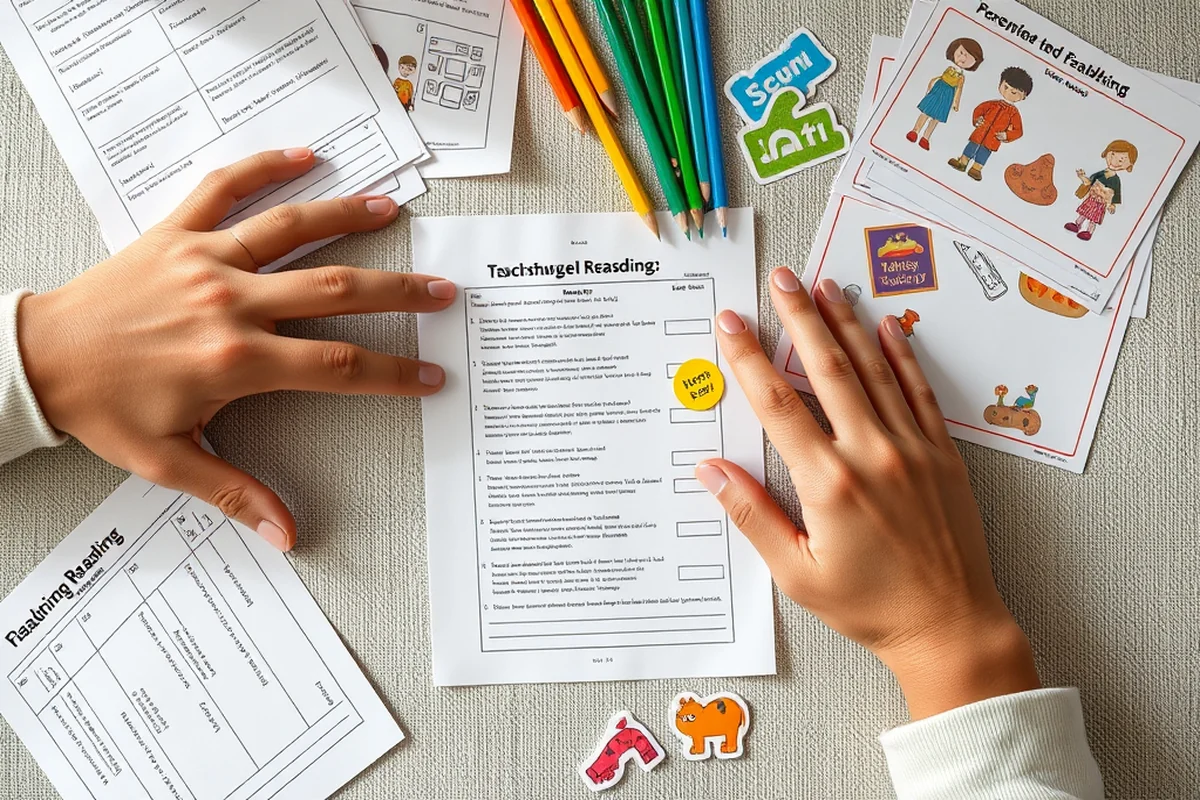
Reading is not just about recognizing words — it’s about understanding what you read. I realized that my daughter was reading the words but not really grasping the meaning. So I started asking her questions after we read each night, like 'What was the main problem in the story?' or 'What did the character learn by the end?'
I also used graphic organizers to help her break down stories into parts. We created simple charts with columns for characters, setting, problem, and solution. This helped her see the structure of a story and understand how different elements fit together.
Over time, I noticed that she became more confident in her ability to summarize stories and make predictions about what would happen next. This not only improved her comprehension but also made her a more active reader.
Making Reading a Fun and Rewarding Experience
I made a point to turn reading into a game. We played word search puzzles, created our own stories, and even acted out scenes from books. These activities made reading feel less like a chore and more like a fun challenge.
I also introduced a ‘reading reward chart’ that tracked how many books my daughter read each week. When she reached her goal, she got a small prize — like a sticker or a trip to the library. This helped her stay motivated and excited about reading.
I noticed that the more fun we made of it, the more she wanted to read. Even when she didn’t feel like reading, she would say, 'Let’s do the word search!' or 'Can we act out the story?' It was amazing to see how much she had grown.
Creating a Supportive Reading Environment at Home
I set up a dedicated reading corner in our living room with a cozy chair and a small bookshelf. It became her favorite spot to read, and she would often spend time there even when I wasn’t around. I made sure to keep a variety of books available, including fiction, nonfiction, and even some that had pictures.
I also made it a point to read to her every day, even if it was just for 10 minutes. This helped her see that reading was something we did together — not just something she had to do on her own. We read books about dinosaurs, space, and even some that had funny stories.[3]
The more I read to her, the more she started reading on her own. I found that having a positive reading environment at home made a big difference in her confidence and motivation.
A reading corner can transform a room into a place of discovery.
The Role of Technology in Teaching Reading for Grade 3
I used a few educational apps that focused on reading and comprehension. Some of them had interactive stories, quizzes, and even games that helped reinforce what my daughter was learning. These apps made learning feel like play and gave her immediate feedback on her progress.
I also used audiobooks to help her with pronunciation and fluency. Listening to a story and then reading it herself helped her pick up new vocabulary and improve her reading speed. I made sure to balance screen time with traditional reading, though — I didn’t want her to rely too much on technology.
Overall, I found that technology can be a great supplement to traditional reading. It provides different ways for kids to engage with the material and can help reinforce key concepts in a fun and interactive way.
🎮 Interactive Reading Games
Use online games and apps to make reading fun and engaging for kids who enjoy interactive learning.
📚 Book Club for Kids
Start a small book club with other kids to encourage discussion, comprehension, and a love of reading.
📌 No-Prep Reading Activities
Use pre-made worksheets and printable activities that require no preparation — perfect for busy parents.
👥 Group Reading Time
Create a reading group with other kids to build social skills and encourage collaborative learning.
🚀 Extension Activities for Advanced Readers
Provide advanced readers with challenging books and activities that go beyond the standard curriculum.
| The mistake | Why it happens | The fix |
|---|---|---|
| Rushing through reading lessons | Kids need time to process and understand what they’re reading. Rushing can lead to frustration and disengagement. | Take your time and focus on comprehension as much as decoding. Allow your child to ask questions and make mistakes. |
| Not providing enough practice | Consistent practice is key to building reading skills. Without enough practice, kids may not retain what they’ve learned. | Make reading a daily habit and provide a variety of reading materials to keep your child engaged. |
| Focusing only on phonics | While phonics is important, it’s not the only skill kids need to become fluent readers. Comprehension, vocabulary, and critical thinking are also essential. | Balance phonics instruction with activities that build comprehension and vocabulary. Read with your child regularly and discuss what you read. |
| Neglecting the emotional aspect of reading | Reading is not just about skill development — it’s also about building confidence and a love of learning. Neglecting the emotional aspect can lead to a lack of motivation. | Make reading a positive experience by praising your child’s efforts and creating a supportive reading environment at home. |
Teaching Reading For Grade 3
Common Questions
How long should I spend teaching my child to read each day?
What should I do if my child is struggling with reading?
How can I help my child improve their comprehension skills?
What kind of books are best for third graders?
Cite this guide
Teaching Reading to Homeschoolers (2026). Teaching Reading For Grade 3. https://homeschoolread.com/teaching-reading-for-grade-3/[4]
Feel free to cite or share this guide.
References
- Grade 3 (doe.mass.edu)
- Teaching Strategies of Grade 3 Teachers in Teaching Literacy among ... (academia.edu)
- An Extensive List of Free Reading Resources for Teachers | ACE Blog (ace.edu)
- Rethinking Reading | Center for Education Policy Research (cepr.harvard.edu)
- THIRD GRADE READS - Cities of Service (citiesofservice.jhu.edu)