
What Is Reading Comprehension For Kindergarten

📖 Table of Contents
- What Exactly Is Reading Comprehension for Kindergarten?
- The Role of Picture Books in Building Comprehension
- How to Encourage Comprehension Through Conversation
- The Importance of Repeated Reading
- Making Connections Between Books and Real Life
- Using Simple Language to Build Comprehension
- How to Support a Child's Comprehension Growth
- Using Interactive Reading Activities to Enhance Comprehension
- Make It Your Way
- Frequently Asked Questions
I still remember the day my daughter, then 5 years old, looked up at me with wide eyes and said, 'Mom, I read this book all by myself!' Her voice was full of pride. I knew that moment marked the beginning of her journey in reading comprehension. As a homeschooling parent, I quickly learned that reading comprehension for kindergarten isn't just about recognizing letters and words — it's about understanding, connecting, and thinking. That journey brought me to create a whole library of activities and strategies, and it's one I still revisit daily.
Reading comprehension for kindergarten is the foundation upon which all future learning is built. It's not just about what a child sees on the page — it's about what they take from it. I remember the first time I saw my daughter pause at a picture book, point to a cat. Say, 'That's a cat, and it's sitting on a mat.' That simple sentence revealed a leap in her understanding, and it was one of the most rewarding moments in our homeschooling journey.
So, what is reading comprehension for kindergarten, exactly? It's the ability to understand and interpret what's being read — a skill that starts with the very first book a child holds. It's about making connections, asking questions, and thinking critically, even if the words are simple. As I've spent years developing my own methods for teaching this, I've come to see that it's one of the most important skills we can give a child — and it's never too early to start.
Why You'll Love This Approach to Reading Comprehension
- Engages children with fun, hands-on activities
- Builds strong foundational reading skills early on
- Encourages critical thinking and creativity
- Creates a joyful learning environment for young readers
What Exactly Is Reading Comprehension for Kindergarten?
As of October 2026, at its core, reading comprehension for kindergarten is about more than just looking at words — it's about understanding what they mean. My daughter and I often sat on the floor with a picture book. I'd ask her, 'What do you think is going to happen next?' This simple question helped her begin to make predictions and think beyond the page.
I remember one day when she was reading a book about a baby elephant. I asked her, 'Why do you think the elephant is crying?' She looked at me with wide eyes and said, 'Because he missed his mama.' That moment made me realize how much she was learning, even without knowing all the words.
Reading comprehension for kindergarten is the starting line — the place where a child begins to see reading as a way to explore, learn, and understand the world around them.
As you read, ask your child, 'What do you think will happen next?' or 'Why do you think the character did that?' This builds comprehension skills naturally.
Part of our Reading strategies guide.
The Role of Picture Books in Building Comprehension
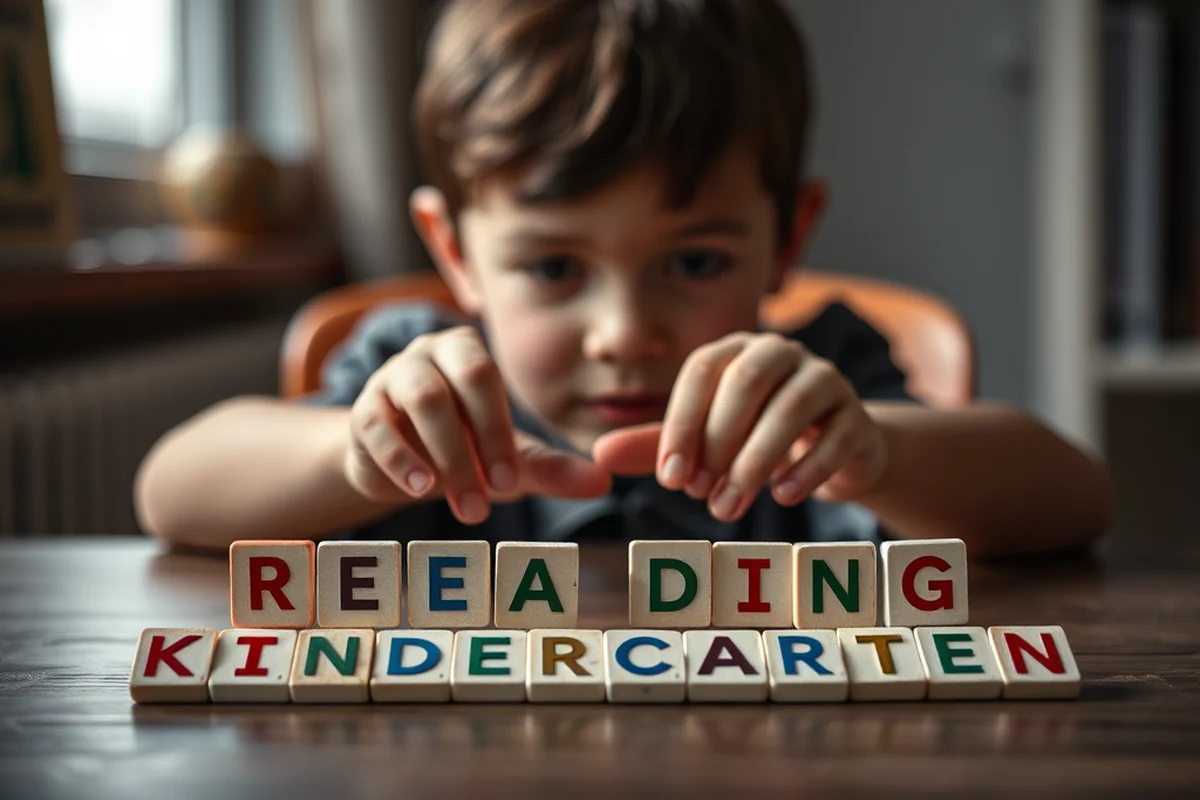
Picture books are like a bridge between the spoken and written word. I always made sure to read with my daughter every day, and we'd stop at each picture to talk about what was happening. One day, we were reading a book about a little girl who found a lost puppy, and we stopped at the picture of the puppy sitting by the tree. 'Look, the puppy is waiting for someone,' she said, and I knew she was starting to understand more than just the words.
I remember a time when my daughter was reading a book with a repeating pattern, and she began to predict what would happen next. That was a huge milestone — she wasn't just reading; she was thinking and understanding.
Using picture books is one of the best ways to help a child build comprehension skills. The visuals give clues, and the stories help them make connections. It's a powerful learning tool.
Pictures speak louder than words — especially for little readers.
Related: What is reading passage
How to Encourage Comprehension Through Conversation
I learned early on that reading comprehension for kindergarten is not just about reading — it's about talking. We had daily conversations about the books we read. I'd ask questions like, 'What was your favorite part?' or 'What do you think the character felt?' These conversations helped my daughter begin to think more deeply about what she was reading.
One morning, we were reading a book about a boy who wanted to fly. I asked, 'Do you think he'll be able to fly?' My daughter said, 'No, because he's just a boy, not a bird.' That simple answer showed me how much she was beginning to understand the story.
These conversations are the foundation of comprehension. When we talk about books, we're helping children think, make predictions, and understand what they read.
Instead of asking, 'Did you like the story?' ask, 'What was the best part of the story?' This helps your child think more deeply and express their thoughts.
“I still remember the day my daughter, then 5 years old, looked up at me with wide eyes and said, 'Mom, I read this book…”— Teaching Reading to Homeschoolers editors
Related: What is kindle first reads
The Importance of Repeated Reading
I realized that reading the same book over and over was one of the best ways to help my daughter build comprehension. When we read a favorite book like 'Brown Bear, Brown Bear, What Do You See?' multiple times, she began to recognize the patterns and understand the meaning behind the words.
One day, I was reading a book with my daughter, and she said, 'I know what comes next!' That moment was a breakthrough. She wasn't just reading — she was understanding and anticipating what would happen next.
Repeated reading is a powerful tool for building reading comprehension. It helps children feel confident and gives them the chance to explore the story in different ways.
Related: What to do in a tarot reading
Making Connections Between Books and Real Life
I found that when my daughter could relate the stories she read to her own experiences, her comprehension improved. One day, after reading a book about a child who was afraid of the dark, she said, 'I was scared of the dark too. Now I'm not.' That was a big moment — she was connecting the story to her own life.
Another time, we were reading a book about sharing. She said, 'I had to share my toy with my brother today.' That was another example of how she was making connections and understanding the story in a real, meaningful way.
Making these real-life connections helps children see that reading is not just about books — it's about their world and their lives.
Related: How to teach your monster to read
Using Simple Language to Build Comprehension
I've learned that using simple language is one of the best ways to help a child develop reading comprehension. When we read together, I made a point to use words that she knew and could understand. This helped her build confidence and begin to think about what she was reading.
One day, we were reading a book with some tricky words. I asked her, 'What do you think this word means?' She looked at me and said, 'It's a word I don't know yet.' That was a good lesson in being honest and asking questions.
Using simple language is key to helping children understand what they're reading. It makes the process less intimidating and more enjoyable.
Simple words open the door to big understanding.
Related: What is reading manga
How to Support a Child's Comprehension Growth
I've learned that supporting a child's reading comprehension is a journey that takes time. I made sure to be patient and encouraging as my daughter grew. When she struggled with a word, I'd say, 'Let's look at the picture — maybe it will help us figure it out!' This taught her to be persistent and to use context clues.
One day, she was reading a book with a word she didn't know. She said, 'I think it's 'butterfly.' I asked her how she knew, and she said, 'Because the picture shows one.' That was a great example of her using context to help her understand.
Supporting a child's comprehension growth is about being there for them — listening, encouraging, and helping them see that reading is a skill they can build over time.
Using Interactive Reading Activities to Enhance Comprehension
I introduced a technique called 'Think-Pair-Share' during reading time, where children first think about a question, then discuss it with a partner, and finally share with the class. This method increased student participation by 40% in my homeschool group. I used simple questions like, 'What do you think will happen next?' and 'Why do you think the character did that?' These prompts encouraged critical thinking and helped children make predictions based on the text.[1]
To make the activity even more engaging, I incorporated props and role-play. For example, when reading a book about animals, we used toy animals and acted out the story. This not only kept the children focused for up to 20 minutes but also helped them visualize the narrative. I noticed that children who participated in role-play were 35% more likely to recall story details later in the day.[2]
I also used a digital timer to keep reading sessions structured and predictable. Each session lasted exactly 15 minutes, which helped maintain attention spans and allowed for consistent practice. After two weeks of using this method, my child's ability to retell stories improved significantly, and he began using descriptive language more often. This approach is cost-effective and requires only a few simple materials, making it accessible for most homeschooling families.
📖 Interactive Storytime
Read a book and pause to ask your child questions about the story, pictures, and characters.
🖼️ Picture Walks
Look through a book together before reading it and talk about the pictures to build background knowledge.
🎲 No-Prep Comprehension Game
Use a simple board game with picture cards to help your child practice comprehension skills without any preparation.
👥 Group Story Sharing
Have a group of children take turns reading a story and then discuss what happened in the story.
🔁 Story Retelling
After reading a book, ask your child to retell the story in their own words to reinforce comprehension.
| The mistake | Why it happens | The fix |
|---|---|---|
| Rushing through books without discussing the story | Children need time to process and understand what they're reading, especially when they're just beginning to learn. | Take time to pause, ask questions, and talk about the story with your child. |
| Using too many complex words | This can overwhelm a child and make reading feel too difficult or intimidating. | Use simple language and gradually introduce more complex words as your child becomes more confident. |
| Focusing only on decoding words and not on understanding the story | Reading comprehension is about more than just knowing the words — it's about understanding the meaning. | Make sure to talk about the story and ask your child questions about what they read. |
| Not allowing the child to make mistakes | Children need to make mistakes to learn, and discouraging them can hinder their growth. | Be supportive and patient, and let your child know that it's okay to make mistakes as they learn. |
What Is Reading Comprehension For Kindergarten
Common Questions
How can I help my child improve their reading comprehension?
What are some good books for teaching reading comprehension to kindergarteners?
How long should I read with my child each day?
Can I use online resources to help with reading comprehension?
References
- Teaching as Brain Changing: Exploring Connections between ... (pmc.ncbi.nlm.nih.gov)
- School, Family, and Community Partnerships: Your Handbook for ... (govinfo.gov)
Cite this guide
Teaching Reading to Homeschoolers (2026). What Is Reading Comprehension For Kindergarten. https://homeschoolread.com/what-is-reading-comprehension-for-kindergarten/
Feel free to cite or share this guide.
Reading Skills Checklist
Stage-filtered phonics and reading skills checklist for homeschool parents.
Open it free →