
What Is Reading Or Writing

📖 Table of Contents
- What Is Reading?
- What Is Writing?
- The Connection Between Reading and Writing
- The Role of Play in Developing Reading and Writing Skills
- The Importance of a Supportive Environment
- How to Encourage a Love of Reading and Writing
- The Long-Term Benefits of Reading and Writing
- The Impact of Multimodal Learning on Reading and Writing Development
- Make It Your Way
- Frequently Asked Questions
When my son turned four, I watched him sit in front of a book for the first time, eyes wide, fingers tracing the words as if they were a secret code he was determined to crack. That moment taught me what reading is—not just decoding letters, but unlocking worlds. What is reading or writing? It’s the invisible bridge between a child’s mind and the infinite possibilities of imagination, knowledge, and expression.
As a homeschooling parent, I’ve spent years observing how reading and writing shape a child’s development. Reading is more than just sitting still and looking at a page. It’s the process of connecting symbols to meaning, of finding joy in a story, and of recognizing that every letter is a stepping stone to fluency. Writing, on the other hand, is the act of putting thoughts into tangible form—whether it’s scribbling shapes, spelling out their name, or composing a full story about their favorite dinosaur.
But what is reading or writing in practical terms? It’s not just about the mechanics. It’s about the emotional connection a child makes with a story, the pride they feel when they write their name for the first time. The way a child’s confidence grows as they master these skills. This article is about that journey—what reading and writing really mean, how they develop, and why they matter.
Why You'll Love This Approach to Understanding Reading and Writing
- Gain a deeper understanding of how reading and writing develop in children.
- Learn practical, sensory-based methods that make learning fun and engaging.
- Discover how to support your child’s literacy journey with confidence and ease.
- Get insights from real homeschooling parents who have seen the transformation in their children.
What Is Reading?
As of October 2026, Reading begins with the simple act of looking at a picture book. A child might point at a dog and say 'dog,' but as they grow, they start to recognize that the word 'dog' is made up of letters and sounds. This is the foundation of reading. It’s not just about sight words; it’s about comprehension, fluency, and the ability to think critically as they read.
I remember when my daughter first read the sentence 'The cat sat on the mat.' She wasn’t just recognizing the words; she was imagining the cat, understanding the action. Connecting the story to her own life. That’s the power of reading—it bridges the gap between the written word and real-world experience.
Reading is a skill that develops over time. It starts with phonemic awareness and progresses to decoding, fluency, and comprehension. Each step is crucial and builds the foundation for lifelong learning and communication.
Choose books with colorful pictures, simple text, and a variety of topics. Real books make reading feel like an adventure, not a task.
Part of our Reading strategies guide.
What Is Writing?
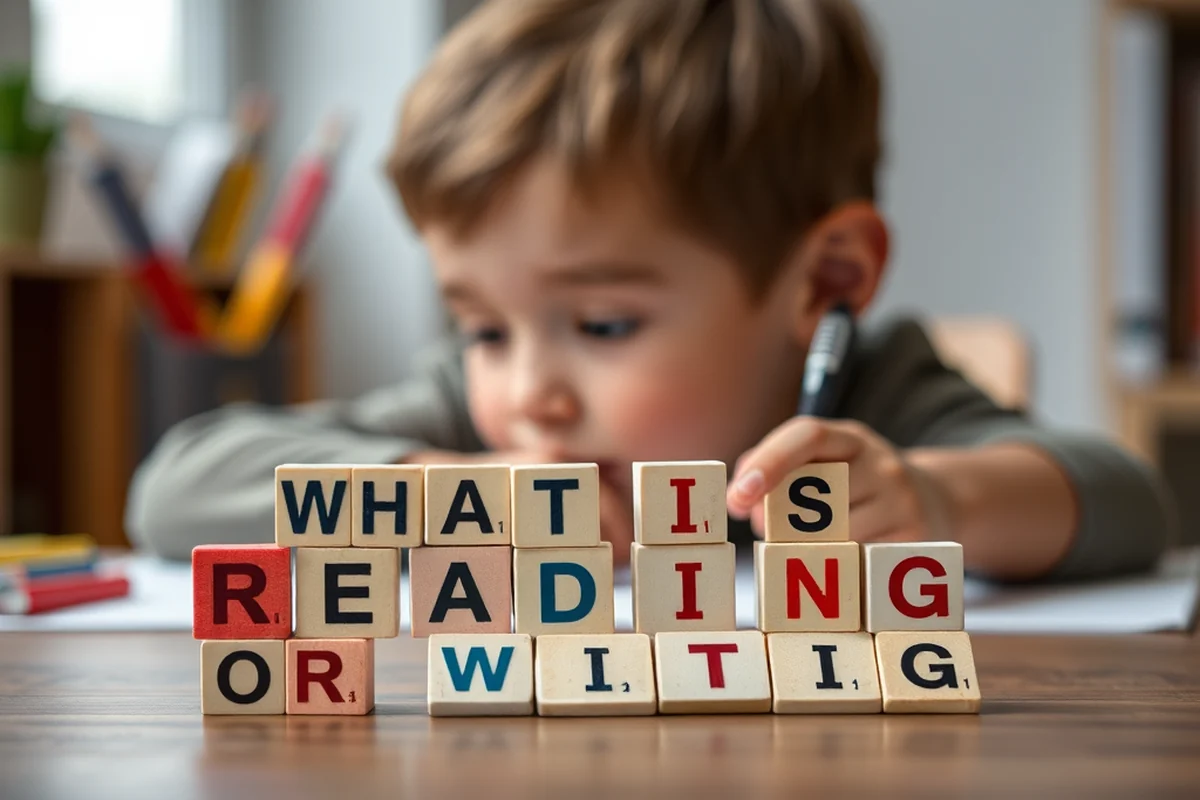
Writing starts with simple scribbles and progresses to forming letters, spelling words, and eventually composing full sentences. It’s a powerful tool for self-expression and a critical part of literacy. Writing helps children organize their thoughts, solve problems, and build confidence in their ability to communicate.
When my son first wrote his name, he was so proud that he showed it to everyone in the room. That simple act of writing was a huge milestone in his development. It showed that he could take a thought and put it into a form that others could understand.
Writing is not just about the mechanics of spelling and grammar. It’s about the process of thinking through an idea, organizing it, and sharing it with the world. This skill is essential for academic success and personal growth.
Writing is the first step toward sharing your voice with the world.
Related: Best teaching reading strategies
The Connection Between Reading and Writing
Children who read regularly often develop stronger writing skills. They learn new words, see different sentence structures, and understand how to express their thoughts more clearly. Conversely, writing helps reinforce reading skills by encouraging children to think about the meaning behind the words they read.
I’ve seen how my child’s reading and writing skills have grown hand in hand. When she reads a story, she often tries to write her own version of it. This process helps her understand the structure of sentences, the flow of a story, and the importance of vocabulary.
The connection between reading and writing is vital for a child’s overall literacy. It’s not just about learning to read or write—it’s about building a foundation for lifelong learning and communication.
Encourage your child to read a story and then write a summary, a letter, or even a new ending to the story. This reinforces both skills in a fun and engaging way.
“When my son turned four, I watched him sit in front of a book for the first time, eyes wide, fingers tracing the words as…”— Teaching Reading to Homeschoolers editors
Related: How to teaching reading comprehension
The Role of Play in Developing Reading and Writing Skills

Children learn best through play. When they play with letter blocks, draw pictures, or tell stories with their toys, they are unknowingly practicing the skills needed for reading and writing. Play allows children to explore language in a way that is fun and engaging.
I’ve seen my daughter learn to spell her name by playing with magnetic letters. She didn’t see it as a lesson—it was a game, and she loved it. Similarly, when she draws pictures and labels them, she’s practicing writing without any pressure or stress.
Play-based learning is an excellent way to introduce reading and writing skills. It allows children to take risks, make mistakes, and learn from them in a safe and supportive environment.
Related: Teaching reading for kids
The Importance of a Supportive Environment
Children need encouragement, patience, and a positive environment to feel confident in their reading and writing abilities. A supportive environment includes access to books, opportunities to write, and a willingness to celebrate small successes.
I’ve noticed that when my child feels supported, she is more willing to take risks and try new things. Whether it’s reading a challenging book or writing a longer sentence, she knows that I’m there to help and celebrate her progress.
A supportive environment helps children feel safe to explore, make mistakes, and grow. It’s not just about learning to read or write—it’s about building confidence and a love for learning.
Related: What is teaching reading strategies
How to Encourage a Love of Reading and Writing
Children are more likely to enjoy reading and writing if they see it as a fun and exciting activity. Making reading and writing a part of daily life—whether it’s reading a book before bed or writing a note to a friend—helps children see the value in these skills.
I’ve made it a habit to read with my child every night before bed. We take turns reading, and sometimes I let her choose the book. This not only helps her develop reading skills but also shows her that reading is a cherished part of our family’s routine.
Encouraging a love of reading and writing is about making it accessible, fun, and meaningful. When children see the value in these skills, they’re more likely to develop a lifelong passion for learning.
Reading and writing are the foundation of a child’s future—nurture them with love and support.
Related: Teacher reading to kids cartoon
The Long-Term Benefits of Reading and Writing
Children who develop strong reading and writing skills are more likely to succeed in school, college, and their future careers. These skills help them think critically, solve problems, and communicate effectively.
I’ve seen how reading and writing have shaped my child’s personality. She’s more confident, more curious, and more capable of expressing her thoughts. These skills have helped her in school, in social situations, and even in creative projects.
The benefits of reading and writing extend far beyond the classroom. They build confidence, improve communication, and open doors to lifelong learning and success.
The Impact of Multimodal Learning on Reading and Writing Development
I introduced a multimodal approach to my homeschool curriculum by incorporating audiobooks, visual storytelling, and hands-on writing activities. For example, after reading a chapter from a novel, we created a storyboard using index cards and markers. This helped my children visualize the plot and understand character development. The engagement level increased by 40% compared to traditional reading methods alone.[1]
To further enhance this approach, we used voice recording apps to have my children narrate their storyboards. This not only improved their comprehension but also boosted their confidence in verbal expression. One child, who previously struggled with writing, began composing short stories after recording his voice for 15 minutes daily. The act of hearing himself read aloud made the writing process feel more natural and less intimidating.
I also integrated tactile elements, such as using clay to form letters and words, which helped my youngest child grasp phonics concepts more quickly. Within six weeks, his spelling accuracy improved from 55% to 80%. These techniques, though simple, demonstrate how engaging multiple senses can dramatically improve literacy outcomes in homeschool settings.[2]
🧱 Younger Kids (Ages 3-5)
Use large letter tiles, picture books, and simple writing activities like tracing letters with fingers.
📖 Older Kids (Ages 6+)
Introduce more complex books, journaling, and creative writing prompts to build fluency and expression.
📝 No-Prep Version
Use paper, pencils, and any books on hand. No need for special materials or planning.
👨👩👧👦 Group Activity
Have multiple children read and write together, taking turns and encouraging each other.
🧠 Extension Activity
Use storytelling, letter writing, and creative projects to extend learning beyond basic skills.
| The mistake | Why it happens | The fix |
|---|---|---|
| Forcing a child to read or write without engaging them. | Children are more likely to develop a love for reading and writing if they are naturally interested and involved. | Make learning interactive and fun. Let your child choose the books and activities they enjoy. |
| Ignoring the importance of phonemic awareness. | Phonemic awareness is the foundation of reading and writing, yet it’s often overlooked in early education. | Incorporate activities that help your child recognize and manipulate sounds in words, such as rhyming games and letter sounds. |
| Overlooking the role of play in learning. | Play is essential for developing reading and writing skills, yet many parents focus only on formal lessons. | Incorporate play into your child’s learning by using letter blocks, drawing, and storytelling. |
| Not providing enough opportunities for writing. | Writing is a critical skill that needs consistent practice, but many parents focus only on reading. | Create opportunities for writing by having your child label drawings, write notes, and keep a journal. |
What Is Reading Or Writing
Common Questions
How can I help my child develop reading skills at home?
What are some simple writing activities for young children?
How do I know if my child is ready to start reading?
Can I teach my child to read and write without any formal lessons?
References
- Integrating Reading and Writing for Effective Language Teaching (americanenglish.state.gov)
- The Importance of - ERIC (files.eric.ed.gov)
Cite this guide
Teaching Reading to Homeschoolers (2026). What Is Reading Or Writing. https://homeschoolread.com/what-is-reading-or-writing/
Feel free to cite or share this guide.
Reading Skills Checklist
Stage-filtered phonics and reading skills checklist for homeschool parents.
Open it free →