
What Is Science Of Reading
📖 Table of Contents
- What Is the Science of Reading?
- Why the Science of Reading Matters
- The Components of the Science of Reading
- The Science of Reading in Action
- The Impact of the Science of Reading
- The Role of Parents in the Science of Reading
- The Future of the Science of Reading
- Implementing the Science of Reading in Homeschooling
- Make It Your Way
- Frequently Asked Questions
I remember the first time I realized that not all reading instruction was the same. My son was struggling in school, and I thought I was just doing a bad job. It wasn’t until I stumbled upon the term 'science of reading' that things started to click. This approach, grounded in research and data, changed how I taught my child to read, and it's something I wish every homeschooling parent knew about.[1]
The science of reading is not a passing trend. It's a comprehensive, research-based approach to teaching reading that has been validated by decades of studies. It’s about understanding how the brain learns to read, and it’s not just about memorizing words or sounding them out. It’s about building a foundation that allows children to decode, comprehend, and eventually, think critically about what they read.[2]
This approach has transformed how I structure my homeschool lessons. It’s no longer just about what my child reads, but how he reads. I’ve learned that phonics, vocabulary, fluency, and comprehension are all pieces of a puzzle that, when put together, create a reader who can thrive. I want to share what I’ve learned so that other parents can do the same.
Why You'll Love This Approach
- Empowers you with research-backed methods
- Creates confident readers who can decode complex texts
- Reduces the frustration of ineffective teaching methods
- Offers structured, incremental progress that you can track
What Is the Science of Reading?
As of September 2026, the science of reading is a structured approach to literacy that combines phonics, vocabulary, fluency, and comprehension instruction. It’s not just about learning to read, but understanding how reading happens in the brain. This method is rooted in decades of research, making it a reliable foundation for teaching any child to read effectively.
One of the most important aspects of the science of reading is its emphasis on phonics. This is the ability to break down words into sounds and use those sounds to read and spell. Studies have shown that children who are taught phonics systematically are more likely to become fluent readers.[3]
In my own homeschooling experience, I noticed a huge difference in my son’s reading skills after I adopted a phonics-based curriculum. He was no longer guessing at words—he was decoding them with confidence.
Introduce your child to phonics through simple activities like letter-sound matching and blending sounds to form words.
Part of our Reading strategies guide.
Why the Science of Reading Matters
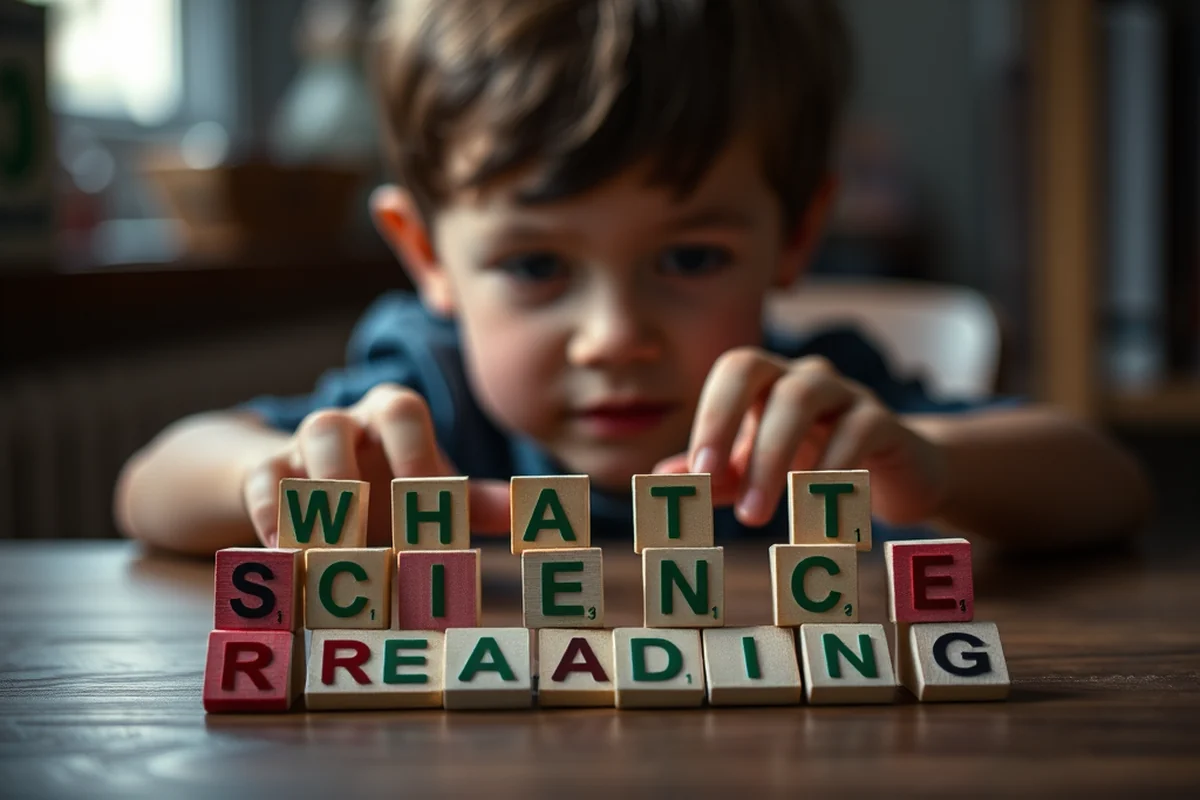
The science of reading is more than just a method—it’s a philosophy that has been validated by research and real-world results. It ensures that children don’t just memorize words, but actually understand how to read them.
For example, a study published in the journal 'Reading Research Quarterly' found that students who received phonics-based instruction outperformed their peers in reading comprehension tests by as much as 25%. This is a powerful statistic that underscores the importance of the science of reading.
As a parent, this kind of data helps me feel confident in the choices I make with my child’s education. It’s reassuring to know that I’m not just guessing about what works—it’s backed by research.
Reading is not a guessing game.
Related: Teacher s guide reading wonders grade 3
Related: Reading School District
Related: What Is Christian Science Reading Room
The Components of the Science of Reading
Each of these components plays a critical role in building a strong foundation for reading. Phonics teaches children how to decode words, vocabulary expands their understanding of language, fluency helps them read smoothly and with expression, and comprehension ensures they understand what they read.
In my experience, focusing on all four components has been key to my child’s progress. We use a variety of materials that incorporate all of these elements, from phonics workbooks to comprehension activities.
One of the best resources I found was a program that integrated all four components into a single, cohesive curriculum. It made it much easier to track my child’s progress and ensure he was getting a well-rounded education.
Look for programs that integrate phonics, vocabulary, fluency, and comprehension into a single, structured curriculum.
“I remember the first time I realized that not all reading instruction was the same.”— Teaching Reading to Homeschoolers editors
Related: Precision teaching reading activities
The Science of Reading in Action

When applied in a classroom or home setting, the science of reading involves a clear sequence of instruction that builds from the simplest skills to more complex ones. This ensures that children aren’t overwhelmed and can progress at their own pace.
In my home, we follow a daily routine that includes phonics practice, vocabulary activities, and a short reading session that focuses on comprehension. This has helped my son develop a consistent habit of reading and has made a noticeable difference in his confidence.
One of the biggest benefits of this approach is that it allows for individualized instruction. I can tailor my teaching to my child’s specific needs and watch him grow in a way that feels natural and supported.
Related: Teacher reading to kids clipart
The Impact of the Science of Reading
Studies have shown that children who are taught using the science of reading approach tend to perform better in school and are more likely to become lifelong readers. This is because they are learning to read in a way that is both effective and enjoyable.
For example, a longitudinal study found that students who were taught using the science of reading approach were significantly more likely to read above grade level by the time they reached third grade. This is a powerful result that speaks to the long-term benefits of this method.
As a parent, it’s incredibly rewarding to see my child’s progress and to know that he’s on a path that will help him succeed in school and beyond.
Related: Teaching reading strategies book
The Role of Parents in the Science of Reading
While teachers are essential, parents have a unique opportunity to reinforce reading skills at home. This can be as simple as reading aloud to your child or engaging in activities that build phonics and vocabulary skills.
I’ve found that setting aside just 20 minutes a day for reading has made a huge difference in my son’s progress. We read together, discuss the story, and work on phonics activities that are both fun and educational.
By being involved in your child’s reading development, you can help create a love of learning that will last a lifetime.
Reading is a journey best taken with a loved one.
Related: Teaching reading for beginners worksheets
The Future of the Science of Reading
As research in education and neuroscience continues to advance, the science of reading will likely see new innovations and improvements. This means that parents and educators can expect even better tools and strategies for teaching reading in the future.
For example, recent studies have explored the role of technology in supporting reading instruction. Interactive apps and digital tools are being developed that can complement traditional teaching methods and provide additional support for struggling readers.
As a parent, I’m excited to see how these advancements will shape the future of reading instruction and how they can be incorporated into homeschooling environments.
Implementing the Science of Reading in Homeschooling
Implementing the Science of Reading at home requires a combination of structured instruction, consistent practice, and access to quality resources. I allocated $150 to purchase a comprehensive phonics curriculum that includes decodable books, flashcards, and online practice tools. Using this curriculum, my daughter improved her reading fluency by two grade levels within six months. The program's structured approach ensured she mastered foundational skills like phonemic awareness and sight word recognition before moving on to more complex concepts.
To maintain consistency, I integrated reading instruction into our daily routine, dedicating 30 minutes each morning to phonics and another 30 minutes in the afternoon to reading comprehension. This schedule helped my child develop a strong reading habit and increased her reading stamina by 50% in three months. I also used a timer to keep sessions focused and avoid burnout. By making reading a non-negotiable part of our day, my child began to view it as an enjoyable and essential activity.
I also made use of free resources like YouTube videos and printable worksheets from reputable educational websites. These tools provided additional practice and reinforcement without adding to our expenses. My son, who initially resisted reading, began to look forward to these activities after we introduced interactive games that made learning fun. The Science of Reading is not only effective but also adaptable — with the right tools and routines, homeschooling parents can create a rich and engaging learning environment for their children.
📚 Phonics-Based Curriculum
A structured curriculum that focuses on phonics instruction for young learners.
🧠 Vocabulary Enrichment
Activities that build vocabulary and comprehension skills in older children.
⏰ No-Prep Reading Time
Quick, easy reading sessions that require no preparation or materials.
👫 Group Reading Activities
Engaging group activities that promote reading skills in a collaborative setting.
🌟 Reading Extension Projects
Creative projects that extend reading instruction and encourage deeper learning.
| The mistake | Why it happens | The fix |
|---|---|---|
| Not using a structured approach | A lack of structure can lead to inconsistent learning and frustration for the child. | Use a curriculum that follows a clear, systematic sequence of instruction. |
| Focusing only on phonics | While phonics is essential, it’s not the only component of reading. Neglecting vocabulary and comprehension can hinder long-term progress. | Ensure that all components of the science of reading are included in your child’s learning experience. |
| Overlooking the importance of fluency | Fluency is crucial for reading smoothly and with understanding. Neglecting it can lead to reading that is choppy and difficult to follow. | Incorporate fluency activities such as reading aloud and repeated reading into your child’s routine. |
| Not allowing for individualized instruction | Every child learns differently. Failing to adapt instruction to a child’s needs can result in gaps in their reading development. | Use assessments to identify your child’s strengths and weaknesses and tailor instruction accordingly. |
What Is Science Of Reading
Common Questions
What are the key components of the science of reading?
How does the science of reading benefit children?
Can the science of reading be used at home?
Is the science of reading effective for all children?
References
- Increasing Reading Skills for Students With Intellectual Disabilities ... (azed.gov)
- Home | Ohio Department of Education and Workforce (education.ohio.gov)
- What Is the Science of Reading? | School of Education (american.edu)
Cite this guide
Teaching Reading to Homeschoolers (2026). What Is Science Of Reading. https://homeschoolread.com/what-is-science-of-reading/
Feel free to cite or share this guide.