
Science Of Teaching Reading

📖 Table of Contents
- The Brain's Role in Learning to Read
- Phonics: The Building Blocks of Reading
- Fluency: The Rhythm of Reading
- Vocabulary: The Breadth of Understanding
- Comprehension: The Goal of Reading
- Differentiated Instruction: Meeting Each Child Where They Are
- Assessment: Measuring Progress Along the Way
- Make It Your Way
- Frequently Asked Questions
When I first started homeschooling my son, I thought reading was simply about opening a book and pointing to words. I was wrong. It took me months of trial and error, and a few late-night Google searches, to realize that teaching reading is a science — not a guess. The science of teaching reading is about understanding how the brain processes language, what activities truly build foundational skills, and how to tailor those activities to each child's learning style. The more I learned, the more I saw that reading is not just about decoding letters, but about connecting them to meaning, emotion, and the world around us.[3]
I remember the day my son sat at the table with a book, reading a full sentence aloud for the first time. The way his eyes lit up, the way his voice filled the room with pride — it was magical. But what made that moment possible wasn't just practice. It was a combination of phonemic awareness, phonics, fluency, vocabulary, and comprehension — all the pillars of the science of teaching reading. These pillars form the foundation of every effective reading program, whether you're a parent, a teacher, or a homeschooling guide. Understanding these principles changed how I approached reading instruction forever.[4]
The science of teaching reading isn't just for educators. It's for anyone who wants to help a child learn to read with confidence, clarity, and joy. It's about looking beyond the pages of a book and into the way the brain works. It's about knowing that every child is different, and that the best reading instruction is tailored to their unique needs. Whether you're just starting out or you're looking for a refresher, the science of teaching reading has something valuable to offer — and it's time to dive in.
Why You'll Love This Approach
- It's backed by neuroscience and research, ensuring real progress.
- It's adaptable to different learning styles and ages.
- It transforms reading from a chore into a joyful, purposeful activity.
- It builds not just reading skills, but critical thinking and confidence.
The Brain's Role in Learning to Read
As of October 2026, Reading is not a passive activity. It's a dynamic process that involves multiple parts of the brain working together. The left hemisphere, particularly the occipital and temporal lobes, is responsible for decoding symbols and associating them with sounds. The right hemisphere helps with comprehension and context. When we teach reading using the science of teaching reading, we're essentially helping the brain wire itself for language and meaning.
Children with strong phonemic awareness — the ability to hear and manipulate sounds in words — are more likely to become fluent readers. Activities that emphasize sound discrimination, like rhyming games or segmenting words into syllables, activate these brain regions and promote neural connections. Over time, these connections become more efficient, making reading feel effortless.
I noticed this in my son when we began using phonics-based activities. Within weeks, he was able to decode simple words without hesitation. The science of teaching reading showed me that the brain doesn't just learn to read — it learns to read in a way that feels natural and intuitive.
Before introducing letters, spend time with your child focusing on sounds. Use clapping, tapping, and rhyming to build phonemic awareness.
Phonics: The Building Blocks of Reading
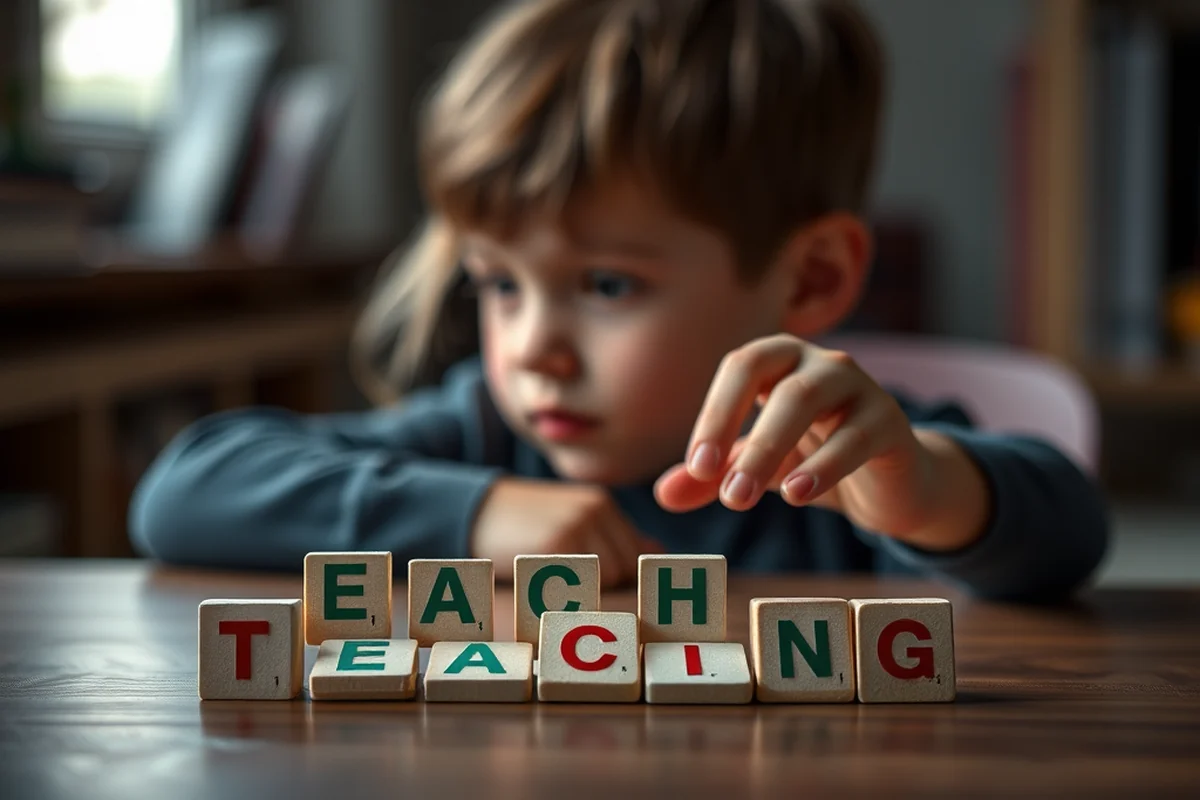
Phonics is one of the most critical components of the science of teaching reading. It teaches children how to break down words into sounds and how those sounds map to letters. This skill is essential for early readers, as it allows them to decode unfamiliar words independently.
Research from the National Literacy Trust shows that children who receive systematic phonics instruction are more likely to become fluent readers. Activities such as letter-sound matching, blending, and segmenting are effective ways to teach phonics. These activities are often paired with multisensory techniques, like tracing letters in sand or using magnetic letters to form words.[1]
I’ve seen phonics instruction transform my son’s reading abilities. He went from struggling with simple CVC words to reading short sentences with ease. The key was consistency and the use of phonics-based tools that made learning interactive and fun.
Phonics is the key to unlocking the door to reading.
Related: What is read books
Fluency: The Rhythm of Reading
Fluency is often overlooked but is a crucial part of the science of teaching reading. Fluent readers can recognize words quickly and effortlessly, allowing them to focus on the meaning of the text. This skill is developed through repeated reading, choral reading, and reading aloud with a model.
I remember reading to my son every night, and over time, he started reading along with me. His voice became more confident, and his reading became more expressive. This is fluency in action — and it's something that can be nurtured with daily practice and encouragement.
Fluency is not just about speed. It's about the rhythm and flow of reading. A child who reads fluently can read with expression, which helps with comprehension and engagement. It's the science of teaching reading in motion.
Set aside 10-15 minutes each day to read aloud to your child. This helps build fluency, vocabulary, and a love of reading.[2]
“When I first started homeschooling my son, I thought reading was simply about opening a book and pointing to words.”— Teaching Reading to Homeschoolers editors
Related: How to read books to kids
Vocabulary: The Breadth of Understanding

Vocabulary is the foundation of comprehension. Children who know more words can read more complex texts and understand them more deeply. Expanding vocabulary should be a regular part of the science of teaching reading, whether through direct instruction or exposure to rich language.
I've found that reading aloud to my son and discussing the meaning of new words has significantly boosted his vocabulary. When we come across a new word, we look it up together, discuss its meaning, and even act it out. This makes learning fun and engaging for both of us.
Expanding vocabulary doesn't have to be a formal activity. It can be as simple as talking, listening, and reading together. The more exposure a child has to rich language, the stronger their vocabulary becomes — and the more they can understand what they read.
Related: How to start with a book
Comprehension: The Goal of Reading
Comprehension is the ultimate goal of the science of teaching reading. It's not enough to be able to read the words — a reader must understand the meaning behind them. Comprehension involves making connections between the text and the reader's own experiences, predicting outcomes, and drawing conclusions.
I’ve found that asking my son questions about what he’s read has significantly improved his comprehension skills. When I ask him to explain a story in his own words or predict what will happen next, he's more engaged and more likely to understand what he reads.
Comprehension is a skill that can be taught and strengthened through practice. It involves active reading and thinking, which helps children become more confident and capable readers.
Related: What is books for baby
Differentiated Instruction: Meeting Each Child Where They Are
The science of teaching reading is not a one-size-fits-all approach. It recognizes that each child has unique learning styles, strengths, and challenges. Differentiated instruction tailors reading activities to meet each child’s individual needs, ensuring that no one is left behind.
I’ve had to adapt my teaching methods based on my son’s learning style. When he struggled with phonics, I used more hands-on activities and visual aids. When he became more confident, I introduced more complex texts and comprehension questions. This flexibility made a huge difference in his progress.
Differentiated instruction is a powerful tool in the science of teaching reading. It helps educators and parents create a learning environment that supports every child, no matter their starting point.
Every child is different — and so is their path to reading.
Related: What is bible study for kids
Assessment: Measuring Progress Along the Way
Assessment is a critical component of the science of teaching reading. It allows educators and parents to track a child’s progress and identify areas where they may need more support. Assessments can be informal, like asking a child to read aloud, or formal, like standardized reading tests.
I’ve found that regular informal assessments, such as having my son read aloud or answer comprehension questions, have helped me understand where he’s excelling and where he needs more practice. These assessments are not about grading — they’re about learning and growth.
Assessment is not just about measuring success. It’s about understanding where a child is and how to help them move forward. It’s an essential part of the science of teaching reading and a key to long-term success.
🗣️ Phonics-Based Activities for Younger Kids
Simple phonics games and activities that build foundational reading skills in children ages 3-6.
📚 Comprehension Challenges for Older Kids
Activities that promote deeper understanding of texts for children ages 7-10.
⏰ No-Prep Reading Time
Quick, no-prep activities that make reading a natural part of the day.
👥 Group Reading Games
Interactive group activities that make reading fun and engaging for multiple children.
🚀 Reading Extensions for Advanced Learners
Activities that challenge advanced readers with complex texts and critical thinking tasks.
| The mistake | Why it happens | The fix |
|---|---|---|
| Skipping phonics instruction in favor of whole language approaches. | Whole language approaches may not build the foundational decoding skills needed for reading fluency and success. | Incorporate systematic phonics instruction into your reading program to ensure a strong foundation. |
| Overlooking the importance of repeated reading for fluency. | Fluency is developed through practice, and skipping repeated reading can hinder a child's progress. | Set aside time each day for your child to read the same passage multiple times to build fluency and confidence. |
| Assuming that all children learn in the same way. | Children have different learning styles, and a one-size-fits-all approach may not be effective for every child. | Use differentiated instruction that tailors reading activities to your child's individual needs and learning style. |
| Neglecting assessment and progress tracking. | Assessment is essential for identifying a child's strengths and areas for improvement. | Use informal assessments like reading aloud and answering comprehension questions to track your child's progress regularly. |
Science Of Teaching Reading
Common Questions
How can I teach my child to read without expensive materials?
What's the best age to start teaching reading?
How can I make reading more engaging for my child?
What should I do if my child is struggling with reading?
References
- The Science of Reading for Non-Reading Teachers | ACE Blog (ace.edu)
- What Is the Science of Reading? | School of Education (american.edu)
- Welcome to the Science of Reading! | Department of Education (azed.gov)
- Dr. Kim Buechler Learning Specialist (boardsandcommissions.sd.gov)
Cite this guide
Teaching Reading to Homeschoolers (2026). Science Of Teaching Reading. https://homeschoolread.com/science-of-teaching-reading/
Feel free to cite or share this guide.
Reading Skills Checklist
Stage-filtered phonics and reading skills checklist for homeschool parents.
Open it free →