
What Is A School Memory Book

📖 Table of Contents
- What Exactly Is a School Memory Book?
- How a School Memory Book Benefits Learning
- What Goes Into a School Memory Book?
- How to Start a School Memory Book
- How Long Should a School Memory Book Be?
- How to Organize a School Memory Book
- How to Use a School Memory Book for Reflection
- Make It Your Way
- Frequently Asked Questions
I remember the first time I opened my son's school memory book—a worn-out notebook with scrawled drawings, sticky notes, and a few photos tucked between the pages. It wasn't just a collection of stuff; it was a time capsule of his early education. That notebook became my favorite way to track his growth, and it sparked a new habit I've used for every child I've homeschooled since. A school memory book is more than just a keepsake; it's a powerful tool for reflection, learning, and connection. It's a tangible way to see how far your child has come, and it helps you stay present in the learning journey.[1]
As a homeschooling parent, I've found that a school memory book is one of those rare, low-cost tools that offers high rewards. I started using one when my first child was in kindergarten, and over the years, I've watched it evolve into a personalized portfolio of learning, milestones, and memories. This book isn't just about academic progress; it's about emotions, experiences, and the little moments that make learning meaningful. Whether it's a sticker from a field trip, a note from a teacher, or a drawing of a favorite subject, each item adds to the story of a child's education.[2]
I've used school memory books for over a decade, and I've learned that they're not only for homeschooled children. They work just as well in traditional classrooms, and I've even seen teachers use them to track student growth over the school year. The beauty of a school memory book is that it's customizable. It can be as simple as a scrapbook or as elaborate as a digital portfolio. Whatever form it takes, it's a way to document the learning journey in a way that feels real and personal. I can't recommend it enough for anyone who wants to capture the magic of education in their own way.[3]
Why You'll Love This Educational Tool
- A school memory book helps you track your child's growth in a visual and emotional way.
- It fosters reflection and self-awareness in both children and parents.
- It's a low-cost, high-impact way to document learning milestones.
- It makes education feel personal and meaningful.
What Exactly Is a School Memory Book?
As of October 2026, a school memory book is a physical or digital collection of items that reflect a child's learning journey. It can be as simple as a notebook with drawings and notes or as elaborate as a scrapbook with photos and stickers. These books are often created by the child, parents, or teachers and serve as a way to document growth, achievements, and memorable learning moments.[4]
I've used them with my children since kindergarten, and I've found that they're most effective when the child is involved in the process. Whether it's cutting out a letter they learned or pasting a ticket from a science fair, the act of creating the book helps reinforce learning. I've even seen children revisit their books years later and recognize how far they've come.
These books are also valuable for parents who want to see progress over time. They offer a visual way to track milestones, and they help create a sense of continuity in learning. For example, I've kept a book for each of my children, and it's been incredible to see their handwriting improve or their interests develop.
Start with a basic notebook and add items as they come. You don't need anything fancy to make this work.
Part of our Reading elementary guide.
How a School Memory Book Benefits Learning
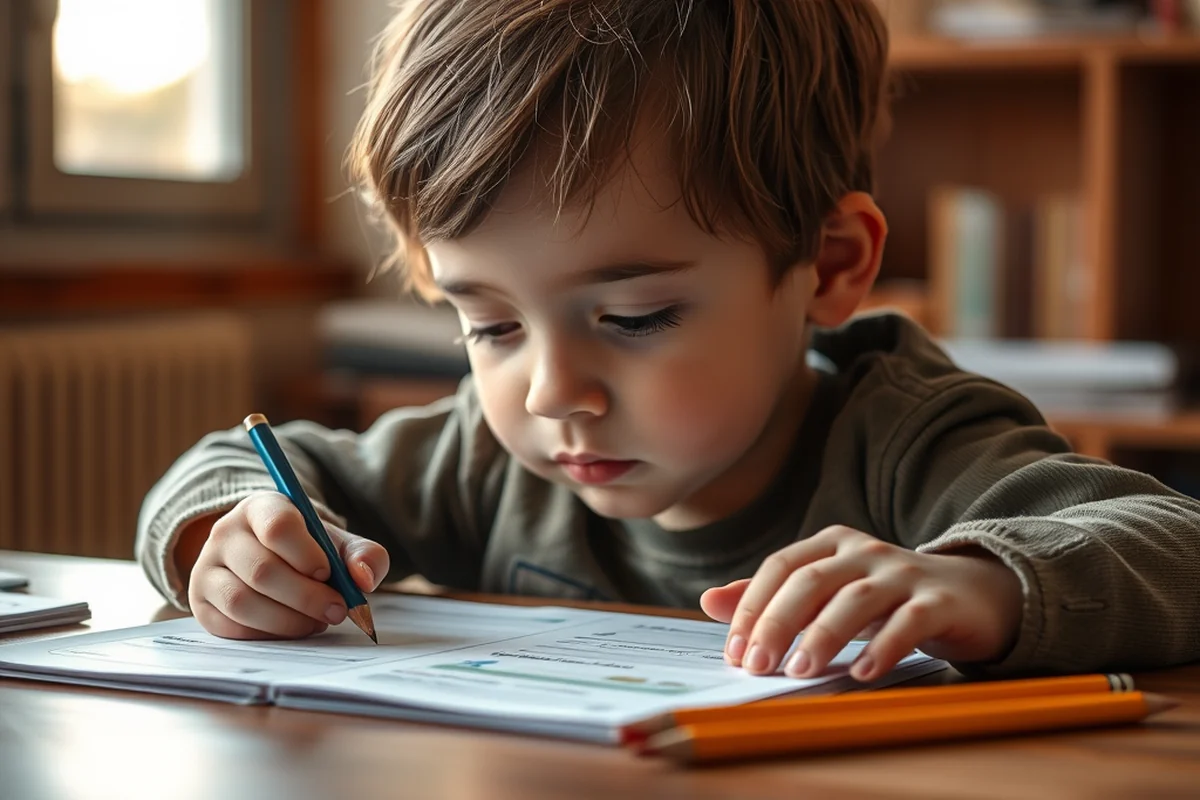
When my son was in first grade, I noticed that he was more excited to complete tasks when he knew they would end up in his memory book. The act of adding a new item—like a math problem he solved or a poem he wrote—gave him a sense of pride and purpose. I've seen this effect with every child I've homeschooled, and it's one of the reasons I've kept using this method for so long.
I've also found that a school memory book can serve as a tool for reflection. At the end of a school year, I like to sit with my child and go through the book together. We talk about what they learned, what they enjoyed, and what they want to improve on. This has been a powerful way to encourage self-awareness and goal-setting.
In addition, these books create a sense of continuity. They help children see the bigger picture of their learning journey and understand how their efforts over time have led to progress. For example, I've seen a child revisit a drawing from their first year of homeschooling and realize how much they've improved in their art skills.
A school memory book turns learning into a celebration.
Related: Purpose of teaching reading
What Goes Into a School Memory Book?
There's no one-size-fits-all approach to a school memory book, but there are some common elements that I've found to be especially useful. These include drawings, notes from teachers or parents, photos from field trips or events, and completed assignments. Even things like a ticket from a science fair or a sticker from a reading challenge can be included.
I've filled my children's books with everything from spelling tests to science experiments. One of my favorites was a small notebook my daughter made about her favorite books. She wrote down the titles, drew pictures of the characters, and even included a summary of each book. It was a beautiful way for her to process what she had read.
I also like to include reflections or journal entries from my children. These can be as simple as a few sentences about what they learned that week or as detailed as a full page about their thoughts on a particular subject. These reflections help me understand their thinking and provide a way to connect with them on a deeper level.
You don't need to buy anything special—just use what's already around the house to fill the book.
“I remember the first time I opened my son's school memory book—a worn-out notebook with scrawled drawings, sticky notes, and a few photos tucked between…”— Teaching Reading to Homeschoolers editors
Related: Teaching reading douglas fisher
How to Start a School Memory Book

Starting a school memory book can be as easy as grabbing a notebook and a few supplies. I've used everything from a simple composition book to a scrapbook with multiple pages. The key is to have a place where you can collect and organize items as they come.
I've found that it's best to start with a few simple supplies: a notebook, glue, scissors, and a few colored pencils. These are the basics, and they allow for a lot of creativity. I've also used a laminator to preserve some of the items, like stickers or tickets, so they last longer.
Once you have your supplies, the next step is to decide what you want to include. I like to start with a few pages that are just for collecting items, and then I gradually add more structured sections as the child grows. For example, I've used a section for spelling tests, a section for science experiments, and a section for reflections or journal entries.
Related: Teaching reading to kindergarten
How Long Should a School Memory Book Be?
I've used memory books for different lengths of time, and I've found that the length depends on the child and the family's goals. For example, I've created a book that lasted an entire year, and I've also made shorter books that focused on specific subjects or activities.
I've noticed that younger children tend to be more engaged with shorter books, while older children enjoy longer books that allow them to document their progress over time. I've also found that having a book that's too long can be overwhelming, so it's best to start small and build up as needed.
Whatever length you choose, the most important thing is that the book feels meaningful to the child. If they're excited about adding to it and revisiting it, then the length is just right. I've seen my children revisit their books multiple times a year, and that's been one of the most rewarding parts of this process.
Related: Teaching reading strategies for kindergarten
How to Organize a School Memory Book
I've found that organizing a school memory book is essential for making it useful over time. I've used different methods, like labeling sections by subject or by date, to help make the book more accessible. For example, I've used tabs to mark different sections, such as reading, math, and science, so that I can easily find what I'm looking for.
I've also found that it's helpful to keep a running list of items that I want to include. This helps me stay organized and ensures that I don't forget to add important milestones. For example, I've kept a list of spelling tests, science experiments, and reflection journal entries that I want to include in the book.
I've also used a digital approach to organizing, where I've taken photos of some of the items and stored them in a folder. This has been especially helpful for keeping track of items that might be lost or damaged over time. I've found that having both a physical and digital copy of the book adds value and ensures that the memories are preserved.
Organization makes memories last longer.
Related: Best teaching reading books
How to Use a School Memory Book for Reflection
One of the most powerful uses of a school memory book is for reflection. I've found that going through the book with my children at the end of a school year has been a valuable way to see how far they've come. It helps them recognize their own progress and feel proud of their achievements.
I've also used the book to encourage self-awareness and goal-setting. For example, I've sat with my children and asked them about their favorite subjects, what they've learned, and what they want to improve on. This has been a great way to foster a sense of ownership over their learning.
I've found that reflection is most effective when it's done regularly, not just at the end of the year. I've used the book to check in with my children every few months and see how they're doing. This has helped me stay connected to their learning and support them in a more meaningful way.
📚 Younger Kids' Memory Book
Perfect for toddlers and preschoolers, this version uses stickers, drawings, and photos to document early learning milestones.
📖 Older Kids' Memory Book
Ideal for middle and high school students, this version includes reflections, project summaries, and academic achievements.
📝 No-Prep Memory Book
This version uses a simple notebook and adds items as they happen, with no planning or preparation required.
👥 Group Memory Book
Designed for classroom or co-op settings, this version allows multiple children to contribute and share their learning journey.
🔍 Extension Memory Book
This version is used for subjects like history or science, where students can add research, experiments, and reflections.
| The mistake | Why it happens | The fix |
|---|---|---|
| Trying to make the book too elaborate. | A school memory book can quickly become overwhelming if you try to include too many items or too much detail. | Keep it simple. Focus on the most meaningful items and let the book grow naturally over time. |
| Not involving the child in the process. | If the child isn't involved in creating the book, they may not feel a sense of ownership or connection to it. | Involve the child in the process by asking them what they want to include and letting them help with the organization. |
| Forgetting to revisit the book. | A school memory book is most effective when it's revisited regularly to see progress and reflect on learning. | |
| Not keeping the book organized. | A disorganized book can be hard to navigate and may not serve its purpose as well as it could. | Use tabs, labels, or a digital format to keep the book organized and easy to use. |
What Is A School Memory Book
Common Questions
How do I start a school memory book for my child?
What should I include in a school memory book?
Can I use a digital format for a school memory book?
How often should I update a school memory book?
References
- Returning to School After a Concussion | HEADS UP - CDC (cdc.gov)
- Frequently Asked Questions (FAQs) Regarding Tuition and Student ... (educate.iowa.gov)
- California Preschool Learning Foundations (Volume 1) (cde.ca.gov)
- End Of Year Memory Book (training.jacksonms.gov)
Cite this guide
Teaching Reading to Homeschoolers (2026). What Is A School Memory Book. https://homeschoolread.com/what-is-a-school-memory-book/
Feel free to cite or share this guide.
Reading Skills Checklist
Stage-filtered phonics and reading skills checklist for homeschool parents.
Open it free →