
What Is Reading Comprehension Definition

📖 Table of Contents
- What Is Reading Comprehension Definition?
- Why Is Reading Comprehension Important?
- How to Teach Reading Comprehension
- The Components of Reading Comprehension
- The Role of Context in Reading Comprehension
- How to Assess Reading Comprehension
- Building a Love for Reading Through Comprehension
- Make It Your Way
- Frequently Asked Questions
I remember the first time my son read a story and asked me, 'But what does it mean?' It was a simple question. It opened a door to understanding what reading comprehension really is. For parents and educators, knowing the definition of reading comprehension is the first step to helping children become fluent, thoughtful readers. It's not just about recognizing words — it's about making meaning from them.[1]
Reading comprehension is a skill that shapes how a child interacts with the world. It's the bridge between the printed page and the child's own thoughts and experiences. When a child reads and comprehends, they're not just decoding letters — they're building a foundation for critical thinking, problem-solving, and lifelong learning. This definition of reading comprehension is the key to unlocking those abilities.[2]
But what exactly is reading comprehension? It's more than just reading the words on the page. It's about understanding the message, making connections, and applying the knowledge gained. As a homeschooling parent, I quickly realized that teaching reading comprehension was one of the most important tasks I had. It's a skill that doesn't develop overnight — it requires strategy, practice, and an understanding of what the definition really means.[3]
Why You'll Love This Approach to Reading Comprehension
- You’ll gain a clear, actionable definition of reading comprehension to guide your teaching.
- You’ll learn how to break down the process into small, achievable steps for your child.
- You’ll discover techniques that make comprehension more engaging and interactive.
- You’ll find real-life strategies that help kids understand and apply what they read.
What Is Reading Comprehension Definition?
As of October 2026, Reading comprehension is the ability to understand and interpret written text. It involves more than just recognizing words — it's about making meaning from what's being read. I've seen so many children struggle with reading because they can decode the words, but they can't grasp the message behind them. That's when it's clear that comprehension is missing.[4]
One of the first things I learned as a homeschooling parent is that reading comprehension is a complex skill that builds gradually. It requires a child to use prior knowledge, make connections, and infer meaning. For example, my son would read a story about a boy who finds a treasure. He wouldn't understand that the treasure was symbolic of something greater — that's when I knew we needed to focus on comprehension.
Understanding the definition of reading comprehension is the first step. But it's not enough to know what it is — you have to know how to teach it. This means creating an environment where children can practice, explore, and make meaning from what they read. It's not just about reading — it's about thinking.
Choose short, engaging stories that match your child's interests. Use them to discuss what's happening and ask open-ended questions.
Part of our Reading strategies guide.
Why Is Reading Comprehension Important?
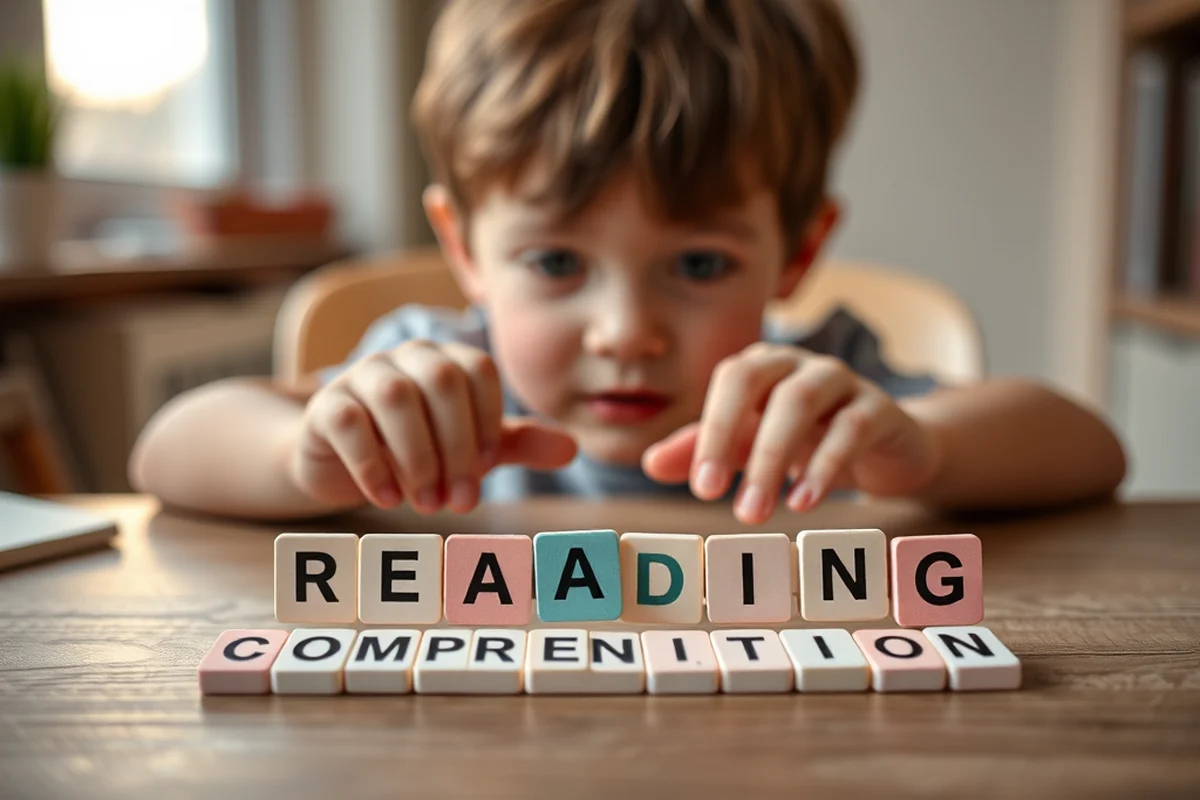
Reading comprehension is crucial for learning, communication, and problem-solving. It's the foundation for everything else — from math and science to literature and history. I've seen how a child's ability to understand what they read can impact their performance in other subjects. When they can't comprehend, they struggle in all areas.
Without strong reading comprehension skills, a child can't follow instructions, understand complex ideas, or analyze information. This is why it's so important to teach comprehension from an early age. I started working on comprehension skills with my son when he was just four, and the difference it made in his school performance was incredible.
The importance of reading comprehension can't be overstated. It's not just about passing tests — it's about preparing children to think critically and engage with the world around them. It's a skill that will serve them for a lifetime.
Reading comprehension is the key to unlocking a child's potential.
Related: What is reading passage
How to Teach Reading Comprehension
Teach reading comprehension through discussion, questioning, and practice. It's not enough to read — you have to engage with the text. I've found that asking my child questions about what he's reading helps him understand the message. When he reads a story, I ask, 'What do you think the character is feeling?' or 'Why do you think that happened?'
Practice is essential. I created a routine where we read together every day and then discussed what we read. This helped my son make connections and think more deeply about the stories. It wasn't always easy, but the results were worth it. He began to understand the meaning behind what he read.
Teaching reading comprehension is a process that requires patience and persistence. It's not just about memorizing facts — it's about building the skills that help a child think, analyze, and make meaning. The more you practice, the better your child becomes.
Encourage your child to think beyond the text by asking questions like, 'What do you think the character will do next?' or 'How would you feel if you were in that situation?'
“I remember the first time my son read a story and asked me, 'But what does it mean?' It was a simple question, but it…”— Teaching Reading to Homeschoolers editors
Related: What is kindle first reads
The Components of Reading Comprehension

Reading comprehension involves decoding, vocabulary, inference, and critical thinking. These components work together to help a child understand what they're reading. Decoding is the ability to recognize words, but it's only the first step. Vocabulary is also essential — a child can't comprehend a text if they don't know the words.
Inference and critical thinking are perhaps the most important components of reading comprehension. These skills allow a child to make connections, draw conclusions, and think beyond the text. I've seen my son struggle with inference — he would read a story and not understand the hidden meanings. That's when I realized we needed to work on this skill.
Understanding the components of reading comprehension helps you focus on the right areas. It's not just about reading — it's about thinking. Each component plays a role in building a strong foundation for comprehension.
Related: What to do in a tarot reading
The Role of Context in Reading Comprehension
Context helps a reader understand the meaning of words and the overall message of a text. It's one of the most important factors in reading comprehension. When a child reads a word in a new context, they may not know what it means. But with context, they can make educated guesses and understand the message.
I've seen my son read the word 'sailor' in a story about the sea and understand that it refers to someone who navigates ships. But in a different context, like a story about a game, he might confuse it with something else. That's why context is so important — it helps a child make meaning from what they read.
Understanding context is a skill that develops over time. It's not just about knowing the words — it's about understanding how they fit into the larger picture. As a homeschooling parent, I try to teach my child how to use context to help them understand what they're reading.
Related: How to teach your monster to read
How to Assess Reading Comprehension
Assess reading comprehension through observation, discussion, and practice. It's not always easy to know how well a child is understanding what they read. I've found that observation is one of the best ways to assess comprehension. When my son reads, I watch for signs that he's understanding — he might point to pictures, ask questions, or repeat parts of the story.
Discussion is another way to assess comprehension. I ask my son questions about what he's read, and I listen for his answers. If he can explain the story, make connections, and understand the message, I know he's comprehending. If he's struggling, I know we need to work on that skill.
Practice is essential for assessing reading comprehension. I give my son short comprehension activities to do on his own. These help me see where he's doing well and where he needs more support. It's not just about getting the right answers — it's about understanding the process.
Assessment is the key to knowing where your child is and where they need to go.
Related: What is reading manga
Building a Love for Reading Through Comprehension
Encourage a love for reading by making it interactive, engaging, and meaningful. When a child reads and comprehends, they're not just learning — they're connecting with the story. I've seen how my son's love for reading has grown when we make it interactive. We read together, discuss the stories, and even act them out.
Making reading engaging is important for building comprehension. I use books that are visually stimulating and include a variety of topics that interest my son. When he's engaged, he's more likely to understand what he's reading. I also use games and activities that help him practice comprehension skills in a fun way.
Creating a meaningful reading experience helps a child see the value in reading. I explain to my son how reading helps him learn new things, understand the world, and communicate better. When he sees the benefits, he's more motivated to read and comprehend.
📖 Interactive Storytelling
Use picture books to engage young learners in discussion and role-play.
📘 Reading Journals
Encourage older students to keep reading journals to reflect on what they read.
🧠 No-Prep Comprehension Activities
Use printable worksheets and online resources for quick, no-prep comprehension practice.
👥 Group Reading Circles
Create a group setting where children can discuss and analyze what they've read together.
🎨 Extension Activities
Enhance comprehension by incorporating drawing, writing, and drama into the reading experience.
| The mistake | Why it happens | The fix |
|---|---|---|
| Focusing only on decoding and not on comprehension. | Children may be able to read the words but not understand the message. This can lead to frustration and poor academic performance. | Balance decoding with comprehension activities. Ask questions, discuss stories, and encourage your child to think about what they're reading. |
| Not providing enough context for reading comprehension. | Children may struggle to understand new words or make connections in the text without context. | Use context-rich materials and discuss how words fit into the larger picture. Encourage your child to use context clues to understand what they're reading. |
| Assessing comprehension only through testing. | Testing may not give a full picture of a child's comprehension skills. It may not account for their ability to think, analyze, and make connections. | Assess comprehension through observation, discussion, and practice. Look for signs that your child is understanding and making meaning from what they read. |
| Assuming all children have the same comprehension skills. | Children develop comprehension skills at different rates. Some may need more support and practice than others. | Recognize that each child is different. Provide individualized support and practice based on your child's needs and abilities. |
What Is Reading Comprehension Definition
Common Questions
How can I improve my child's reading comprehension?
What are the signs that my child is struggling with comprehension?
How often should I practice reading comprehension with my child?
What books are best for developing comprehension skills?
References
- Role of Reading Comprehension in Learning Statistics and ... (academia.edu)
- Reading criteria - AKleg.gov (akleg.gov)
- § 38–2581.01. Definitions. | D.C. Law Library (code.dccouncil.gov)
- Comprehension for 1st Grade - Dpi.nc.gov (dpi.nc.gov)
Cite this guide
Teaching Reading to Homeschoolers (2026). What Is Reading Comprehension Definition. https://homeschoolread.com/what-is-reading-comprehension-definition/
Feel free to cite or share this guide.
Reading Skills Checklist
Stage-filtered phonics and reading skills checklist for homeschool parents.
Open it free →