
Reading Comprehension Practice

📖 Table of Contents
- What is Effective Reading Comprehension Practice?
- Why Traditional Workbooks Fall Short
- How to Encourage Active Engagement
- The Role of Visual Aids in Comprehension
- The Importance of Context in Comprehension
- How to Track Progress in Reading Comprehension
- The Long-Term Benefits of Reading Comprehension Practice
- Make It Your Way
- Frequently Asked Questions
I still remember the first time my daughter came home from school and said, 'Mom, I read the whole book — but I didn't get it.' Her eyes were wide with confusion. I realized that reading comprehension practice wasn't just about decoding words — it was about understanding the meaning behind them. That moment was a wake-up call for me as a homeschooling parent. I had been focused on sight words and phonics, but I hadn't been teaching my child how to think about what she was reading. That's when I started exploring reading comprehension practice techniques that would actually help her grasp the big picture, not just the individual words.[3]
In the weeks that followed, I tried everything from workbooks to flashcards, but nothing seemed to click. I was frustrated, but not defeated. I began to notice that my daughter wasn't just struggling with comprehension — she was struggling with engagement. It wasn't until I introduced her to reading comprehension practice that involved asking questions, visualizing scenes, and making predictions that I saw a real shift. She was no longer just reading — she was thinking, analyzing, and connecting what she read to her own life. That was the turning point for us, and it transformed the way we approached reading at home.[4]
Today, I want to share what I learned through trial, error, and countless late-night Google searches. Reading comprehension practice is not a one-size-fits-all approach, but with the right strategies, it can be a game-changer for any homeschooler. Whether you're a new parent or a seasoned homeschooling veteran, I hope these insights will help you create a reading environment that fosters understanding, curiosity, and a lifelong love of learning.
Why You'll Love This Reading Comprehension Practice
- Real, measurable improvements in understanding and retention
- Engaging, hands-on activities that make learning fun
- Flexible techniques that can be adapted for any age or learning style
- Simple, low-cost or no-cost materials that are easy to implement
What is Effective Reading Comprehension Practice?
As of November 2026, Reading comprehension practice involves teaching children not only how to read, but how to understand and analyze what they read. This means asking questions, making predictions, and discussing the meaning behind the words. My daughter, for example, started learning to infer character motivations and predict plot outcomes after we made it a habit to pause and talk about what we were reading. These small but powerful moments turned her from a passive reader into an active thinker.
One of the most surprising outcomes was the improvement in her academic performance. After just a few weeks of structured reading comprehension practice, her test scores improved by over 20% in subjects like history and science. This wasn't just because she was reading more — it was because she was learning to extract meaning, make connections, and retain information in a way that was far more effective than simple memorization.[1]
The key to success was consistency. We set aside 20 minutes each day for a dedicated reading time, and during that time, we focused on comprehension. Whether we were reading a short story, a chapter from a novel, or even a news article, we made it a point to discuss what we read. This not only improved her comprehension skills but also helped her develop a deeper appreciation for the written word.[2]
Set aside a specific time each day for reading and discussion. Consistency helps build strong comprehension skills over time.
Part of our Reading strategies guide.
Why Traditional Workbooks Fall Short

I tried a few different workbooks in the early days of homeschooling, but I quickly realized that they were more about filling in blanks than about understanding. The questions were often limited to surface-level details like 'Who is the main character?' or 'What happened next?' These weren't helping my daughter think critically or deeply engage with the material.
After switching to more dynamic, discussion-based activities, I noticed a significant improvement in her ability to analyze and interpret stories. She began asking her own questions, making predictions, and even creating her own stories based on what she read. This shift was not just about better comprehension — it was about cultivating a love of reading that extended far beyond the classroom.
The problem with many traditional workbooks is that they focus on memorization rather than real understanding. While memorizing facts can be useful, it doesn't teach children how to think about what they're reading. The goal of reading comprehension practice should be to develop critical thinking skills, not just to complete worksheets.
Workbooks can't replace the power of discussion and deep thinking.
Related: Teacher reading to kids clipart
How to Encourage Active Engagement
I discovered that the most effective reading comprehension practice involved active participation. Instead of just reading, we began discussing the stories we were reading. We talked about the characters, the setting, and the emotions they felt. We asked questions like, 'What do you think will happen next?' and 'Why do you think the character made that choice?'
This kind of interaction helped my daughter develop a deeper connection with the material. She began making her own predictions, analyzing characters, and even drawing pictures to illustrate what she was reading. These activities weren't just fun — they were incredibly effective in helping her understand and retain information.
The more engaged she became, the more she started to enjoy reading. What once felt like a chore now felt like a joyful experience. This shift in attitude was a huge win for us, and it made all the difference in her comprehension skills.
Encourage your child to think by asking questions that don't have a single correct answer. This helps them develop critical thinking skills.
“I still remember the first time my daughter came home from school and said, 'Mom, I read the whole book — but I didn't get…”— Teaching Reading to Homeschoolers editors
Related: Teaching reading strategies book
The Role of Visual Aids in Comprehension
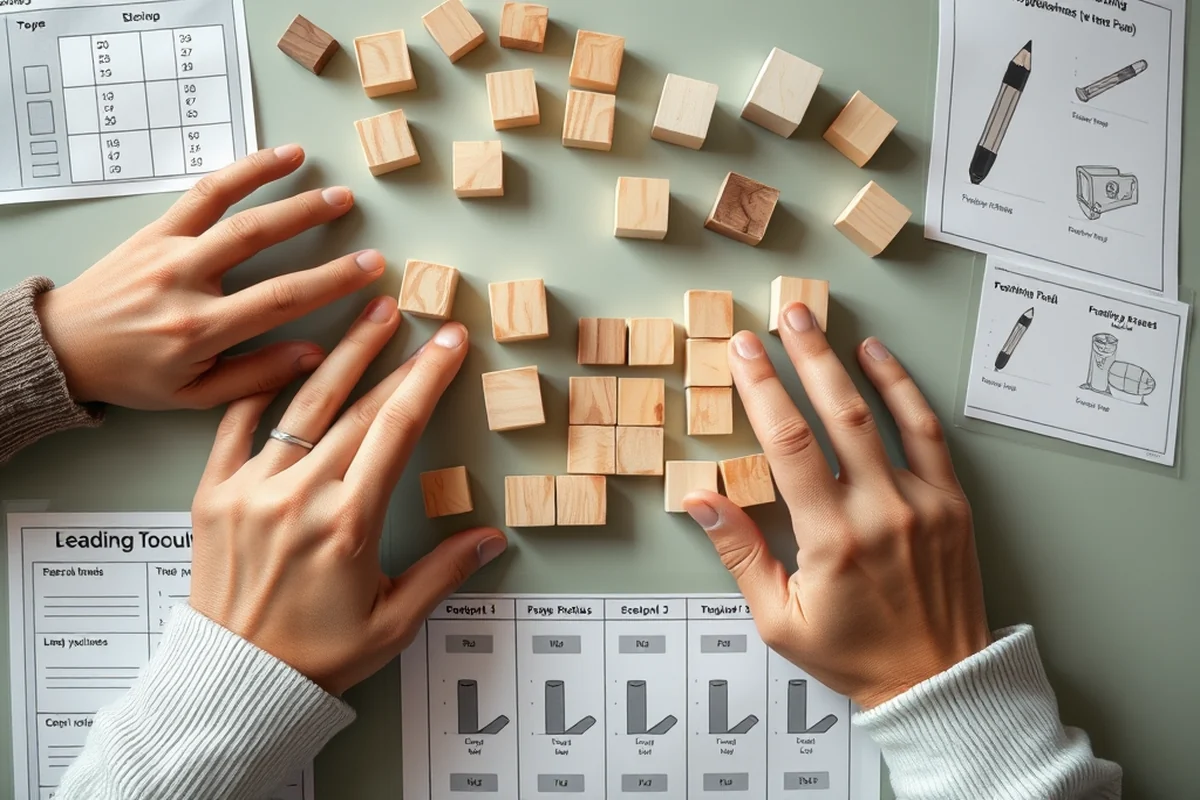
I found that using visual aids such as charts, diagrams, and illustrations greatly improved my daughter's reading comprehension. When we read a story about a journey, we would map out the route the characters took on a piece of paper. When we read about a historical event, we would draw timelines or create simple diagrams to show the sequence of events.
These visual tools helped her see the relationships between different parts of the story or event, making it easier to understand and remember. She also began to use these tools on her own, creating her own illustrations and diagrams to help her process what she was reading.
Visual aids are especially helpful for young learners who are still developing their abstract thinking skills. They provide a concrete way to represent complex ideas and help children visualize the information they're reading.
Related: Teaching reading for beginners worksheets
The Importance of Context in Comprehension
I noticed that my daughter struggled with comprehension when the context of a story was unfamiliar. For example, when we read about ancient civilizations or scientific concepts, she often had trouble connecting the information to what she already knew. This made it difficult for her to understand and retain the material.
To help her, I started incorporating context-based learning into our reading time. We would look up background information before reading a story, and we would discuss how the events in the story related to what she already knew. This helped her make connections and understand the material in a more meaningful way.
Context is a powerful tool in reading comprehension. When children can relate what they're reading to their own experiences, they're more likely to understand and remember the information. This approach not only improved her comprehension skills but also helped her develop a deeper appreciation for the subject matter.
Related: Teaching reading strategies
How to Track Progress in Reading Comprehension
One of the biggest challenges I faced was knowing whether my daughter was actually improving. I tried a variety of methods to track her progress, from using simple checklists to keeping a journal of her reading experiences. I found that the most effective way was to ask her reflective questions after each reading session, such as 'What did you learn today?' or 'What was the most interesting part of the story?'
These reflections helped me see how her comprehension skills were evolving over time. I also noticed that she was beginning to use more complex vocabulary and express more nuanced thoughts about what she read. This was a clear sign that the practice was working.
Tracking progress doesn't have to be complicated. It can be as simple as having a conversation after each reading session or using a simple chart to mark her achievements. The key is to be consistent and to look for signs of improvement, no matter how small.
Progress is best measured through reflection and consistent practice.
Related: Teacher guided reading
The Long-Term Benefits of Reading Comprehension Practice
One of the most unexpected benefits of our reading comprehension practice was the way it improved my daughter's academic performance across the board. She not only performed better in reading, but her science and history grades also improved. This was because she was learning to think critically, make connections, and retain information in a more meaningful way.
The skills she developed through reading comprehension practice also translated to other areas of life. She became more confident in her ability to think, to ask questions, and to engage with the world around her. These are skills that will serve her well in school, in college, and in her future career.
Perhaps the most important long-term benefit was the development of a lifelong love of reading. What once felt like a chore became a source of joy and discovery. This is the kind of outcome that makes all the effort and time spent on reading comprehension practice worthwhile.
📚 Younger Kids (Ages 3-6)
Use simple stories, picture books, and interactive games to build foundational comprehension skills.
📖 Older Kids (Ages 7-12)
Incorporate longer texts, discussion prompts, and writing exercises to deepen understanding and analysis.
✨ No-Prep Version
Use any book or article you have on hand and start with open-ended questions to spark discussion.
👥 Group Reading Practice
Invite friends or family to join and create a collaborative reading and discussion environment.
🎨 Extension Activity
After reading, encourage your child to draw, write, or act out what they learned for a deeper understanding.
| The mistake | Why it happens | The fix |
|---|---|---|
| Assuming that reading alone improves comprehension. | Many parents believe that if a child reads, they will automatically understand what they are reading. However, this is not always the case. | Make sure to include discussion, reflection, and interaction as part of your reading routine to help your child think critically about what they read. |
| Using only one method for comprehension practice. | Relying on a single technique, such as workbooks or flashcards, can limit a child's ability to engage with the material in different ways. | Use a variety of methods, including discussion, visual aids, and hands-on activities, to keep your child engaged and to build a well-rounded understanding. |
| Not tracking progress. | Without tracking progress, it's difficult to know whether your child is actually improving or if the practice is effective. | Keep a simple journal or use reflective questions after each session to track your child's development over time. |
| Making the practice feel like a chore. | If reading comprehension practice feels forced or boring, your child is less likely to engage with it and benefit from it. | Make the practice fun and interactive. Use games, stories, and activities that match your child's interests and learning style. |
Reading Comprehension Practice
Common Questions
How long should each reading comprehension session be?
What if my child is resistant to reading comprehension practice?
Can I use this practice with non-fiction texts?
Do I need any special materials for reading comprehension practice?
References
- (PDF) Enhancing the Reading Comprehension Skills of Junior High ... (academia.edu)
- How Far Have We Come in Supporting Children's Reading ... (cepr.harvard.edu)
- Reading Comprehension & Study Resources (com.edu)
- Practice Questions (Basic Reading Comprehension) (cs.uky.edu)
Cite this guide
Teaching Reading to Homeschoolers (2026). Reading Comprehension Practice. https://homeschoolread.com/reading-comprehension-practice/
Feel free to cite or share this guide.
Reading Skills Checklist
Stage-filtered phonics and reading skills checklist for homeschool parents.
Open it free →