
How To Teach Piano Without Reading Music

📖 Table of Contents
When my youngest daughter, Lily, was six years old, she sat at the piano for the first time, eyes wide and fingers trembling. She had no idea how to read music, but she had a deep love for the song 'Let It Go' from Frozen. I knew then that teaching her piano without music reading wasn't just possible—it was essential. That moment taught me that kids don't need to start with notes and staffs to fall in love with playing an instrument. What they need is joy, curiosity, and a connection to the music they already know.
Over the next year, I experimented with different methods, from using colored stickers to mark keys to creating visual storyboards for songs. I watched Lily progress from struggling to play a single note to playing full melodies by ear. I learned that teaching piano without reading music is not about skipping the fundamentals—it's about building a foundation that is intuitive, playful, and deeply personal. It's about meeting the child where they are, not where we think they should be.
Today, I walk into classrooms and homes where parents and teachers are finding creative ways to teach piano without traditional music reading. They're using rhythm clapping, hand motions, and even apps that translate music into visual patterns. These methods are not just effective—they're transforming how kids experience music. If you're wondering how to teach piano without reading music, I'm here to tell you it's not only possible. It can be one of the most rewarding ways to introduce a child to music.
Why You'll Love This Method
- Encourages natural, intuitive learning through sound and touch
- Builds confidence by allowing kids to play songs they recognize and love
- Creates a strong emotional connection to music
- Can be adapted for any age or learning style
Start with Familiar Songs
As of November 2026, one of the most effective ways to begin teaching piano without reading music is by using familiar songs. Children can often recognize a melody even if they can't read it, making it a great entry point into playing the piano. For example, if a child knows 'Twinkle Twinkle Little Star' by heart, you can guide them to play the melody on the piano using simple finger motions and visual cues.
I've found that playing along with a child's favorite song while they follow the rhythm with their hands is a powerful way to introduce them to the keyboard. It’s not about accuracy at first—it’s about connection. I remember one time, when Lily and I sang 'You Are My Sunshine' together while I played, her eyes lit up with joy and she started to mimic the notes I played on the piano.
By the time children can play a few songs they love, they begin to understand the relationship between sound and keys. This method builds confidence and curiosity, which are essential for long-term learning. I always recommend starting with songs that are short, repetitive, and emotionally resonant.[1]
Pick songs your child loves and play along with them while they follow the rhythm with their hands.
Part of our How to play piano without reading music guide.
Introduce Rhythm Through Movement
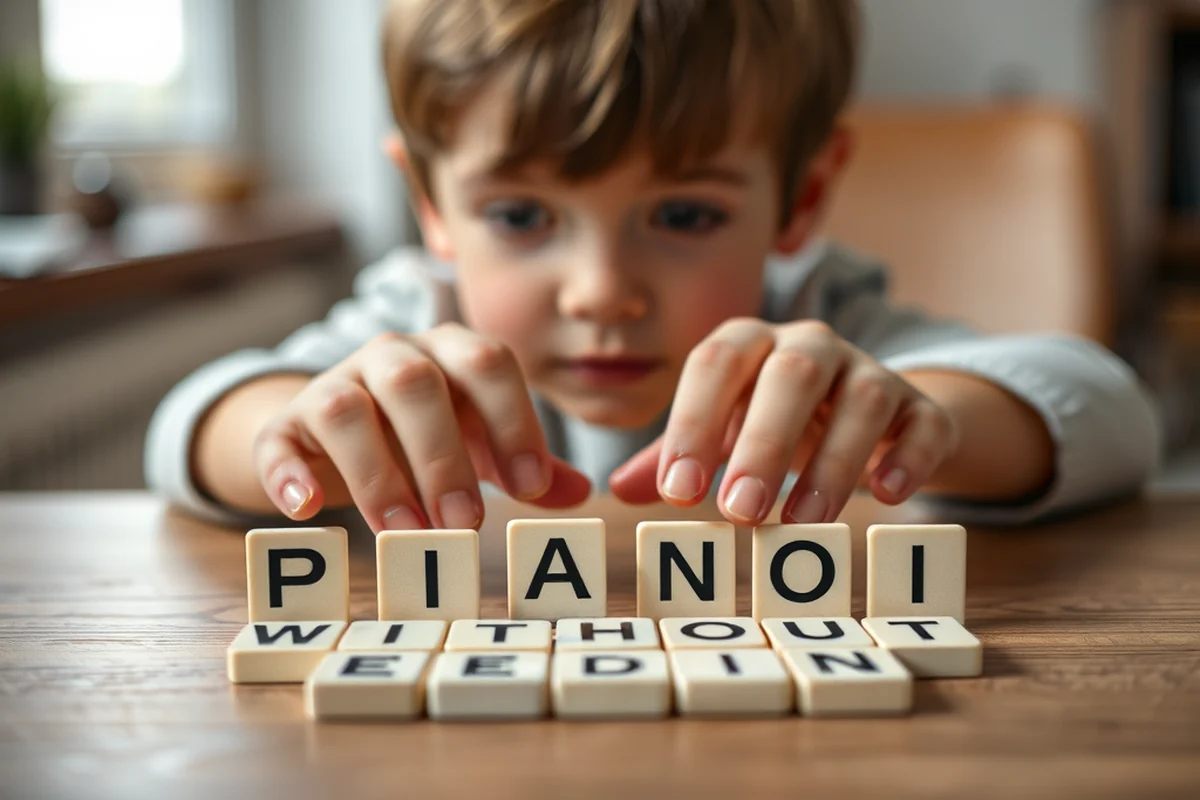
Rhythm is the foundation of music, and it doesn’t require reading. Teaching children to clap, stomp, or move to the beat of a song is a powerful way to build their musical intuition. When I started working with Lily, I used clapping games to help her understand the rhythm of a song. We would clap along to the beat of 'Old MacDonald' and then gradually introduce the piano keys as a way to replace the claps with actual notes.
I was amazed at how quickly Lily picked up the concept of rhythm through movement. She began to play simple rhythms on the piano by following the claps we made together. This method helped her understand the structure of songs without ever needing to read a note. The physicality of rhythm makes it more engaging and easier to grasp.
Using movement to teach rhythm is also a great way to involve the whole family. You can turn rhythm practice into a game by having everyone in the house clap or stomp along to a song. This not only makes learning fun but also strengthens the child's sense of timing and musicality.
Rhythm is the heartbeat of music, and it doesn’t require reading.
Related: What is sight reading in music
Use Visual Cues and Color Coding
Color coding is a simple but effective way to help children learn piano without reading music. By assigning different colors to different keys, you create a visual map that makes it easier for children to find the right notes. I used a system where each key was colored in a way that matched the notes of a song, helping Lily recognize patterns and positions intuitively.
I used stickers and markers to color the keys of the piano. For example, I colored the C key red, the D key blue, and so on. This helped Lily understand that certain keys corresponded to specific colors and that she could find the right note by looking at the color rather than reading the note itself. This method was especially helpful for children with visual learning styles.
Color coding also helps build memory and recognition. As Lily played more songs, she started to remember which colors corresponded to which keys, and this made her more confident in her playing. I’ve seen this technique used successfully with children of all ages, from toddlers to teenagers.
Assign a different color to each key and use stickers or markers to help children associate notes with colors.
“When my youngest daughter, Lily, was six years old, she sat at the piano for the first time, eyes wide and fingers trembling.”— Teaching Reading to Homeschoolers editors
Introduce the Concept of 'Listening' to Music
Listening is a fundamental skill in learning to play piano, and it doesn't require reading music. Encourage children to sit at the piano and listen closely to the sounds they make. Ask them to identify high and low notes, or to listen for when the melody changes. I found that this helped Lily become more aware of the different tones and patterns in music, even before she could play a single note.
I would sit with Lily and play a song on the piano while asking her to describe what she heard. She would say things like, 'That note sounds happy!' or 'That one is sad.' This kind of listening exercise helped her build an emotional connection to the music and made her more attentive to the nuances of the sound.
By teaching children to listen actively, you're helping them develop a deep understanding of music that goes beyond notes on a page. This approach is especially useful for young children who may not yet have the motor skills to play complex pieces but can still learn to appreciate and recognize musical elements.
Incorporate Storytelling and Visual Storyboards
Storytelling is a powerful tool for teaching piano without music reading. By creating a story around a song, you help children understand the emotions and characters in the music, making it easier for them to learn and play the piece. I used this method with Lily by creating a simple storyboard for the song 'The Lion Sleeps Tonight.' We acted out the story together, and then I played the piano while she followed along.
The story helped Lily understand the rhythm and melody of the song in a way that was meaningful to her. She was more engaged and willing to try playing the piano, even though she couldn't read the notes. This approach is especially effective for children who are visual learners or who enjoy imaginative play.
Visual storyboards can also be used to help children understand the structure of a song. You can draw simple pictures that represent different parts of the song, such as the beginning, middle, and end. This helps children see the progression of the music and makes it easier to remember the notes.
Use Apps and Digital Tools
In the digital age, there are many apps and online tools that can help children learn to play piano without reading music. These tools often use visual and interactive methods to teach the piano, making it more engaging for children. I used one app with Lily that used bright colors and animations to teach her how to play different notes.
The app allowed Lily to follow along with the music and see the notes on the screen as she played. It was a great way to introduce her to the keyboard in a fun and interactive way. Some apps even use a game-like interface, where children earn points for playing the right notes and completing songs.
Using these digital tools can be especially helpful for children who are more visual or tech-savvy. They can provide a structured and engaging way to learn piano without the need for traditional music reading. I recommend trying a few different apps to see which one works best for your child.[2]
Digital tools can make learning piano fun and interactive, even for young children.
Encourage Repetition and Practice Through Play
One of the most effective ways to teach piano without reading music is by making practice feel like play. When I started working with Lily, I turned our piano lessons into games. We would race to see who could play a song faster or try to play the melody with our eyes closed. This made practice fun and engaging, and it helped Lily retain what she was learning.
I also used stickers and rewards to encourage Lily to practice regularly. Every time she played a song correctly, she would get a sticker, and after a few stickers, she could choose a small reward. This system helped her stay motivated and excited about learning the piano.
Encouraging repetition through play is a powerful way to help children develop muscle memory and confidence. When learning becomes a game, children are more likely to stay interested and continue practicing. It's a win-win for both the child and the parent.
🎹 Younger Kids (Ages 3-6)
Use colorful stickers, clapping, and simple songs to introduce the piano in a playful, sensory-rich environment.
🎵 Older Kids (Ages 7-12)
Use apps and visual storyboards to help them understand the structure and narrative of songs without needing to read music.
🕒 No-Prep Version
Use the piano itself as the only tool—play familiar songs and let children imitate the notes through listening and movement.
👨👩👧👦 Group Version
Use group clapping, rhythm games, and storytelling to teach piano in a fun, collaborative setting.
🎨 Extension Activity
Create a visual storyboard or color-coded key map to help children understand the structure of a song and its progression.
| The mistake | Why it happens | The fix |
|---|---|---|
| Skipping the basics of rhythm and listening | Ignoring rhythm and listening skills can lead to a lack of musical understanding and make it harder for children to progress. | Always start with rhythm and listening exercises. These are the building blocks of musical learning. |
| Trying to force reading music too early | Forcing a child to read music before they are ready can lead to frustration and a loss of interest in playing the piano. | Focus on listening, rhythm, and movement first. Only introduce music reading when the child is ready and interested. |
| Not using familiar songs | Using unfamiliar songs can make learning feel overwhelming and disconnected from the child's interests. | Always start with songs the child knows and loves. This helps them build confidence and make a personal connection to the music. |
| Not making practice fun | If practice feels like a chore, children are less likely to stay motivated and continue learning. | Incorporate games, rewards, and creative activities to make practice feel like play. |
How To Teach Piano Without Reading Music
Common Questions
Can very young children learn piano without reading music?
What if my child doesn't have access to a piano?
How long does it take to see results?
Are there any apps you recommend for teaching piano without reading music?
References
- Music and Dyslexia: The Therapeutic Use of Instrument (Piano ... (files.eric.ed.gov)
- Piano education online: Challenges and solutions - PMC - NIH (pmc.ncbi.nlm.nih.gov)
Cite this guide
Teaching Reading to Homeschoolers (2026). How To Teach Piano Without Reading Music. https://homeschoolread.com/how-to-teach-piano-without-reading-music/
Feel free to cite or share this guide.
Reading Skills Checklist
Stage-filtered phonics and reading skills checklist for homeschool parents.
Open it free →