
What Is Map Reading Fluency

📖 Table of Contents
- What Is Map Reading Fluency?
- Why Map Reading Fluency Matters in Homeschooling
- How to Introduce Map Reading Fluency to Young Children
- The Role of Technology in Teaching Map Reading Fluency
- Developing Advanced Map Reading Skills
- The Benefits of Consistent Map Reading Practice
- Integrating Map Reading Fluency into Other Subjects
- Make It Your Way
- Frequently Asked Questions
I still remember the first time my son asked me, 'What is map reading fluency?' It was a simple question. It opened a door to a world of spatial awareness, critical thinking, and problem-solving that I hadn’t fully appreciated before. In our homeschool, we often talk about reading fluency in terms of decoding words. Map reading fluency is a different beast — it’s about interpreting, navigating, and making sense of the world around us through visual representations.[4]
For years, I didn’t realize that map reading fluency was a skill that could be taught, practiced, and mastered just like phonics or math facts. It wasn’t until I began incorporating maps into our daily learning routine that I saw the shift in my child’s confidence and understanding of geography, directions. Even abstract concepts like scale and proportion. Map reading fluency isn’t just about following a trail on a map; it’s about building a mental model of the world that helps children become more independent and inquisitive learners.
Today, I want to walk you through what map reading fluency really means and why it’s an essential skill for homeschoolers. It’s not just about finding your way from point A to point B — it’s about understanding spatial relationships, building cognitive flexibility. Developing the kind of thinking that supports science, math, and even language arts. As we explore this topic, you’ll see how map reading fluency can be taught in fun, engaging ways that fit seamlessly into your homeschool day.
Why You'll Love This Activity
- Encourages problem-solving and critical thinking through real-world scenarios
- Builds spatial awareness and understanding of geography
- Fosters independence and confidence in navigation and planning
- Provides a multisensory learning experience that integrates math and language
What Is Map Reading Fluency?
As of November 2026, at its core, map reading fluency is about understanding how maps work — symbols, scale, direction, and the relationship between different points on a map. It’s not just about following a trail; it’s about knowing where you are, where you’re going, and how to get there. In our homeschool, we began by introducing simple road maps and city layouts, gradually moving to topographic maps and global geography as our child’s confidence grew.
Map reading fluency is also about cognitive skills like pattern recognition, spatial reasoning, and problem-solving. For instance, when my son was learning to read a map of his neighborhood, he didn’t just memorize the streets — he began to see how they connected and how to use landmarks as reference points. This kind of thinking translates into math, science, and even language arts as students learn to make connections and think abstractly.
The beauty of map reading fluency is that it doesn’t require advanced vocabulary or complex instructions. With the right tools and a few consistent practice sessions, even very young children can begin to understand the basics. I’ve seen kids as young as four navigate simple maps with ease, using directional language like 'left,' 'right,' 'above,' and 'below.'
Use maps of your child’s neighborhood or favorite places to make the concept more relatable and meaningful.
Part of our Reading strategies guide.
Why Map Reading Fluency Matters in Homeschooling
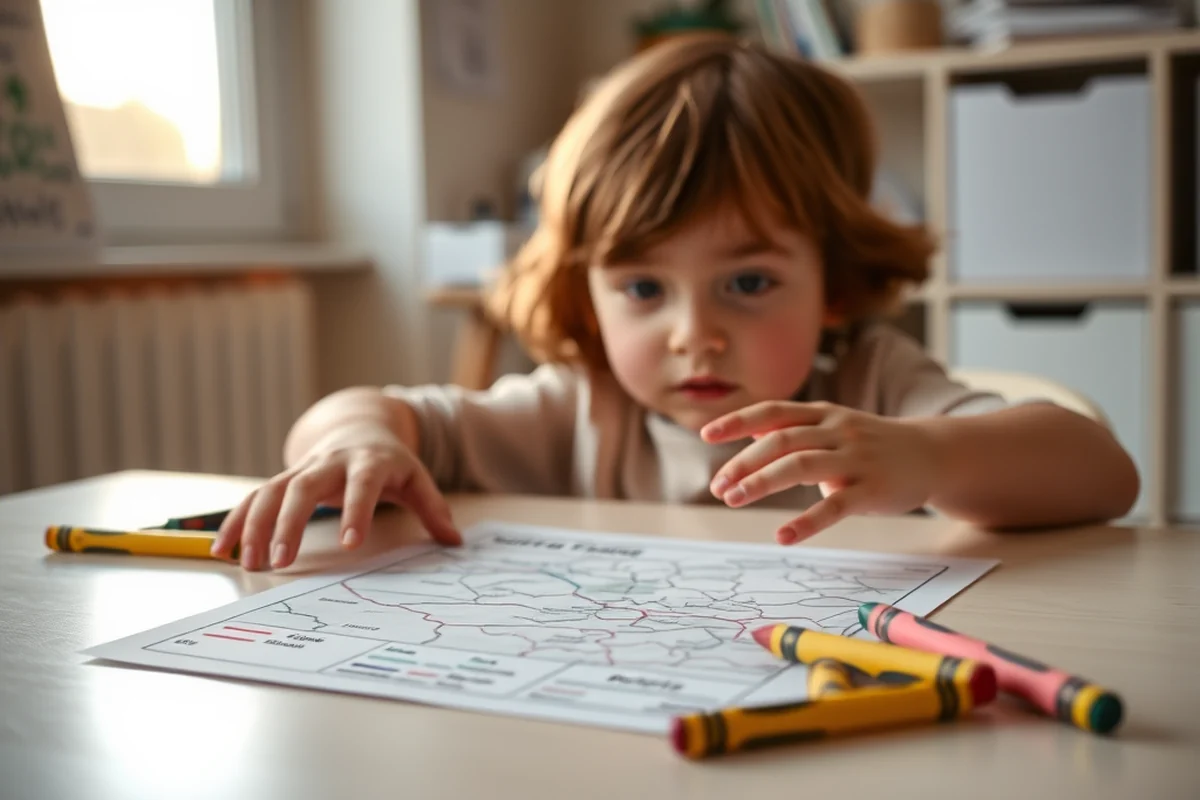
In our homeschool, map reading fluency became a cornerstone of our learning, not just because it’s useful, but because it’s foundational. It builds the kind of thinking that supports reading comprehension, math problem-solving, and even scientific reasoning. When my son could read a map, he was no longer just following directions — he was interpreting them and using them to make decisions.
Map reading fluency also helps children develop a better sense of orientation and spatial awareness. I’ve seen a marked improvement in my child’s ability to visualize and understand geometry concepts after regular map-reading practice. He could now see how angles and shapes relate to real-world objects — something that wasn’t possible before.
More than that, it builds confidence. There’s a real sense of accomplishment when a child can read a map and navigate their way to a destination. It’s empowering and it fuels a love of learning that carries over into other subjects.
Map reading fluency is not just about direction — it’s about thinking.
Related: What is reading partners
How to Introduce Map Reading Fluency to Young Children
For very young children, it’s all about making the learning process tactile and visual. I started with large, colorful maps that were easy for my child to touch and explore. We used simple maps of our home, our neighborhood, and even the layout of our local park. The key was to keep the maps familiar and relatable to make the learning experience meaningful.
I also used real-life examples. We took walks around the neighborhood and used a map to find our way back home. This helped my child make a direct connection between the physical world and the abstract representation on the map. The more we practiced, the more comfortable he became with the idea of reading and interpreting maps.
As we continued, we introduced new vocabulary like 'north,' 'south,' 'east,' and 'west.' We played games where my child had to find a specific landmark on the map. Helped reinforce the concept of direction and spatial awareness. It was all about making it fun and interactive.
Relate map reading activities to places your child visits regularly to build relevance and context.
“I still remember the first time my son asked me, 'What is map reading fluency?' It was a simple question, but it opened a door…”— Teaching Reading to Homeschoolers editors
Related: Epic reading app
The Role of Technology in Teaching Map Reading Fluency
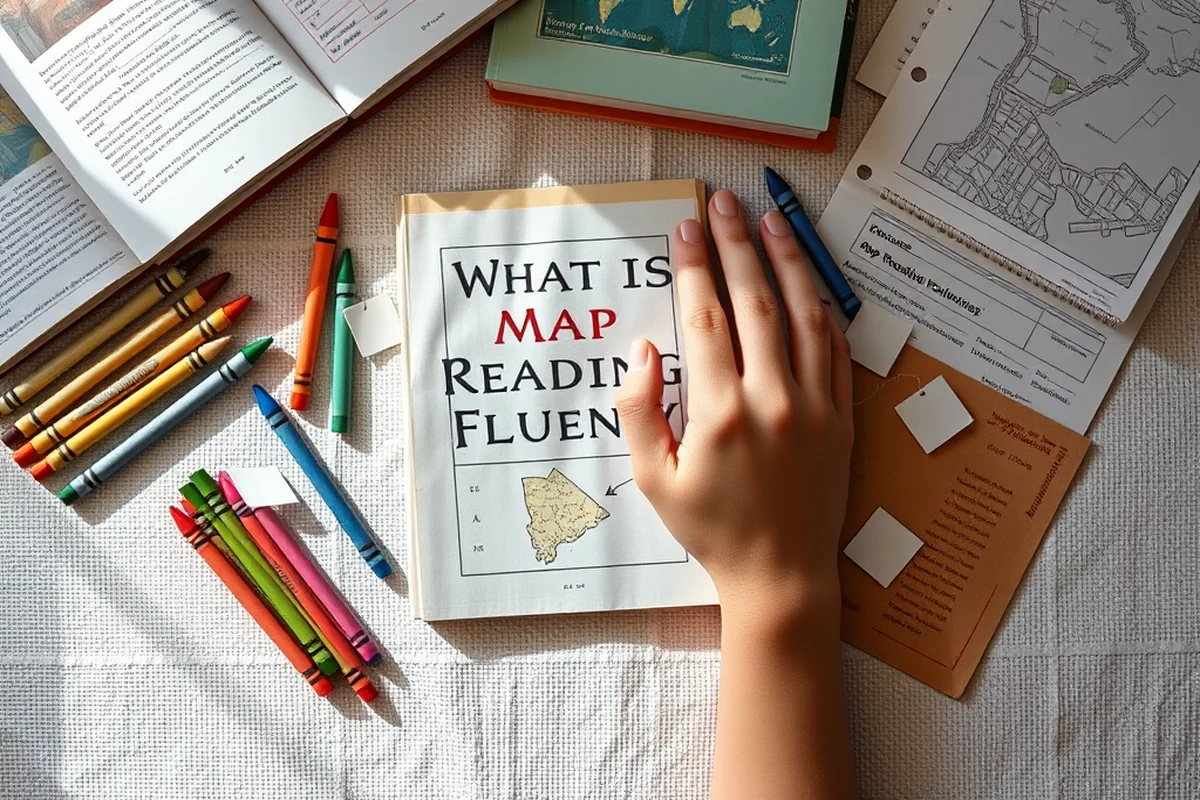
In our homeschool, we’ve incorporated technology to make map reading fluency more engaging and interactive. We use educational apps that allow children to zoom in and out of maps, rotate them, and even explore different views of the same location. This hands-on approach helps children see how maps work in a more dynamic way.
I’ve found that interactive maps are especially helpful for teaching scale and proportion. For instance, my child could see how a small pin on a map represented a large area in the real world. This kind of visual learning is powerful and helps build a deeper understanding of spatial relationships.
However, I also make sure to balance technology with traditional map-reading skills. While digital maps are useful, they don’t replace the need for physical maps and manual navigation. The combination of both helps build a well-rounded understanding of map reading fluency.
Related: What is reading passages
Developing Advanced Map Reading Skills
Once my child had a solid foundation in basic map reading, I began introducing more complex maps like topographic maps and even global maps. These maps require a deeper understanding of symbols, scale, and terrain. I used online resources and educational websites to help my child learn how to read contour lines and understand elevation changes.
We also started using maps for planning trips and exploring different regions. This helped my child apply what he had learned in real-life situations. He could now plan a route, estimate distances, and even predict the kind of terrain he would encounter on a journey.
Advanced map reading fluency also involves understanding different types of maps — from political maps to weather maps. This helps children see how maps can be used for a variety of purposes, which broadens their understanding of the world around them.
Related: Top books to read in 2026
The Benefits of Consistent Map Reading Practice
Consistency is key with developing map reading fluency. I’ve found that even 15 minutes of daily practice can make a significant difference over time. My child has become more confident in navigating both physical and digital maps, and this confidence translates into other areas of learning as well.[1]
One of the most surprising benefits I’ve seen is how map reading fluency has improved my child’s problem-solving skills. He now approaches challenges with a more analytical mindset, often breaking down complex problems into smaller, manageable parts — a skill that is invaluable in math, science, and even language arts.
Regular practice also helps reinforce spatial awareness and cognitive flexibility. My child is now able to visualize and understand complex spatial relationships. Has helped him in subjects like geometry and even in reading comprehension where he can better visualize scenes and relationships described in a text.
Consistency turns map reading into a lifelong skill.
Related: What s in reading pennsylvania
Integrating Map Reading Fluency into Other Subjects
One of the most effective ways to reinforce map reading fluency is by integrating it into other areas of learning. For example, in math, we use maps to teach concepts like distance, scale, and proportion. My child has learned to calculate how many miles it is from one point to another on a map, which helps build his math skills in a practical way.
In science, maps help us explore geography, climate, and even ecosystems. We use maps to study different regions, compare climates, and understand how geography affects the environment. This kind of learning is both engaging and educational, helping my child see the real-world applications of what he’s learning.[2]
In language arts, maps help with reading comprehension and vocabulary. We use maps to discuss locations, landmarks, and even to create stories based on different regions. This helps my child develop a richer vocabulary and a better understanding of how geography influences culture and history.
🗺️ Younger Kids Map Game
A fun, hands-on activity using large, colorful maps and real-life landmarks to introduce basic map reading concepts.
⛰️ Older Kids Topographic Challenge
A more advanced map-reading activity that uses topographic maps and challenges students to navigate complex terrains and routes.
✏️ No-Prep Map Tracing
A simple, no-prep activity where children trace routes on printed maps to build basic map reading skills.
🕵️ Group Map Scavenger Hunt
A collaborative activity that involves teams working together to solve map-based challenges and complete tasks.
🌍 Map Reading Extension Project
An in-depth project that integrates map reading fluency with research, planning, and real-world application of geographic knowledge.[3]
| The mistake | Why it happens | The fix |
|---|---|---|
| Using complex maps for young children. | This can overwhelm them and make the learning process frustrating. | Start with simple, familiar maps and gradually introduce more complex ones as the child becomes more confident. |
| Focusing only on physical maps and ignoring digital maps. | This limits the child’s exposure to different types of maps and real-world applications. | Balance physical and digital map activities to provide a well-rounded learning experience. |
| Not providing enough context or explanation. | This can lead to confusion and a lack of understanding of spatial relationships. | Use real-life examples and provide clear explanations to help children make connections between the map and the physical world. |
| Skipping consistent practice. | Without regular practice, children may not develop the fluency needed to read and interpret maps effectively. | Incorporate short, regular map-reading sessions into the homeschool routine to build fluency over time. |
What Is Map Reading Fluency
Common Questions
At what age can children start learning map reading fluency?
What materials do I need to teach map reading fluency?
Can I use technology to teach map reading fluency?
How long does it take to develop map reading fluency?
References
- Understanding your Skills and Expertise: Careers Outside of Academe (arhu.umd.edu)
- Measures to Monitoring Progress in Reading (dhh-resources.umn.edu)
- Pilot Study of the Dynamic Early Literacy Framework for ... (digitalcommons.buffalostate.edu)
- examining the predictive relationship between map reading scores (digitalcommons.liberty.edu)
Cite this guide
Teaching Reading to Homeschoolers (2026). What Is Map Reading Fluency. https://homeschoolread.com/what-is-map-reading-fluency/
Feel free to cite or share this guide.
Reading Skills Checklist
Stage-filtered phonics and reading skills checklist for homeschool parents.
Open it free →