
What Is Reading Bingo

📖 Table of Contents
- What Exactly Is Reading Bingo?
- How to Set Up a Reading Bingo Game
- Why Reading Bingo Works for Early Learners
- How to Adapt Reading Bingo for Older Kids
- How Reading Bingo Boosts Confidence and Motivation
- How to Make Reading Bingo More Interactive
- How to Track Progress with Reading Bingo
- Make It Your Way
- Frequently Asked Questions
I remember the first time I tried Reading Bingo with my 5-year-old son, and it felt like I had unlocked a secret door to his imagination. We sat on the floor, surrounded by colorful cards and a little pile of books, and the way his eyes lit up when he found the right word on his card was unforgettable. It wasn’t just a game—it was a way to make reading feel like an adventure. Reading Bingo has since become a regular part of our homeschool routine, and it's helped us build a love for reading that I never thought possible.
Before I started using Reading Bingo, I worried that my son would find reading boring, especially after a long day. But this activity changed everything. It’s not just about the words—it’s about the joy of discovery, the thrill of matching, and the satisfaction that comes with completing a row. We started with a few simple words, and now he can recognize and spell over 100 words on his own. The key to making this work was keeping it light, fun, and interactive.[1]
Reading Bingo is more than just a game—it's a powerful tool for developing literacy skills in a way that feels natural and engaging. It’s a game that can be tailored to any age, any reading level, and any learning style. Whether you're a parent, a teacher, or a homeschooling parent, this activity is worth exploring. I promise you’ll find it both effective and enjoyable.
Why You'll Love This Educational Tool
- Encourages active engagement with reading material
- Builds vocabulary through repetition and fun
- Adaptable to any reading level or learning style
- Promotes confidence and a love for reading
What Exactly Is Reading Bingo?
As of October 2026, Reading Bingo is a simple yet effective literacy game that combines the excitement of bingo with the educational value of reading. It works by having children match words on a bingo card with corresponding pictures, definitions, or context clues in a set of books or materials. The goal is to find a row or column of matched words and call out 'Bingo!' Once a player has completed a line, they can earn a small prize or a sticker, making the activity even more rewarding.
This game is typically played with a set of bingo cards, each containing a different set of words. The cards can be customized to match the child’s reading level or learning goals. For example, a beginner set might focus on sight words like 'the,' 'and,' or 'is,' while an advanced set could use vocabulary from a specific book or theme.
I’ve used this method with my son, and I’ve noticed that the act of matching words to images or context helps reinforce reading skills. It also encourages children to look for patterns, make connections, and think critically—skills that are essential in early literacy development.
Begin with a set of sight words that your child is already familiar with. This will build confidence and make the game more enjoyable for them.
Part of our Reading strategies guide.
How to Set Up a Reading Bingo Game
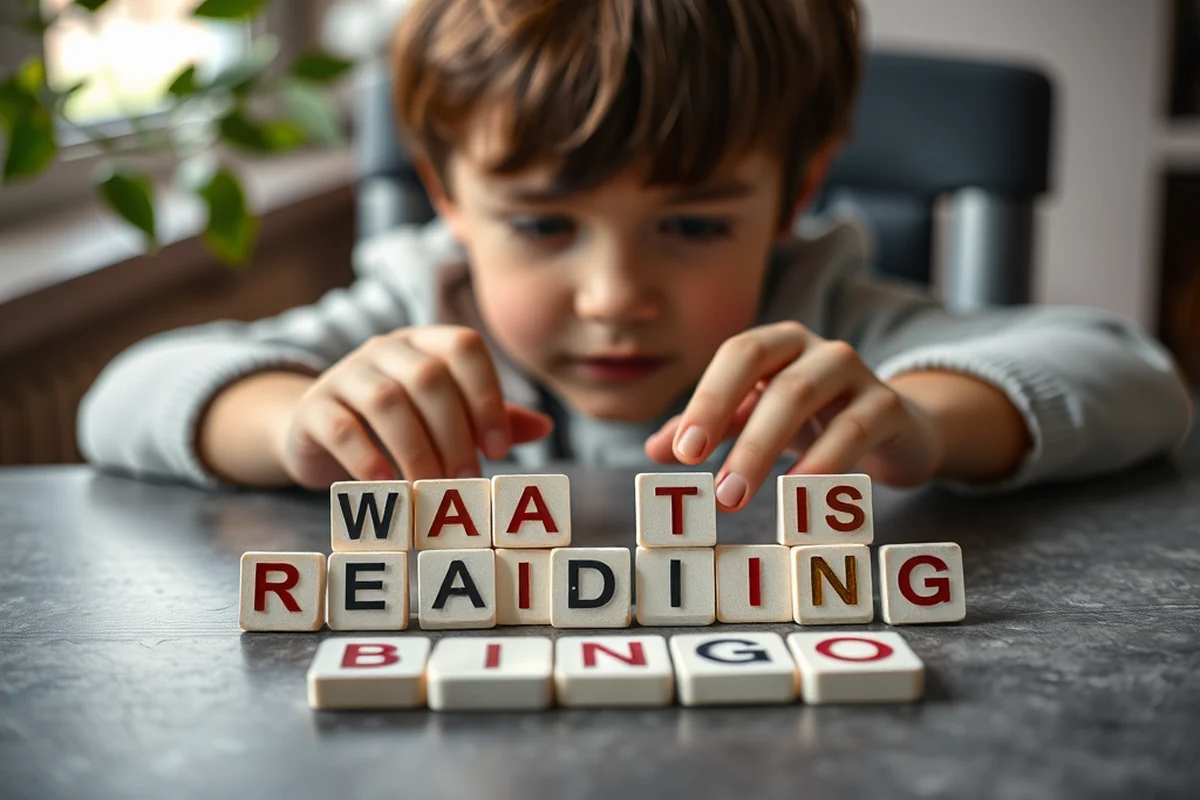
To play Reading Bingo, you’ll need a set of bingo cards, a list of words, and a collection of books or materials that match those words. I usually create my own cards using free printable templates found online. Each card typically has a 5x5 grid with 25 words. For younger children, I use images instead of words, and for older kids, I use definitions or context clues.[2]
Once the cards are ready, I choose a set of books or materials that align with the words on the cards. For example, if the theme is animals, I select books that feature a variety of animals. I read through the books with my son, pointing out the words on the bingo card as I go.
I’ve found that the key to a successful game is to keep it light and fun. I use small prizes like stickers or tokens to reward my son when he completes a row. This not only makes the game more engaging but also helps reinforce the learning that happens during the activity.
A well-prepared Reading Bingo game can turn even the most reluctant reader into an enthusiastic participant.
Related: Teaching reading strategies book
Why Reading Bingo Works for Early Learners
Children between the ages of 3 and 6 are at a crucial stage in their literacy development, and Reading Bingo provides an engaging way to support that growth. It helps them recognize and pronounce words in a low-pressure environment, which is essential for building confidence and fluency.
I’ve noticed that my son is more willing to read when he knows that it’s part of a game. He doesn’t feel like he’s being tested or evaluated—he just wants to find the right word and win a sticker. This shift in mindset makes the difference between a reluctant reader and an eager one.
In addition to building vocabulary, Reading Bingo also encourages children to think critically. They have to search for the word in the book, match it with the image on the card, and then find another word that completes a row. This process helps develop cognitive skills that are valuable in learning.
For younger children, use images or flashcards to help them make the connection between the word and its meaning. This can be especially helpful for kids who are just beginning to read.
“I remember the first time I tried Reading Bingo with my 5-year-old son, and it felt like I had unlocked a secret door to his…”— Teaching Reading to Homeschoolers editors
Related: Teaching reading for beginners worksheets
How to Adapt Reading Bingo for Older Kids
For older children, Reading Bingo can be a great way to reinforce vocabulary, grammar, and comprehension skills. Instead of using simple sight words, I use words from their current reading level or from their favorite books. This helps them connect the words to the themes they’re already interested in.
I’ve used Reading Bingo with my son to review vocabulary from a science unit we were studying. Each bingo card had words related to the topic, and I read through a nonfiction book with him, pointing out the words on the card. This helped him understand the context of the words and how they fit into a larger idea.
This version of the game is also a great way to encourage critical thinking. Instead of just matching words to images, older kids can match words to definitions, synonyms, or even parts of speech. This makes the game more challenging and engaging for them.
Related: Teaching reading strategies
How Reading Bingo Boosts Confidence and Motivation
One of the most rewarding aspects of Reading Bingo is the way it helps children feel accomplished. When they complete a row on their card, they get to call out 'Bingo!' and earn a small prize. This sense of achievement is powerful, especially for children who may struggle with reading.
I’ve seen this work with my son. He used to get frustrated when he couldn’t read a word, but with Reading Bingo, he sees it as a challenge rather than a failure. He now looks forward to playing the game and even asks for it on days when he’s feeling down about reading.
This boost in confidence translates into better performance in school and a more positive attitude toward reading. It also helps children develop a growth mindset, where they believe that with effort, they can improve their reading skills.
Related: Teacher guided reading
How to Make Reading Bingo More Interactive
To make Reading Bingo more interactive, I like to use a variety of materials, such as picture cards, flashcards, and audio clips. This helps children see, hear, and touch the words, which can reinforce learning in different ways.
I’ve also incorporated movement into the game by having my son get up and find a word in a book or on a poster. This adds a physical component to the game, which can help younger children stay focused and engaged.
Another way to make the game more interactive is to use a timer. I set a time limit for each round, and my son tries to complete a row within that time. This adds a sense of urgency and makes the game more exciting.
Interactive Reading Bingo turns passive learning into an active, engaging experience that children love.
Related: Teaching reading jessie wise
How to Track Progress with Reading Bingo
I keep a record of the words my son has mastered by marking them on a separate sheet. This helps me see which words he’s comfortable with and which ones he still needs to work on. I also use this sheet to set goals, such as mastering 10 new words each week.
Tracking progress is especially helpful when using Reading Bingo for older children. I can see how their vocabulary and comprehension skills are developing over time, and I can use that information to adjust the difficulty of the game as needed.
I’ve also found that tracking progress helps children see how far they’ve come. My son loves looking at the words he’s mastered and feels proud of his accomplishments. This sense of progress is a powerful motivator for continued learning.
📚 Younger Kids Version
Use picture cards and simple words to help younger children recognize and match words with images.
📖 Older Kids Version
Use more complex words and themes, such as vocabulary from favorite books or science topics.
🪄 No-Prep Version
Create a quick version of the game using flashcards and a blank bingo board. This is perfect for on-the-go learning.
👥 Group Version
Play Reading Bingo in a group setting with multiple players, making it a fun social activity for children.
🎯 Extension Version
After completing a Bingo card, challenge children to write or draw a sentence using the words they’ve matched.
| The mistake | Why it happens | The fix |
|---|---|---|
| Using too many words on the bingo card | Using too many words can overwhelm the child and make the game less enjoyable. | Start with a smaller number of words and gradually increase the difficulty as the child becomes more comfortable. |
| Not allowing the child to choose the words | Forcing the child to use words they are not familiar with can lead to frustration and disengagement. | Let the child choose the words they want to use on their bingo card to make the game more personal and enjoyable. |
| Playing the game too often | Playing the game too frequently can make it feel like a chore rather than a fun activity. | Balance the frequency of the game with other learning activities to keep it fresh and exciting. |
| Not providing enough support | If the child is struggling, not providing enough support can lead to frustration and disengagement. | Be patient and offer guidance when needed. Use visual aids or audio support to help the child understand the words better. |
What Is Reading Bingo
Common Questions
How often should I play Reading Bingo with my child?
Can I use Reading Bingo with a child who is not yet reading?
What if my child gets frustrated during the game?
How long should a typical Reading Bingo game last?
References
- California Preschool Learning Foundations (Volume 1) (cde.ca.gov)
- Read-At-Home Plan - Nebraska Department of Education (education.ne.gov)
Cite this guide
Teaching Reading to Homeschoolers (2026). What Is Reading Bingo. https://homeschoolread.com/what-is-reading-bingo/
Feel free to cite or share this guide.
Reading Skills Checklist
Stage-filtered phonics and reading skills checklist for homeschool parents.
Open it free →