
What Is Reading Journal
📖 Table of Contents
- What Exactly Is a Reading Journal?
- How to Use a Reading Journal in Homeschooling
- The Benefits of a Reading Journal for Young Readers
- Tips for Creating an Effective Reading Journal
- How a Reading Journal Helps With Comprehension
- How a Reading Journal Can Be Used for Different Age Groups
- Using a Reading Journal for Long-Term Growth
- Make It Your Way
- Frequently Asked Questions
I still remember the first time my daughter came home from school with a stack of paper and a pencil, asking me to help her with something called a 'reading journal.' At first, I was confused — what was this mysterious notebook filled with scribbles and drawings? But as we sat together, she explained that it was a place where she wrote about the books she read, her favorite characters, and even how the story made her feel. That moment was the beginning of my journey into understanding what a reading journal truly is — a simple, powerful tool that can transform the way children engage with books.[2]
Over the years, I’ve watched my daughter — and now my son — grow more confident in their reading abilities, all thanks to the consistent use of a reading journal. At first, it was just a few sentences here and there, but as they got older, their entries became more detailed, thoughtful, and personal. A reading journal is more than just a notebook — it's a space for reflection, creativity, and connection to the stories they love.[3]
What is a reading journal, exactly? It's a personal record where readers document their thoughts, feelings, and insights about the books they read. It can be as simple as a notebook with a few prompts or as elaborate as a colorful binder with pages dedicated to different genres. No matter the form, a reading journal is a powerful way to encourage a lifelong love of reading and deepen comprehension skills — and I've seen it work in my own home.[4]
Why You'll Love This Educational Tool
- Encourages deep reading and reflection
- Helps track reading progress over time
- Boosts vocabulary and writing skills
- Fosters a personal connection to books
What Exactly Is a Reading Journal?
As of October 2026, a reading journal is a personal space where children — and even adults — can document their reading experiences. It’s a place where they can write about what they liked most in a story, what surprised them, or how a character made them feel. I’ve used my own reading journal since I was a kid, and it helped me stay connected to the books I read.
In our homeschool, we use a simple notebook with lined pages and a few prompts. For example, we might ask, 'What was the most exciting part of the book today?' or 'What would you say to the main character if you met them?' These questions help children think critically about what they're reading.
One of the best parts of a reading journal is that it can be as simple or as complex as the child wants it to be. Some kids enjoy drawing, while others prefer to write paragraphs. I’ve seen my daughter’s journal evolve from scribbles to full sentences — and it’s been amazing to watch her grow as a reader.
Use prompts like 'What was the best part of the book?' or 'What did you learn today?' to get your child started.
Part of our Reading strategies guide.
How to Use a Reading Journal in Homeschooling

In our homeschool, we use the reading journal as a daily routine. After reading a book, we sit down and spend 15 minutes writing or drawing about what we read. This has become a cherished part of our day — and it’s helped both my kids develop a deeper connection to literature.[1]
I’ve noticed that my daughter is more engaged when she reads if she knows she’ll be writing about it afterward. It gives her a sense of purpose and makes the activity more meaningful. My son, on the other hand, enjoys drawing scenes from the books he reads — and it’s a great way for him to show his understanding of the story.
We also use the journal to track reading progress. Each week, we look back at what we’ve read and talk about what we’ve learned. This helps reinforce comprehension and keeps children motivated to continue reading.
Reading journals turn books into conversations.
Related: What is reading list
The Benefits of a Reading Journal for Young Readers
I’ve seen firsthand how a reading journal can help young readers build their vocabulary and writing skills. When my daughter writes in her journal, she often uses words she wouldn’t have used before — and it’s fascinating to see how her language skills develop over time.
Writing about what she reads helps her think more deeply about the stories she’s reading. For example, after reading a book about kindness, she might write about a time when she was kind to someone — and that helps reinforce the lesson in a real-world context.
A reading journal also helps children develop a love of reading. When they take the time to reflect on what they’ve read, they become more invested in the stories and characters — and that makes them more likely to want to read again.
Encourage your child to use new words they’ve learned from the book in their journal entries.
“I still remember the first time my daughter came home from school with a stack of paper and a pencil, asking me to help her…”— Teaching Reading to Homeschoolers editors
Related: What is read aloud books
Tips for Creating an Effective Reading Journal
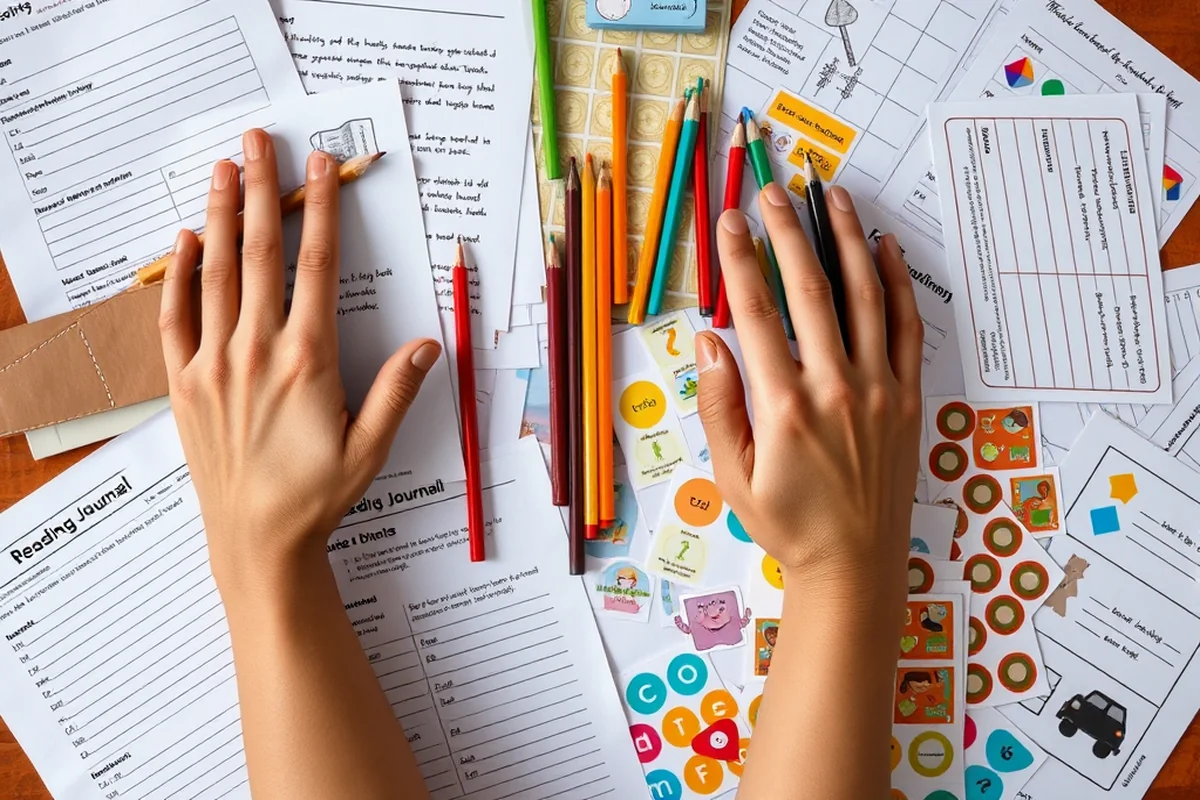
The key to creating an effective reading journal is to make it a part of the daily routine. We set aside time each day for reading and journaling — and it has become a non-negotiable part of our homeschooling schedule.
I also find that using prompts helps guide my children’s thinking. For example, we might use prompts like 'What was the most exciting part of the book today?' or 'What would you say to the main character if you met them?' These questions help children think critically about what they’re reading.
It’s also important to encourage creativity. Some children prefer to draw, while others prefer to write. I allow my kids to use their preferred method — and it helps them feel more connected to the journal and the books they read.
Related: What is sora reading
How a Reading Journal Helps With Comprehension
One of the biggest benefits of a reading journal is how it helps improve comprehension. When my daughter writes in her journal, she often reflects on what she’s read and how it connects to her own life. This helps her understand the story on a deeper level.
For example, after reading a book about friendship, she might write about a time when she had a friend and what they did together. This helps her make a connection between the story and her own experiences — and that’s a powerful way to build comprehension.
I’ve also noticed that my son is better at retelling stories after using his reading journal. He often draws scenes from the books he reads, and then explains what he drew. This helps reinforce the plot and characters — and it’s a great way to practice summarizing.
Related: What is reading light
How a Reading Journal Can Be Used for Different Age Groups
A reading journal can be used with children of all ages — and the way we use it can change based on the child’s developmental stage. For younger children, we might use simple prompts and drawings, while older children might write more detailed reflections.
With my preschooler, we use a simple notebook with colorful pages and prompts like 'What was your favorite part of the story?' or 'What would you do if you met the main character?' These prompts help them think about what they’ve read without overwhelming them.
With my older child, we use more complex prompts and encourage him to write longer entries. We also use the journal to discuss themes and characters in more depth — and it’s been a great way to help him develop his critical thinking skills.
A reading journal grows with your child.
Related: How to read aloud books for kids
Using a Reading Journal for Long-Term Growth
One of the most powerful aspects of a reading journal is how it helps track reading progress over time. We’ve been using the same journal for years, and it’s amazing to see how much my kids have grown as readers.
Looking back at their entries, I can see how their vocabulary, writing skills, and comprehension abilities have improved. It’s also a great way to see how their interests have changed over time — and that helps us choose books that are more relevant to their lives.
In our homeschool, we review the journal every few months and talk about what they’ve learned. This helps reinforce the lessons they’ve learned from reading and keeps them motivated to continue reading.
👶 Younger Kids Version
Uses simple prompts and drawings for preschoolers, with large pages and bright colors.
📚 Older Kids Version
Includes complex prompts and writing activities for older children, with space for detailed reflections.
📝 No-Prep Version
Uses a blank notebook with minimal preparation, ideal for busy homeschoolers.
👥 Group Version
Encourages collaboration and discussion among multiple readers, with prompts for group reflections.
🔍 Extension Version
Includes prompts for deeper thinking and analysis, suitable for older readers or those looking to expand their skills.
| The mistake | Why it happens | The fix |
|---|---|---|
| Making the journal too structured or rigid | This can stifle creativity and make the activity feel like a chore rather than a fun part of reading. | Use open-ended prompts and allow your child to choose how they want to express their thoughts. |
| Not reviewing the journal regularly | Without regular review, children may not see the progress they’ve made or understand the value of the journal. | Set a time each week or month to go through the journal together and talk about what they’ve learned. |
| Using a journal that’s too complex for the child’s age | A journal that’s too complex can overwhelm a younger child and make them feel discouraged. | Choose a journal that’s appropriate for the child’s age and developmental stage. |
| Forcing the child to write every time | Forcing a child to write can create a negative association with reading and journaling. | Let them choose whether they want to write, draw, or use another method to express their thoughts. |
What Is Reading Journal
Common Questions
How often should my child use a reading journal?
What if my child doesn’t want to write in the journal?
How can I make the journal more engaging for my child?
Can I use a digital version of a reading journal?
References
- Reading Journal as a Way to Improve Students' Comprehension ... (academia.edu)
- Reading Logs: Integrating Extensive Reading with Writing Tasks (americanenglish.state.gov)
- Federal Data on Reading for Pleasure: All Signs Show a Slump (arts.gov)
- Art of Reading a Journal Article - Kennesaw State University (campus.kennesaw.edu)
Cite this guide
Teaching Reading to Homeschoolers (2026). What Is Reading Journal. https://homeschoolread.com/what-is-reading-journal/
Feel free to cite or share this guide.