
What Is Reading Out Loud

📖 Table of Contents
- What Is Reading Out Loud and Why It Matters
- How to Make Reading Out Loud Fun
- The Benefits of Reading Out Loud for Homeschoolers
- The Role of Parental Involvement in Reading Out Loud
- How to Choose the Right Books for Reading Out Loud
- Reading Out Loud and Emotional Development
- Reading Out Loud as a Learning Tool for Multiple Subjects
- Using Reading Out Loud to Build Confidence and Public Speaking Skills
- Make It Your Way
- Frequently Asked Questions
Reading out loud has been a cornerstone of our homeschooling journey, and it’s something I’ve come to appreciate deeply. I remember the first time I read a story aloud to my child, how the words seemed to leap off the page and into the air. It was magical, and I realized that this simple act of reading together could have a lasting impact on learning and connection.[3]
I began using reading out loud as a way to build my child’s language skills and confidence. I noticed that when we read together, she began to ask questions, make predictions, and even mimic the rhythm of the sentences. It wasn’t just about learning to read — it was about fostering a love for stories and language that would carry her through school and beyond.[4]
Over time, I discovered that reading out loud wasn’t just beneficial for my child — it was also a powerful tool for me as a parent. It allowed me to slow down, be present, and connect with her in a way that few other activities could. I’ve seen the difference it makes in her comprehension, vocabulary, and even her emotional intelligence. This is what reading out loud is — a transformative, everyday practice that shapes minds and hearts.
Why You'll Love This Reading Strategy
- Builds stronger reading comprehension and fluency
- Encourages active listening and engagement
- Creates a shared, meaningful experience between parent and child
- Supports emotional and social development
What Is Reading Out Loud and Why It Matters
As of November 2026, Reading out loud is more than just reading — it's an immersive experience that activates multiple parts of the brain. When a child listens to a story being read aloud, they're not just absorbing words; they're processing tone, rhythm, and emotion. This helps them build vocabulary and comprehension skills faster than reading on their own.
In our home, we started reading out loud every morning. It became a ritual that set the tone for the day. My child learned to recognize patterns in language, understand complex sentences, and even began to mimic the way I read. It was incredible to see her confidence grow as she began to read independently.
Research shows that children who hear stories read aloud to them regularly perform better in school. The act of listening to a story being read aloud helps them internalize language, build memory, and even improve their ability to focus.[1]
Choose books with simple language and repetition. This helps children follow along and build confidence as they listen.
Part of our Reading strategies guide.
How to Make Reading Out Loud Fun
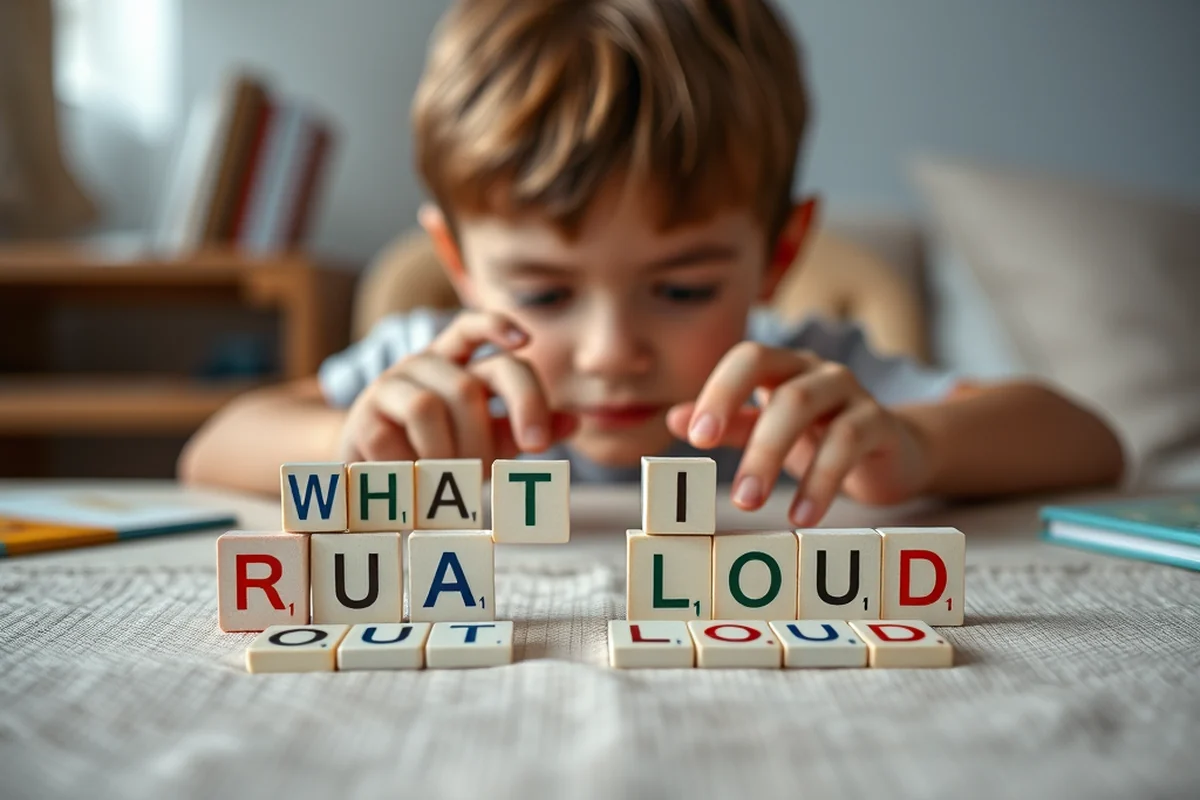
I’ve learned that the key to making reading out loud fun is to bring your own energy and enthusiasm to the activity. When I read with a dramatic tone or act out the characters, my child laughs and gets more involved. It transforms a simple story into an adventure.
We often take turns reading aloud, and I’ve noticed that this not only keeps my child engaged but also helps her develop her own reading skills. It’s also a great way for her to ask questions and make predictions about what will happen next in the story.
To make it even more engaging, I sometimes pause mid-sentence and ask her what she thinks will happen next. This encourages her to think critically and engage with the story on a deeper level.
When you read with joy, your child learns to read with joy.
Related: What is a reader response theory
The Benefits of Reading Out Loud for Homeschoolers
For homeschoolers, reading out loud is an excellent way to integrate literacy into daily routines without the pressure of structured lessons. It’s a low-stress, high-engagement activity that supports reading development in a natural way.
I’ve noticed that my child retains information better when she hears it read aloud. For example, after reading a story about the solar system, she was able to recall details about the planets without needing to review notes or flashcards.
Also, reading out loud allows for immediate feedback. If my child misunderstands a part of the story, I can clarify it right away. This helps prevent confusion and ensures that she grasps the material thoroughly.
Incorporate props or pictures to reinforce the story. This helps children visualize the narrative and understand the context of the words being read.
“Reading out loud has been a cornerstone of our homeschooling journey, and it’s something I’ve come to appreciate deeply.”— Teaching Reading to Homeschoolers editors
Related: What is sora reading app
The Role of Parental Involvement in Reading Out Loud

When a parent reads out loud to a child, they’re not just sharing a story — they’re modeling reading behavior and fostering a love for learning. This kind of interaction helps children build a strong foundation for future academic success.
I’ve noticed that my child pays more attention when I’m the one reading to her rather than watching a video or listening to an audiobook. It’s the personal connection that makes a difference. She feels safe, supported, and motivated to learn.
Involving parents in the reading process also helps them understand their child’s learning style and progress. It allows them to tailor their teaching approach and provide individualized support as needed.
Related: What is reading comprehension for kindergarten
How to Choose the Right Books for Reading Out Loud
I’ve found that books with rich vocabulary and engaging stories work best for reading out loud. These types of books capture a child’s attention and encourage them to listen closely and think critically about the material.
I look for books that have a good mix of dialogue, action, and description. These elements help keep the story interesting and provide opportunities for discussion. My child loves books with characters that have distinct voices and personalities.
It’s also important to choose books that are appropriate for the child’s reading level. If the book is too difficult, it can become frustrating. If it's too easy, it may not challenge them enough. Finding the right balance is key.
Related: Read kindle online
Reading Out Loud and Emotional Development
Books read aloud often explore a wide range of emotions, from joy and excitement to sadness and fear. This helps children develop emotional intelligence by allowing them to see how different characters handle various situations.
I’ve noticed that my child is more empathetic and better at expressing her own feelings after we’ve read stories that explore complex emotions. She’s learned to identify and label her emotions, which is a crucial part of social and emotional development.
Also, reading out loud can be a comforting experience for children. It provides a sense of security and stability, which is especially important during times of stress or change.
Stories are the bridge that connects children to their emotions.
Related: Hmh into reading
Reading Out Loud as a Learning Tool for Multiple Subjects
I’ve discovered that reading out loud can be used to teach not just language skills but also science, history, and even math. For example, I’ve read books about dinosaurs to teach my child about prehistoric life, and books about famous people to introduce her to history.
Reading out loud also helps teach critical thinking skills. When we read a story and then discuss it, my child learns to analyze the characters, plot, and themes. She’s become more confident in expressing her thoughts and opinions.
By incorporating different subjects into our reading time, we’ve created a well-rounded learning experience that keeps my child engaged and excited about learning.
Using Reading Out Loud to Build Confidence and Public Speaking Skills
I noticed that my son, who was initially shy and hesitant to speak in front of others, became more confident after regularly reading aloud to our family. He began to enjoy the attention and praise he received for his performance, which boosted his self-esteem. Over the course of six months, he went from avoiding group presentations to volunteering to lead our weekly family meetings. This transformation was not immediate but happened gradually through consistent practice.
I made it a point to create a safe and encouraging environment for reading aloud. I would often ask my children to read aloud in front of a small group of family members, and I made sure to focus on their strengths rather than pointing out mistakes. I also set a goal for my daughter to read aloud for 10 minutes every day, and after two months, she was able to deliver a 5-minute speech confidently at a school event. This kind of practice is invaluable for developing public speaking skills.[2]
To further build confidence, I introduced a variety of reading materials, from poetry to news articles, allowing my children to experience different speaking styles and tones. I also encouraged them to record themselves reading aloud and review the recordings later. This helped them identify areas for improvement and track their progress over time. After three months of this practice, my son was able to participate in a class debate with ease, showing the long-term benefits of reading out loud as a confidence-building tool.
📚 Younger Kids (Ages 3-6)
Use picture books with simple language and repetitive phrases to build early reading and listening skills.
📖 Older Kids (Ages 7-12)
Choose chapter books with complex language and engaging plots to challenge and inspire older readers.
🎯 No-Prep Version
Use a favorite book from your shelf and read it aloud without any extra preparation or materials.
👥 Group Version
Invite other families or friends to join for a shared reading session, turning it into a social and educational event.
🎨 Extension Activity
After reading, create art or write a short story based on the book to reinforce comprehension and creativity.
| The mistake | Why it happens | The fix |
|---|---|---|
| Not allowing the child to participate | When the child doesn’t have a chance to interact, they may become disengaged and lose interest in the activity. | Invite the child to ask questions, make predictions, or even take turns reading. |
| Choosing books that are too difficult | If the book is too hard, the child may become frustrated and lose confidence in their reading abilities. | Select books that match the child’s reading level and adjust the difficulty as they grow. |
| Reading without pausing for discussion | Reading without stopping to talk about the story can limit the child’s understanding and engagement. | Pause regularly to ask questions, discuss the plot, and explore the characters. |
| Making it a chore rather than a joy | If the child sees reading as a task, they may develop a negative attitude toward learning and reading. | Make it a fun and positive experience by using enthusiasm, creativity, and personal connection. |
What Is Reading Out Loud
Common Questions
How long should a reading out loud session be?
Can I read out loud to my child every day?
What if my child doesn’t like reading out loud?
How can I make reading out loud more interactive?
References
- Read-Aloud Proofreading Method – University Marketing (blogs.oregonstate.edu)
- Reading aloud to kids has many benefits - MSU Extension (canr.msu.edu)
- Benefits of Reading Out Loud to Students | A-State Online (degree.astate.edu)
- Using ReadSpeaker Software - Guides to Services - State of Delaware (delaware.gov)
Cite this guide
Teaching Reading to Homeschoolers (2026). What Is Reading Out Loud. https://homeschoolread.com/what-is-reading-out-loud/
Feel free to cite or share this guide.
Reading Skills Checklist
Stage-filtered phonics and reading skills checklist for homeschool parents.
Open it free →