
What Is Reading Simplified

📖 Table of Contents
- What is reading simplified, really?
- How reading simplified builds early literacy
- Why reading simplified is ideal for homeschoolers
- How to get started with reading simplified
- How reading simplified helps children with learning differences
- How reading simplified builds confidence and independence
- How reading simplified supports lifelong learning
- Make It Your Way
- Frequently Asked Questions
I remember the first time my son sat at the kitchen table, eyes wide and focused, flipping through a book. It wasn’t just a book—it was a portal. He wasn’t reading; he was exploring, discovering, and connecting. That moment, though small, was a revelation. What is reading simplified? It’s not about flashcards or flash drills. It’s about creating a space where curiosity meets words, where a child can fall in love with language without ever feeling pressured. Reading simplified is about honoring the journey, not rushing the destination.[2]
Before we explore the how and the why, let’s be clear: reading simplified isn’t a shortcut. It’s a shift in mindset. It’s about making reading feel less like a chore and more like a conversation. When I first started homeschooling, I tried everything—flashcards, structured lessons, even a reading program that cost nearly $200. But nothing worked. It was only when I leaned into simplicity that I saw real progress. What is reading simplified? It’s the art of stripping away the noise and focusing on the core: a child’s love of stories, of language, and of learning.[1]
Now, I see reading as a daily ritual, not a task. It’s the way we begin each morning, the way we end each day. It’s the way we find joy in the rhythm of words and the magic of a shared story. What is reading simplified? It’s about building a foundation that allows a child to read with ease, confidence, and a lifetime of curiosity. It’s not about perfection—it’s about connection.[3]
Why You'll Love This Approach to Reading
- It fosters a genuine love for reading without pressure or stress.
- It allows for customization based on a child’s interests and pace.
- It supports early literacy through engaging and meaningful interactions.
- It builds confidence and independence through simple, consistent practice.
What is reading simplified, really?
As of November 2026, Reading simplified is not a program, not a curriculum, and not a worksheet. It’s a philosophy. It’s about making reading feel natural, not forced. I started by reading aloud to my son every day. I didn’t use a script, didn’t follow a plan. I just read what interested us—books about dinosaurs, about space, about friendship. Over time, he began to ask questions, to point out words, to want to read on his own. That’s what reading simplified is about: creating a foundation of curiosity and connection.[4]
The key to reading simplified is repetition and consistency. We read the same book multiple times. We stopped at pages we found interesting and skipped the parts that didn’t. We didn’t rush through stories or worry about comprehension. We just read and talked. I remember when my son first tried to read a word on his own. It was the word 'dog.' He didn’t get it right the first time, but he persisted. That moment was a turning point for us. It showed me that reading simplified is not about the end goal—it’s about the process.[5]
Reading simplified is also about adapting to the child’s needs and interests. If a child is drawn to picture books, that’s where you start. If they’re fascinated by stories, you read those. There’s no right or wrong path. I’ve seen so many parents stress over reading milestones, but reading simplified is about letting the child lead the way.
Choose books that align with your child's passions—whether it's dinosaurs, cars, or fairy tales. This makes reading feel like fun, not work.
Part of our Reading strategies guide.
How reading simplified builds early literacy
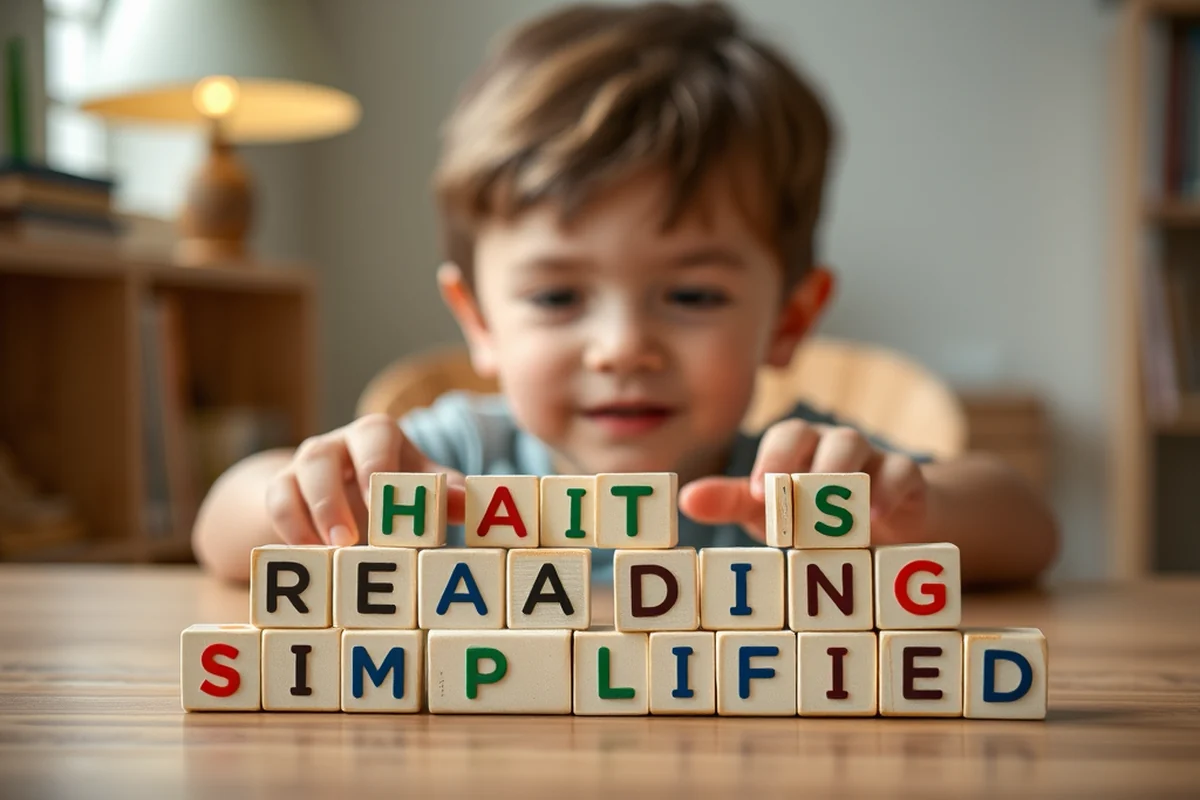
Early literacy is the foundation of reading, and it doesn’t require flash cards or workbooks. It’s about interaction, conversation, and engagement. When we read together, we’re not just sharing stories—we’re building vocabulary, phonemic awareness, and comprehension. I noticed my son’s vocabulary expanding just by reading aloud each day. He learned new words, new ideas, and new ways to think. It wasn’t a lesson—it was a conversation.
One of the most powerful tools in reading simplified is the use of repetition. Reading the same book multiple times helps a child recognize patterns, understand story structure, and build confidence. We read the same book about trains for a month. My son learned the names of different parts of the train, the roles of the train conductor, and the journey itself. It was a small book, but it sparked a huge curiosity.
Reading simplified also helps children develop a sense of prediction and inference. When we read, we stopped and asked questions. We talked about what was happening, what we thought would happen next, and what the characters might be feeling. These small conversations built a child’s understanding of story and meaning.
Reading simplified is not a lesson—it’s a conversation.
Related: What is reading in between the lines
Why reading simplified is ideal for homeschoolers
Homeschooling is about tailoring education to the child, not the system. Reading simplified fits perfectly into that philosophy. It doesn’t require a textbook, a schedule, or a teacher. It’s about making reading a part of daily life. When I started homeschooling, I didn’t have the resources for a full reading program. I had books, and I had time. That was enough.
One of the best things about reading simplified is that it adapts to the child’s pace. Some children pick up reading quickly, while others need more time. Reading simplified doesn’t pressure a child into reading before they’re ready. It lets them explore, make mistakes, and learn at their own speed. I’ve seen children flourish under this approach, not because they were forced to read, but because they were given the freedom to enjoy it.
Reading simplified also helps parents build a strong relationship with their child through reading. It’s a time of connection, of bonding, and of shared discovery. When we read together, we’re not just teaching a child to read—we’re teaching them to love it.
Incorporate reading into daily routines—before meals, during playtime, or before bed. This helps your child see reading as a natural part of life.
“I remember the first time my son sat at the kitchen table, eyes wide and focused, flipping through a book.”— Teaching Reading to Homeschoolers editors
Related: What is reading activities
How to get started with reading simplified

You don’t need a degree in education or a library full of books to start reading simplified. You just need a child and a book. I began by reading aloud every day. Some days, we read for ten minutes. Other days, we read for an hour. The key was consistency, not perfection. I used books that interested my son—books with bright pictures, familiar characters, and simple language.
One of the best ways to start reading simplified is to choose books that your child can participate in. Books with repetitive text, such as 'Brown Bear, Brown Bear, What Do You See?' or 'The Very Hungry Caterpillar,' are great for beginners. These books give children a chance to predict what comes next, to repeat phrases, and to feel a sense of accomplishment.
Another way to get started is to make reading a shared experience. Sit with your child, read together, and talk about the story. Ask questions, make comments, and let your child lead the conversation. This builds a strong foundation of literacy and helps your child see reading as a joyful and meaningful activity.
Related: What is reader s digest condensed books
How reading simplified helps children with learning differences
Children with learning differences often struggle in traditional reading environments. Reading simplified offers an alternative that is flexible, patient, and focused on the child’s needs. I’ve seen this approach help children with dyslexia, ADHD, and autism make meaningful progress. It’s not about fixing the child—it’s about adjusting the way we teach.
One of the most important aspects of reading simplified for children with learning differences is the emphasis on repetition and consistency. These children often benefit from multiple exposures to the same material, which helps them build familiarity and confidence. I’ve seen children with dyslexia make progress simply by reading the same book over and over again, each time gaining a little more understanding.
Reading simplified also allows for a more personalized approach. If a child is struggling with phonics, we focus on that. If a child is interested in storytelling, we explore that. There’s no one-size-fits-all approach. This flexibility is especially beneficial for children who may feel frustrated or discouraged in traditional settings.
Related: What is mark all as read
How reading simplified builds confidence and independence
Confidence in reading begins with small steps, and reading simplified provides exactly that. When a child is allowed to lead the reading process, they gain a sense of ownership over their learning. I’ve seen my son grow more confident with each book we read. He’s no longer shy about reading in front of others. He’s proud of what he can do.
One of the best ways reading simplified builds confidence is through repetition. When a child reads the same book multiple times, they become more familiar with the language, the structure, and the meaning. This repeated exposure helps them feel more comfortable and more capable. It also helps them see that they can learn and grow at their own pace.
Reading simplified also encourages independence by allowing the child to take the lead. They choose the books they want to read, they decide how long they want to read, and they explore the stories in their own way. This sense of independence helps them build self-esteem and a lifelong love of reading.
Reading simplified is about building confidence, one page at a time.
Related: What is voice aloud reader
How reading simplified supports lifelong learning
Lifelong learning begins with a love of reading, and reading simplified helps cultivate that love from the start. When a child grows up reading for joy, they’re more likely to continue reading throughout their life. I’ve seen this happen with my son—he reads every day, not because he has to, but because he enjoys it.
One of the most powerful aspects of reading simplified is its ability to create a foundation of curiosity and exploration. When a child reads, they’re not just learning words—they’re learning about the world. They’re discovering new ideas, new perspectives, and new possibilities. This curiosity is the key to lifelong learning.
Reading simplified also helps children develop a sense of self-direction and self-motivation. When a child chooses what they want to read, they take ownership of their learning. This sense of autonomy is a powerful tool for lifelong learning. It teaches them that they can explore, discover, and grow on their own.
📖 Younger Kids (Ages 3-5)
Use picture books with simple language and repetitive text to build early literacy and vocabulary.
📚 Older Kids (Ages 6-8)
Choose chapter books and stories that allow for deeper discussion and comprehension practice.
✨ No-Prep Option
Use books from your home library or borrow from the local library for a no-cost, no-prep reading experience.
👥 Group Reading
Create a reading circle with other families or friends to share stories and build a community of learners.
🎨 Extension Activity
After reading, draw or write about the story to reinforce comprehension and creativity.
| The mistake | Why it happens | The fix |
|---|---|---|
| Trying to force a child to read before they’re ready. | Forcing a child to read before they’re ready can lead to frustration, anxiety, and a lack of interest in reading. | Let the child lead the way. Read together, talk about the story, and make reading a joyful experience. |
| Over-relying on worksheets and flashcards. | Worksheets and flashcards can make reading feel like a task, not a conversation. They can also be stressful for young learners. | Use books and conversations as the primary tools for teaching reading. Focus on interaction and engagement. |
| Not allowing for repetition and consistency. | Repetition and consistency are essential for building literacy. Without them, children may not make progress or feel confident in their reading abilities. | Read the same book multiple times, and make reading a regular part of your child’s day. |
| Neglecting the child’s interests and preferences. | When a child’s interests are not honored, reading can feel forced and unenjoyable. This can lead to disengagement and a lack of motivation. | Choose books that align with your child’s interests. Let them choose what they want to read and explore their curiosity. |
What Is Reading Simplified
Common Questions
What age is reading simplified best for?
Do I need any special materials for reading simplified?
How long should I read each day with my child?
Can I use reading simplified if my child has learning differences?
References
- Creating an Elementary Reading Curriculum that Leads all Students ... (digitalcommons.hamline.edu)
- Incorporating Extensive Reading into the Foreign Language ... (digitalcommons.kennesaw.edu)
- Incorporating Free Voluntary Reading for an Engaging Curriculum (dliflc.edu)
- Family Literacy Resources - Louisiana Department of Education (doe.louisiana.gov)
- Science of Reading - Nevada Department of Education (doe.nv.gov)
Cite this guide
Teaching Reading to Homeschoolers (2026). What Is Reading Simplified. https://homeschoolread.com/what-is-reading-simplified/
Feel free to cite or share this guide.
Reading Skills Checklist
Stage-filtered phonics and reading skills checklist for homeschool parents.
Open it free →