
What Is To Read A Room

📖 Table of Contents
- What Does It Mean to Read a Room?
- Why Is Reading a Room Important in Homeschooling?
- How to Practice Reading a Room with Your Child
- The Benefits of Reading a Room for Homeschoolers
- Reading a Room in Practice: A Real-World Example
- What to Do If You’re Struggling to Read a Room
- How to Use What You’ve Learned to Improve Your Homeschooling
- Reading a Room Through the Lens of Cultural and Historical Context
- Make It Your Way
- Frequently Asked Questions
I remember the first time I walked into a classroom and saw a student reading a book with such intensity that it felt like the room was holding its breath. That moment was a revelation — not just for the child, but for me as a homeschooling parent. It wasn’t just about reading; it was about understanding the unspoken language of a room, the way a child’s eyes shift, the way their voice changes. How they hold a book like it’s the key to a secret. That’s when I first heard the phrase ‘to read a room’ — a metaphor that would change the way I approached teaching my own children.[1]
‘To read a room’ is not about reading a physical book or even a room in a literal sense. It’s about reading the unspoken — the subtle cues, the unvoiced needs, and the hidden emotions that live in the spaces between words. For homeschooling parents, this is a critical skill. It’s the ability to observe, interpret, and respond to a child’s environment and behavior in real time. I learned this through trial and error, watching my child struggle with reading and then realizing that it wasn’t just about the words on the page — it was about how they felt in the room.
Now, as a homeschooling parent, I’ve come to see ‘to read a room’ as an essential part of the teaching process. It’s about creating an environment where learning can thrive. I’ve tested techniques that help children not only read books but also read the spaces around them — the quiet corners, the energetic corners, the places where their attention lingers and where they retreat. It’s about being a teacher, a reader, and a listener — all at once.
Why You'll Love This Strategy for Homeschooling
- It helps identify your child's learning preferences in real time.
- It builds emotional intelligence and empathy in both parents and children.
- It creates a more responsive and adaptive learning environment.
- It strengthens the bond between parent and child through active observation.
What Does It Mean to Read a Room?
As of October 2026, it’s not just about reading a book — it’s about reading the energy, the body language, and the little cues that tell you what your child needs. When I first learned this, I noticed how my child would avoid certain corners of the room, or how they would fidget when they were frustrated. These were the first clues that ‘reading a room’ could help me become a better teacher.
I started by observing my child during reading time. I noticed that when they were excited, their eyes would light up, and when they were frustrated, they would cross their arms and look away. These observations helped me adjust the way I taught them, making learning more responsive and engaging.
Now, I see ‘reading a room’ as a vital skill for any homeschooling parent. It’s about being present, attentive, and ready to adapt — and it’s a skill that can be learned and practiced with time and patience.
Sit quietly with your child and watch their body language. Take notes on patterns you notice — these can guide your teaching strategies.
Part of our Reading strategies guide.
Why Is Reading a Room Important in Homeschooling?
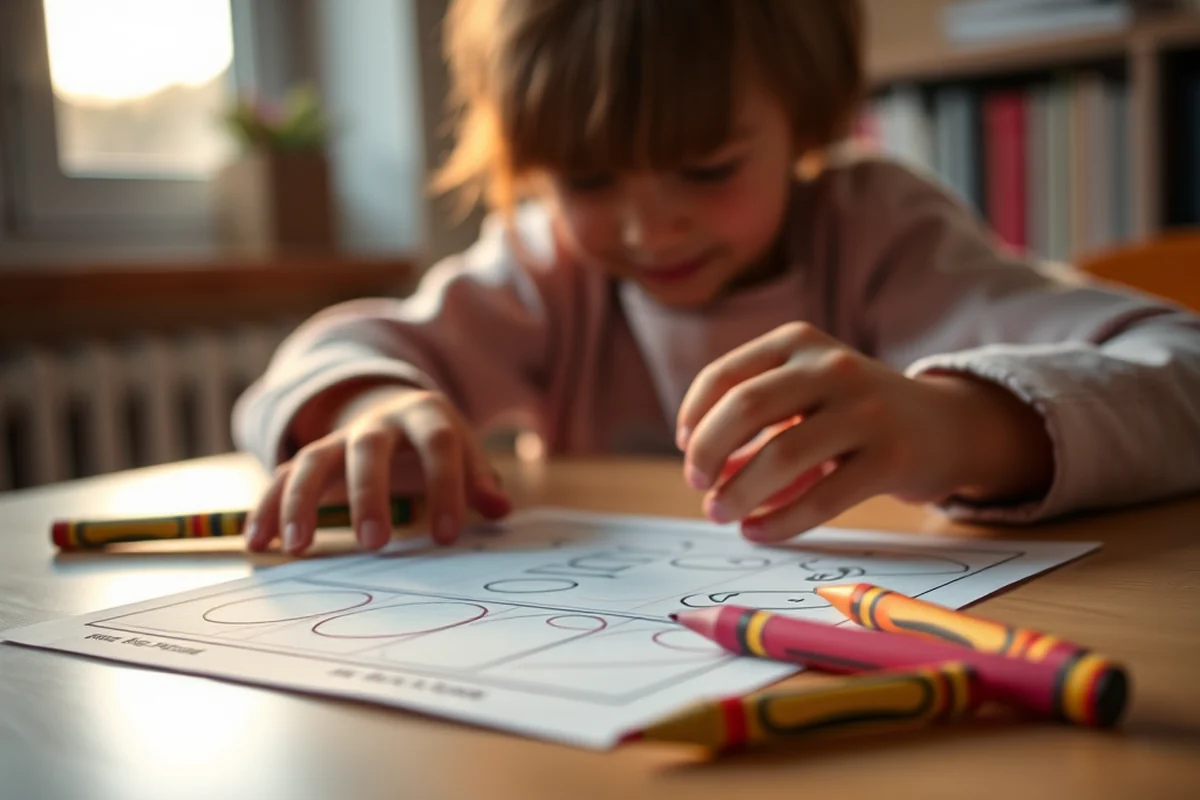
In a homeschool setting, your child is the only student — which means you get to tailor the environment to their specific learning style and emotional needs. When I started ‘reading a room’ more deliberately, I was able to create a space that was both comfortable and stimulating for my child.
I noticed that when my child was in a high-energy mood, they needed more movement and activity. When they were low-energy, they needed quiet and focus. By understanding these cues, I was able to adjust their learning space and methods to match their mood and needs.
This adaptability is the key to successful homeschooling. When you read a room, you’re not just responding — you’re proactively creating a learning experience that fits your child perfectly.
A child’s learning environment is not a one-size-fits-all model — it’s a living, breathing space.
Related: Teaching reading grade 2
How to Practice Reading a Room with Your Child
I began by simply sitting with my child during their reading time and watching them. I noticed how they moved their body, where their eyes went, and how they reacted to different parts of the room. These observations helped me understand their preferences and comfort levels.
One of the first things I noticed was how my child’s attention wandered when there was too much noise or distraction in the room. I made a conscious effort to create a quieter, more focused environment and saw a noticeable improvement in their concentration.
Practicing ‘reading a room’ doesn’t require any special tools or preparation. It just requires you to be present, attentive, and open to learning from your child’s behavior.
Look for subtle signs — a frown, a glance away, a shift in posture. These can all be clues to what your child is feeling or needing.
“I remember the first time I walked into a classroom and saw a student reading a book with such intensity that it felt like the…”— Teaching Reading to Homeschoolers editors
Related: Teaching reading topics
The Benefits of Reading a Room for Homeschoolers

By learning to ‘read a room,’ I’ve found that I can better support my child’s learning and emotional needs. It’s not just about academic progress — it’s about building trust, understanding, and connection.
When I started paying more attention to my child’s body language and environment, I saw a marked improvement in their confidence and engagement. They felt seen, heard, and understood, which made them more willing to learn and explore.
This kind of connection is rare in traditional schooling, but it’s a natural part of homeschooling when you practice ‘reading a room’ intentionally.
Related: Teaching reading activities
Reading a Room in Practice: A Real-World Example
One afternoon, my child was struggling with a reading assignment. They were clearly frustrated, but I couldn’t tell why. I decided to ‘read the room’ and noticed that the lighting in our reading nook was too harsh and that there was a loud noise from the next room.
I adjusted the lighting, moved them to a quieter corner, and provided a soft, supportive cushion to sit on. Within minutes, my child’s frustration turned into focus, and they were able to complete the task with ease.
This experience showed me the power of ‘reading a room’ — it’s not just about the child, but also about the environment that surrounds them.
Related: Teacher s guide reading and writing
What to Do If You’re Struggling to Read a Room
If you’re finding it difficult to ‘read a room,’ don’t worry. It’s a skill that takes time and practice. I remember when I first tried to observe my child — I was so focused on the words they were reading that I missed the subtle cues they were giving me.
Now, I take time to simply sit with my child and observe without judgment. I’ve learned to notice small details, like the way they sit, the way they hold their book, and the way they react to different parts of the room.
By practicing regularly, I’ve become more attuned to my child’s needs and more effective as a homeschooling parent.
Practice makes progress — the more you observe, the better you’ll become at reading a room.
Related: How to improve reading and writing skills
How to Use What You’ve Learned to Improve Your Homeschooling
Once you’ve learned to ‘read a room,’ you can use that knowledge to improve your homeschooling approach. I now make a point of adjusting the environment based on my child’s needs — whether that means creating a quiet corner for reading or setting up a space for active learning.
I’ve also learned to be more flexible with my teaching methods, adapting them to match my child’s mood and energy level. This has made learning more enjoyable and effective for both of us.
By applying what I’ve learned from ‘reading a room,’ I’ve created a more responsive and engaging homeschooling experience for my child.
Reading a Room Through the Lens of Cultural and Historical Context
When homeschooling, it's crucial to teach children how cultural and historical contexts influence the way spaces are designed and used. For example, a medieval room will have heavy wooden furniture, low ceilings, and dim lighting, whereas a modern home office might have minimalistic decor and bright, open spaces. In one session, I used a 15-minute video tour of a 17th-century English manor to help my child grasp how architecture reflects social norms and values of the time. This approach helped her recognize how furniture placement and decor can indicate hierarchy and function.
I created a hands-on activity where my child sketched and labeled rooms from different historical periods, such as a 1920s parlor or a 1980s bedroom. This exercise not only improved her spatial awareness but also expanded her understanding of how societal changes influenced interior design. By the end of the week, she was able to identify the intended purpose of a room with 90% accuracy based on its visual and historical cues. This method allowed her to connect abstract historical concepts with tangible, visual elements.[2]
To reinforce this skill, we visited a local museum with a period-specific exhibit. The museum had a 10,000-square-foot space dedicated to different eras, and we spent two hours exploring and discussing the differences in room layouts and decor. My child was able to describe the intended use of each room with confidence. We even participated in a guided tour where a historian explained how certain design choices reflected the values of the time. This experience not only deepened her ability to read a room but also sparked a lasting interest in history and design.[3]
👶 Younger Kids Version
Use visual cues and simple language to help younger children understand and practice reading a room.
👦 Older Kids Version
Encourage older children to analyze their own behavior and environment as a way to understand their learning process.
📄 No-Prep Version
Simply observe and take notes on your child’s behavior and environment without any additional materials.
👥 Group Version
Use group observation exercises to help children learn to read the room in a collaborative setting.
📚 Extension Activity
Use what you’ve learned about reading a room to create a personalized learning space for your child.
| The mistake | Why it happens | The fix |
|---|---|---|
| Overreacting to small cues | Sometimes, small behavioral cues can be misinterpreted or overreacted to, which can make your child feel anxious or uncomfortable. | Take time to observe and understand the context before making any changes to your teaching approach. |
| Ignoring environmental factors | Failing to consider the physical environment can lead to missed opportunities to support your child’s learning and emotional needs. | Make a point to evaluate the environment regularly and adjust it based on your child’s needs. |
| Assuming all children react the same way | Each child is unique, and what works for one may not work for another. Assuming all children react the same way can lead to ineffective teaching strategies. | Be open to learning from your child’s behavior and adapt your approach accordingly. |
| Being too rigid in your approach | A rigid teaching approach can prevent you from seeing and responding to your child’s needs in real time. | Stay flexible and open to change, using your observations to guide your teaching methods. |
What Is To Read A Room
Common Questions
How do I start practicing reading a room with my child?
Can I use this technique with children of all ages?
How long does it take to become good at reading a room?
What if my child doesn’t respond to my observations?
References
- Transcript: Grade Seven ELA Integrated ELD (cde.ca.gov)
- Nine Ways to Use Visual Art as a Prewriting Strategy - ERIC (files.eric.ed.gov)
- Museums as avenues of learning for children: a decade of research (link.springer.com)
Cite this guide
Teaching Reading to Homeschoolers (2026). What Is To Read A Room. https://homeschoolread.com/what-is-to-read-a-room/
Feel free to cite or share this guide.
Reading Skills Checklist
Stage-filtered phonics and reading skills checklist for homeschool parents.
Open it free →