
What Is Reading Horizons

📖 Table of Contents
- What Makes Reading Horizons Different?
- How to Get Started with Reading Horizons
- What to Expect in the First Few Weeks
- How Long Does It Take to See Results?
- What to Do If Your Child Is Struggling
- How to Keep Your Child Motivated
- What to Do If You Run Out of Materials
- Make It Your Way
- Frequently Asked Questions
I remember the first time I saw my son struggle with reading — his eyes would dart back and forth across the page. He’d often say, 'I don’t know what this word is.' It wasn’t that he wasn’t smart, but he just didn’t know how to make sense of the letters and sounds. That’s when I stumbled upon Reading Horizons, a structured, multisensory approach to phonics that transformed our reading journey. What is Reading Horizons? It’s a proven system that breaks reading down into manageable steps, focusing on phonemic awareness, decoding, fluency, and comprehension — all while making the process engaging and fun for kids.[3]
Reading Horizons isn’t just another phonics program. It’s a complete curriculum that has helped thousands of homeschooled children and classrooms across the country. I tried several phonics methods before I found this one, but what stood out was its clear structure, the use of manipulatives, and the way it builds confidence step by step. It doesn’t just teach kids how to read — it teaches them to love reading. And that, I think, is the most important part of all.[4]
What is Reading Horizons? If I had to describe it in one sentence, it would be: a science-based, systematic phonics program that helps children learn to read through structured, multisensory instruction. It uses hands-on materials like letter tiles, flashcards, and decodable books, and it’s designed to be used with the teacher (or parent) in a one-on-one or small-group setting. I’ve seen it work for kids of all learning styles, from those who are already ahead to those who need more support. It’s not just about learning letters — it’s about building a foundation that lasts.
Why You'll Love This Reading Program
- Structured, science-based approach ensures consistent progress
- Multisensory materials make learning engaging and memorable
- Designed for one-on-one or small group instruction
- Includes everything you need to get started, from flashcards to decodable books
What Makes Reading Horizons Different?
As of October 2026, What makes Reading Horizons different is its emphasis on systematic phonics instruction. Unlike some programs that jump from one skill to the next, Reading Horizons follows a clear sequence that builds on previous lessons. This ensures that children don’t miss foundational skills before moving on. For example, the program starts with phonemic awareness — the ability to hear and manipulate individual sounds — before moving on to letter recognition and blending.
The use of manipulatives is another key feature. I remember when my son first used the letter tiles to make words. He was so excited when he spelled out 'cat' correctly. These hands-on materials help make abstract concepts like phonics more concrete and easier to understand. The program also includes decodable books that are carefully written to match the skills students are learning at each stage.
What really stands out is that Reading Horizons is designed to be used with a teacher or parent in a one-on-one or small-group setting. This allows for immediate feedback and personalized instruction. It’s not a program you just hand to a child and walk away — it’s an interactive, dynamic experience that keeps kids engaged and motivated.
Before diving into letter recognition, spend time playing games that help your child hear and manipulate sounds in words. For example, ask them to identify the beginning sound in 'dog' or change 'cat' to 'bat'. This builds a strong foundation for reading.
Part of our Reading strategies guide.
How to Get Started with Reading Horizons
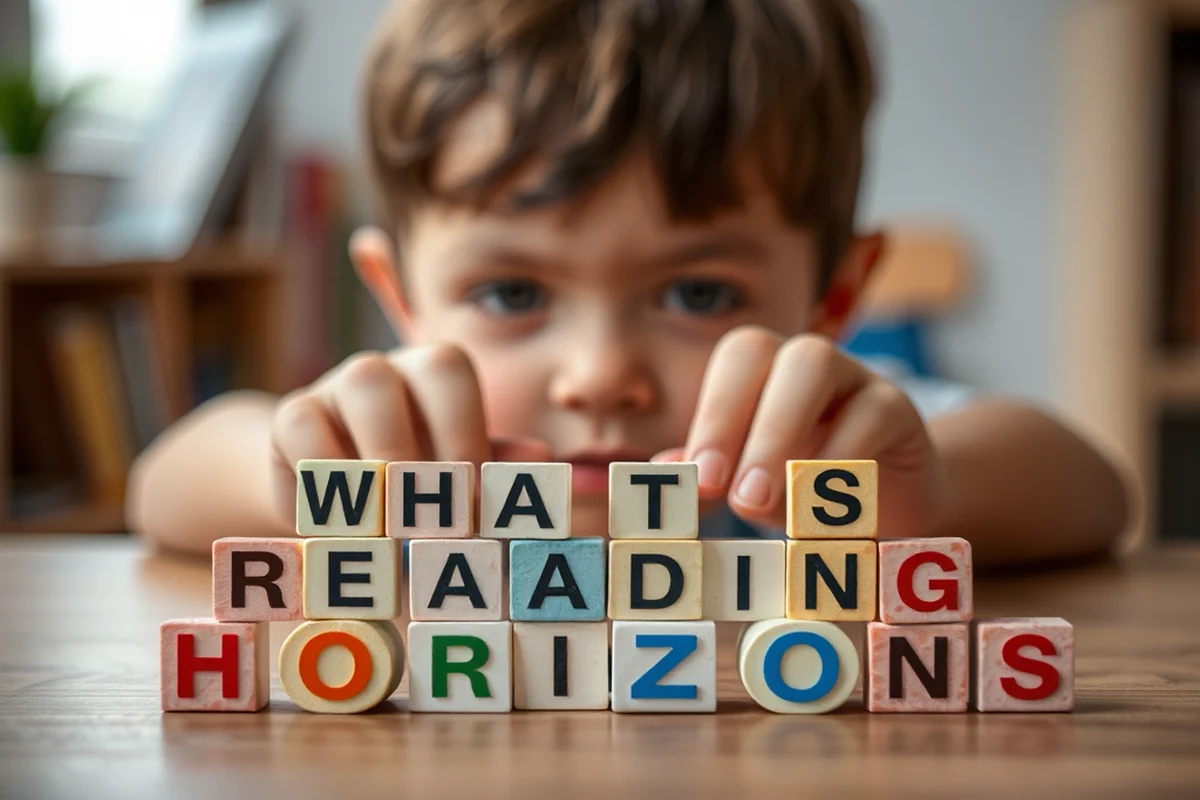
To get started with Reading Horizons, you’ll need a few basic supplies: the program itself, letter tiles, flashcards, and a set of decodable books. I purchased the program online, and it came with everything I needed, including the teacher's manual and lesson plans. I found it easiest to start with the first unit, which focuses on phonemic awareness and letter recognition.
Each lesson is clearly outlined, with step-by-step instructions and a list of materials needed. I liked that the program is broken down into manageable chunks, so it’s easy to see what you need to do each day. The teacher's manual even includes tips on how to modify lessons for different learning styles or needs.
One thing I found really helpful was the online support. The company offers forums where parents and teachers can share ideas, ask questions, and get support. This made the transition to using Reading Horizons much smoother, especially since I was new to teaching phonics.
Getting started with Reading Horizons is like opening a treasure chest of learning tools.
Related: How to read aloud
What to Expect in the First Few Weeks
In the first few weeks of using Reading Horizons, the focus is on phonemic awareness and letter recognition. Each lesson begins with a warm-up activity that gets the child engaged, like playing a game with letter tiles or identifying sounds in words. These activities are short, usually lasting around 10-15 minutes, and they’re designed to be fun and interactive.[1]
After the warm-up, the main lesson begins. This is where the child learns a new phonics concept, such as blending sounds to form words or recognizing the difference between short and long vowels. The teacher's manual provides clear instructions on how to present each concept, and it’s easy to follow. I found that my son was able to grasp these concepts quickly, especially when we used the letter tiles.
By the end of the first few weeks, the child should be able to recognize and blend simple words. I was thrilled when my son was able to read 'cat' and 'dog' on his own. It was a small victory, but it showed that the program was working and that he was making progress.
When teaching new concepts, use visual aids like flashcards and letter tiles to help your child understand what they’re learning. For example, when teaching the letter 'A', show a picture of an apple and ask them to say the sound it makes.
“I remember the first time I saw my son struggle with reading — his eyes would dart back and forth across the page, and he’d…”— Teaching Reading to Homeschoolers editors
Related: What is reading comprehension for grade 5
How Long Does It Take to See Results?
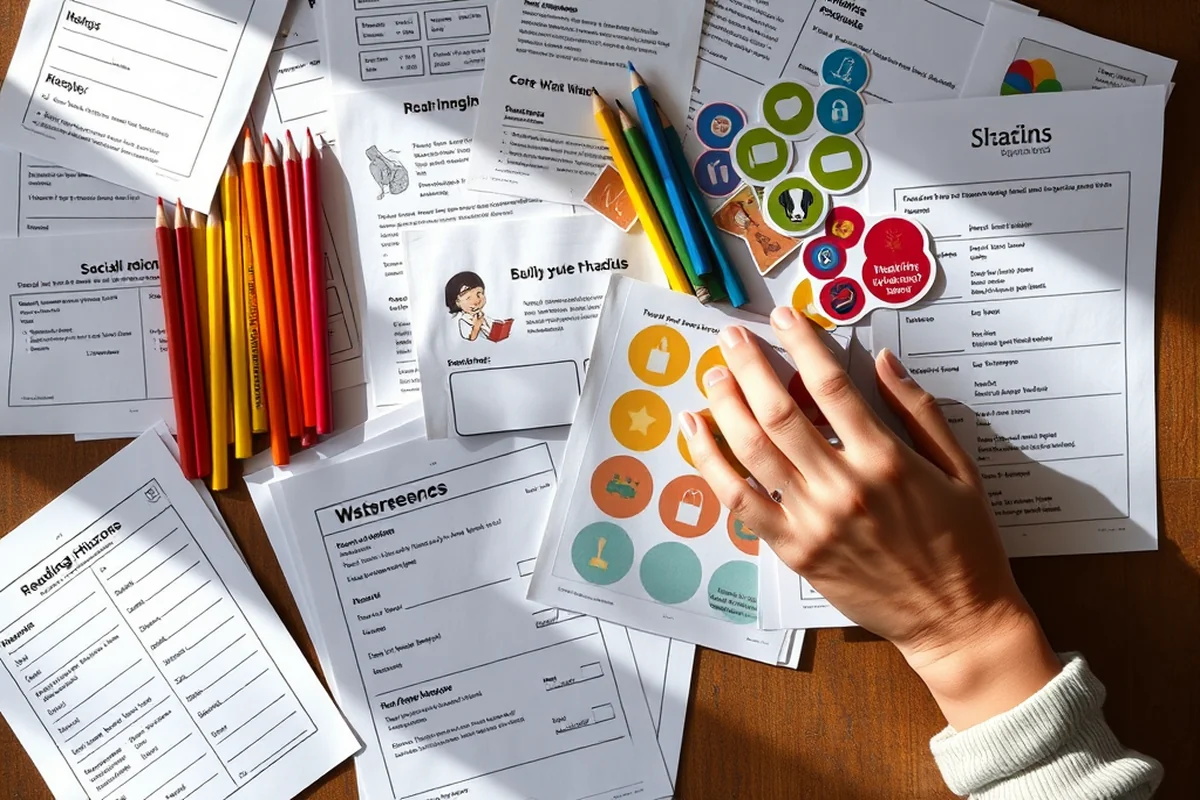
How long it takes to see results with Reading Horizons depends on the child and how much time is spent on the program each day. I noticed improvements in my son’s phonemic awareness within the first two weeks. He was able to hear and identify sounds in words more clearly, and he was excited to try new activities.
By the end of the first month, my son was able to recognize and blend simple words, like 'man' and 'dog'. He was reading short sentences from the decodable books, and he was proud of himself. It was amazing to see how quickly he was progressing, especially since we were only spending 15-20 minutes each day on the program.[2]
It’s important to remember that every child learns at their own pace. Some children may pick up on phonics concepts quickly, while others may take a bit more time. The key is to be patient and consistent. With regular practice and support, most children will begin to see results within a few weeks.
Related: What is reading comprehension for kids
What to Do If Your Child Is Struggling
If your child is struggling with Reading Horizons, the first thing to do is take a step back and review the previous lessons. Sometimes, children may not fully understand a concept before moving on to the next one. I found that going back and reteaching a lesson helped my son grasp a difficult concept more easily.
Another option is to seek additional support. The Reading Horizons website has a forum where parents and teachers can ask questions and get help. I found it helpful to post a question and get advice from others who had been through the same experience. It’s also a good idea to reach out to the company directly for support if needed.
Don’t be discouraged if your child is struggling. Every child learns at their own pace, and it’s normal to have challenges along the way. The most important thing is to stay positive and keep working with your child. With time and patience, they’ll begin to see improvements.
Related: How to read a book monica wood
How to Keep Your Child Motivated
Keeping your child motivated while using Reading Horizons involves making learning fun and rewarding their progress. I found that using games, songs, and hands-on activities helped my son stay engaged and excited about reading. For example, we played a game where he had to find the letter tiles that matched the sounds in a word.
Another way to keep your child motivated is to celebrate their progress. I made a chart where my son could put a sticker each time he completed a lesson. Seeing his progress on the chart kept him motivated to keep going. I also made sure to praise him for his efforts, even if he made mistakes along the way.
It’s also important to create a positive learning environment. I made sure that my son felt safe and supported while using Reading Horizons. I didn’t push him too hard, and I allowed him to take breaks when he needed to. This helped him stay motivated and enjoy the learning process.
Motivation is the key to success — keep it fun, keep it positive, and keep it going.
Related: How improve reading comprehension
What to Do If You Run Out of Materials
If you run out of materials for Reading Horizons, you can make your own or find free printable resources online. I found that using cardboard and markers to create letter tiles was a simple and effective way to replace any lost or damaged materials. It was a quick and easy solution that didn’t cost much.
Another option is to look for free printable resources online. There are many websites that offer free phonics worksheets and flashcards that can be used with Reading Horizons. I found a few websites that had free printable letter tiles and flashcards that were perfect for supplementing the program.
If you’re short on time or materials, you can also use everyday objects as substitutes. For example, I used blocks to represent letter tiles when we were out of them. It was a creative solution that kept the lessons going without missing a beat.
👶 Younger Kids (Ages 3-5)
Use simple letter tiles and focus on phonemic awareness and blending sounds. Keep lessons short and fun to maintain attention.
👦 Older Kids (Ages 6-8)
Use decodable books and focus on fluency and comprehension. Incorporate more advanced phonics concepts and build reading speed.
📦 No-Prep Version
Use free printable resources and focus on the most essential phonics concepts. Ideal for busy parents who need a quick and easy solution.
👥 Group Version
Use letter tiles and flashcards to teach multiple children at once. Great for homeschool co-ops or small group settings.
🧠 Extension Activities
Use games, songs, and hands-on activities to reinforce phonics concepts. Ideal for children who need extra support or who are ahead of their peers.
| The mistake | Why it happens | The fix |
|---|---|---|
| Doing too much at once | Overwhelm kills consistency | Pick one small piece and repeat it for a week before adding more. |
| Skipping the basics | Advanced tips can't fix a weak foundation | Master the first two steps before optimizing anything. |
What Is Reading Horizons
Common Questions
How long does it take to complete the entire Reading Horizons program?
Is Reading Horizons suitable for children with learning disabilities?
Can I use Reading Horizons with more than one child at a time?
What if I run out of materials for Reading Horizons?
References
- The impact of social interaction on student learning - BearWorks (bearworks.missouristate.edu)
- Michelle Kelley - College of Community Innovation and Education (ccie.ucf.edu)
- 2026 ELA/ELD IM Adoption Reports of Findings (cde.ca.gov)
- Adult Literacy Tutoring: Learners - City of Corona (coronaca.gov)
Cite this guide
Teaching Reading to Homeschoolers (2026). What Is Reading Horizons. https://homeschoolread.com/what-is-reading-horizons/
Feel free to cite or share this guide.
Reading Skills Checklist
Stage-filtered phonics and reading skills checklist for homeschool parents.
Open it free →