
How To Define Reading Comprehension

📖 Table of Contents
I remember the first time my daughter sat down to read a storybook and asked me, 'What does it mean?' She was six. I realized that understanding the meaning of what she was reading was just as important as recognizing the words. That moment taught me that reading comprehension isn't just about decoding letters and syllables — it's about connecting the dots between words, ideas, and the world around us. Defining reading comprehension is a critical first step for every homeschooling parent who wants their child to not only read but truly understand.[1]
Over the years, I’ve tried every method I could find to improve my child’s comprehension. I’ve used flashcards, workbooks, and even hired tutors, but the one thing that always seemed to fall through the cracks was the actual definition of reading comprehension. It wasn’t until I spent a full week observing my daughter’s reading habits that I began to see patterns. I noticed that she could read sentences perfectly but struggled to answer simple questions about the plot. That’s when I realized that defining reading comprehension wasn’t just academic — it was practical, and it was essential.[2]
Today, I want to help you define reading comprehension in a way that's actionable, precise, and relevant for your homeschooling journey. Whether your child is just learning to read or is a seasoned reader, understanding the true meaning of comprehension is the key to unlocking deeper learning. In this article, I’ll walk you through the components of reading comprehension, why it matters, and how you can build it in your child with practical strategies that work.[3]
Why You'll Love This Approach to Reading Comprehension
- You’ll gain a clear, actionable definition of reading comprehension that works for all ages and learning styles.
- You’ll discover practical strategies that are easy to implement and tailored for homeschooling environments.
- You’ll learn how to support your child’s comprehension skills without relying on expensive resources or outside help.
- You’ll see measurable improvements in your child’s ability to understand, analyze, and apply what they read.
What Exactly Is Reading Comprehension?
As of October 2026, Reading comprehension is more than just knowing the words on a page. It’s about making meaning from those words. Think of it as a conversation between the reader and the text. When a child reads a story and can tell you what happened, why it happened, and what might happen next, they are showing comprehension in action. It's like having a dialogue with the book and understanding the message it's trying to convey.[4]
I once watched my daughter read a story about a lost puppy and then describe the puppy’s emotions to me as if she had been there. That was a real-life example of comprehension in action. She wasn’t just reading the words — she was connecting with the story and understanding the characters’ feelings. That’s the heart of reading comprehension: it's not just about what you read, but what you understand from it.
To define reading comprehension clearly, it's important to break it down into parts. There’s decoding, which is recognizing words, and then there’s understanding, which is the real work of reading. Decoding is the first step, but it's only the beginning. Comprehension is the deeper skill that allows a child to think critically about what they are reading and apply it to their own lives.
Ask your child, 'What did you just read about?' This helps them reflect and begin to process the information they’ve just taken in.
Part of our Reading strategies guide.
Why Comprehension Matters in Homeschooling
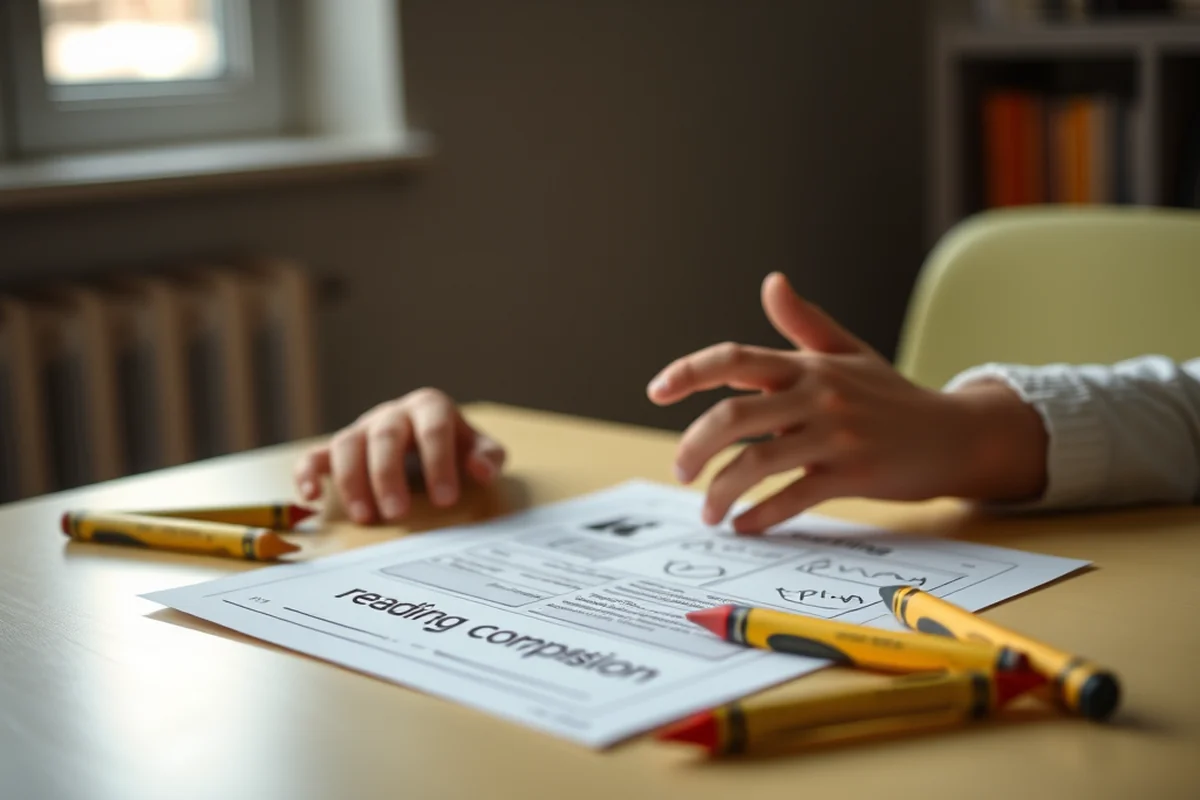
In homeschooling, reading comprehension is the cornerstone of all learning. When a child can understand what they read, they can apply that understanding to everything else they learn. For example, if a child reads about the water cycle and can explain it, they're more likely to grasp related science concepts like evaporation and condensation. That makes comprehension not just a reading skill — it's a learning skill.
I’ve seen how comprehension impacts my child’s performance in other subjects. When she understood a story about a character solving a problem, she began using similar problem-solving techniques in her math homework. It wasn't just about reading — it was about thinking, analyzing, and applying knowledge in new ways.
Without strong comprehension skills, even the most well-intentioned reading lessons can fall flat. It's like building a house on a weak foundation. If the foundation isn't solid, the whole structure can crumble. That’s why defining and strengthening comprehension is so important in homeschooling.
Comprehension isn’t just about reading — it's about learning.
Related: What is reading universe
The Building Blocks of Comprehension
To truly define reading comprehension, you need to understand the pieces that make it up. One of those pieces is vocabulary. Without a solid grasp of words, a child can't understand what they're reading. I’ve noticed that when my daughter learns new words, her comprehension skills improve dramatically. It’s like unlocking new doors in her understanding of the world.
Background knowledge is another key part of comprehension. If a child reads about something they have no experience with, they may struggle to understand it. For example, if a child reads about a rainforest and has never seen one, they may not understand the description of the plants and animals. But if they’ve visited a zoo or watched a documentary, they can connect the information to their own experiences.
Then there's inference, which is the ability to read between the lines. This is the part that allows a reader to make connections, predict outcomes, and understand the deeper meanings in a text. It's the skill that turns a passive reader into an active thinker.
Take your child to a museum or a park and then read a book about that place. This connects their real-world experiences with their reading and strengthens comprehension.
“I remember the first time my daughter sat down to read a storybook and asked me, 'What does it mean?' She was six, and I…”— Teaching Reading to Homeschoolers editors
Related: How to read alouds for kids
How to Assess Comprehension
One of the best ways to assess reading comprehension is by asking your child open-ended questions about what they read. Instead of asking, 'Did you like the story?' which is a yes-or-no question, try asking, 'What was the main problem in the story. How did the character solve it?' This type of question helps you see if they truly understand the plot and the resolution.
Another way to assess comprehension is by observing how your child summarizes what they read. If they can explain the story in their own words, they’re demonstrating a good grasp of the main ideas and details. I’ve found that summarizing is one of the most effective ways to test comprehension because it requires the child to process and restate the information.
You can also check comprehension by asking about key details. For example, after reading a story, you might ask, 'What was the name of the main character?' or 'Where did the story take place?' These questions help you see if your child can pick out important information and retain it.
Related: What is reading theory
Strategies to Build Comprehension
One of the best strategies I’ve used to build my child’s comprehension is previewing the text before reading. This means looking at the title, pictures, and headings to get an idea of what the text is about. It helps the reader activate their background knowledge and prepare for what they’re going to read.
Another strategy is making predictions. Before reading a story, I ask my daughter, 'What do you think will happen next?' This gets her thinking and helps her engage with the text. When she reads and finds out that her prediction was right or wrong, it makes the reading experience more interactive and meaningful.
Asking questions while reading is another effective strategy. I like to pause during the story and ask my daughter, 'Why do you think the character did that?' or 'What would you do in this situation?' These questions help her think critically and make connections between the text and her own life.
Related: What is in prime reading
The Role of Practice in Comprehension
Practice is essential for developing strong comprehension skills. Just like learning to ride a bike, reading comprehension requires consistent effort and repetition. The more a child reads, the more they learn how to understand and interpret what they read.
I’ve noticed that my daughter’s comprehension has improved dramatically when we read together every day. Even short reading sessions have made a big difference. It’s not about quantity — it’s about quality. When we read together, I can ask questions, discuss the text, and help her understand what she’s reading.
Variety is also important. Reading a mix of fiction, nonfiction, and informational texts helps a child develop different types of comprehension skills. For example, reading a storybook helps with narrative comprehension, while reading a science textbook helps with expository comprehension. This variety keeps learning interesting and well-rounded.
Practice doesn’t make perfect — it makes permanent.
Related: What is a kindle reading app
The Importance of Encouragement
Encouragement is a powerful tool in building reading comprehension. When a child feels supported and motivated, they are more likely to take risks and try new things. I’ve found that praising my daughter for her efforts, even when she struggles, has helped her stay motivated and keep reading.
Positive reinforcement is also important. When my daughter answers a comprehension question correctly, I make sure to acknowledge her achievement. Even if she gets a question wrong, I help her see it as a learning opportunity. This creates a safe environment for her to explore and grow.
Encouragement also helps build a love for reading. When a child feels good about their reading abilities, they are more likely to read for pleasure and continue developing their comprehension skills. It’s about creating a positive association between reading and learning.
👶 Younger Kids
Use picture books and simple questions to build early comprehension skills in children as young as 3.
👦 Older Kids
Use more complex texts and ask open-ended questions to challenge and develop comprehension in older children.
📝 No-Prep
Use any book on hand and ask spontaneous questions to practice comprehension without any extra preparation.
👥 Group Version
Host a reading circle with friends or family to discuss and explore comprehension together.
🧠 Extension
Use comprehension journals to reflect on what was read, and connect it to other subjects or personal experiences.
| The mistake | Why it happens | The fix |
|---|---|---|
| Focusing only on decoding and ignoring comprehension. | Decoding is important, but it's only one part of reading. Without comprehension, a child may be able to read words but not understand what they're reading. | Make sure to balance decoding with comprehension activities, such as asking questions and discussing the text. |
| Using only one type of text or activity. | Using a variety of texts helps a child develop different types of comprehension skills. Relying on only one type of text can limit learning. | Incorporate a mix of fiction, nonfiction, and informational texts to provide a well-rounded learning experience. |
| Not providing enough support or encouragement. | A lack of support can make a child feel frustrated or discouraged, which can lead to a loss of motivation. | Offer regular encouragement and positive reinforcement to keep your child motivated and engaged in reading. |
| Assessing comprehension with only yes-or-no questions. | Yes-or-no questions don't provide enough information about a child's understanding. They can’t show if a child can summarize, predict, or make inferences. | Use open-ended questions and observe how your child summarizes and explains what they read. |
| Not allowing the child to take the lead. | When a child feels like they have control over what they read and how they engage with it, they are more likely to take an active interest in comprehension. | Let your child choose what to read and how they want to engage with the text, whether through discussion, drawing, or writing. |
| Assuming that all children learn the same way. | Every child has different learning styles and preferences. A one-size-fits-all approach may not be effective for all children. | Try different approaches and see what works best for your child, whether it's reading aloud, discussion, or using visual aids. |
How To Define Reading Comprehension
Common Questions
How can I help my child if they struggle with comprehension?
What age should I start working on comprehension?
Can comprehension be improved without formal lessons?
How do I know if my child is ready for more advanced comprehension work?
References
- (PDF) Reading, Reading Comprehension, and Reading Skills (academia.edu)
- The Importance of Reading Comprehension (aces.edu)
- Reading criteria - AKleg.gov (akleg.gov)
- What Is the Science of Reading? | School of Education (american.edu)
Cite this guide
Teaching Reading to Homeschoolers (2026). How To Define Reading Comprehension. https://homeschoolread.com/how-to-define-reading-comprehension/
Feel free to cite or share this guide.
Reading Skills Checklist
Stage-filtered phonics and reading skills checklist for homeschool parents.
Open it free →