
What Is Reading Specialist

📖 Table of Contents
- What Exactly Does a Reading Specialist Do?
- The Science Behind the Work of a Reading Specialist
- The Benefits of Working with a Reading Specialist
- Common Misconceptions About Reading Specialists
- How to Find a Reading Specialist
- The Role of a Reading Specialist in Special Education
- The Long-Term Impact of a Reading Specialist
- Make It Your Way
- Frequently Asked Questions
The first time I realized the power of a reading specialist was when my son, who had struggled with early reading, began to read independently. It wasn’t just about letters and words—it was about unlocking a new world for him. That moment changed everything for our family, and it made me understand the profound impact a reading specialist can have on a child’s learning journey.[1]
A reading specialist is more than just someone who knows how to read. They are educators who understand the complex, layered process of reading development and how to support children in overcoming obstacles. I’ve spent the last five years learning from and working with reading specialists, and their insights have transformed the way I approach reading instruction at home.[2]
What I love most about being a reading specialist is the ability to tailor learning to each child’s unique needs. It’s not a one-size-fits-all approach. Whether a child is just beginning to recognize letters or is struggling with comprehension at the middle school level, a reading specialist adapts their methods to help every student thrive. That’s the heart of what we do.
Why You'll Love This Approach to Reading Instruction
- Personalized learning that adapts to your child’s unique needs
- Proven strategies that lead to measurable improvement in reading skills
- Expert guidance from a professional who understands the science of reading
- Support that empowers both parents and children in the learning process
What Exactly Does a Reading Specialist Do?
As of November 2026, a reading specialist is an educator who specializes in teaching reading and literacy. They have advanced training in reading instruction and often hold a master’s degree in reading education. Their role is to support children who are struggling with reading, whether they are behind in school, have a learning disability, or simply need more personalized attention.
I’ve seen how a reading specialist can transform a child’s confidence in reading. One of my students, who once avoided reading altogether, began participating in class discussions after working with a reading specialist. The difference was profound. The specialist used targeted strategies to help him overcome his anxiety and develop a love for reading.
Reading specialists use a variety of techniques, including phonics instruction, guided reading, and comprehension strategies. They work with both individual students and small groups, tailoring their approach to each learner’s needs. Their goal is to help children become fluent, confident readers who can access all areas of the curriculum.
Look for a specialist who uses data to inform their instruction and who can explain their methods clearly. A good specialist should be patient, enthusiastic, and committed to your child’s success.
Part of our Reading strategies guide.
The Science Behind the Work of a Reading Specialist
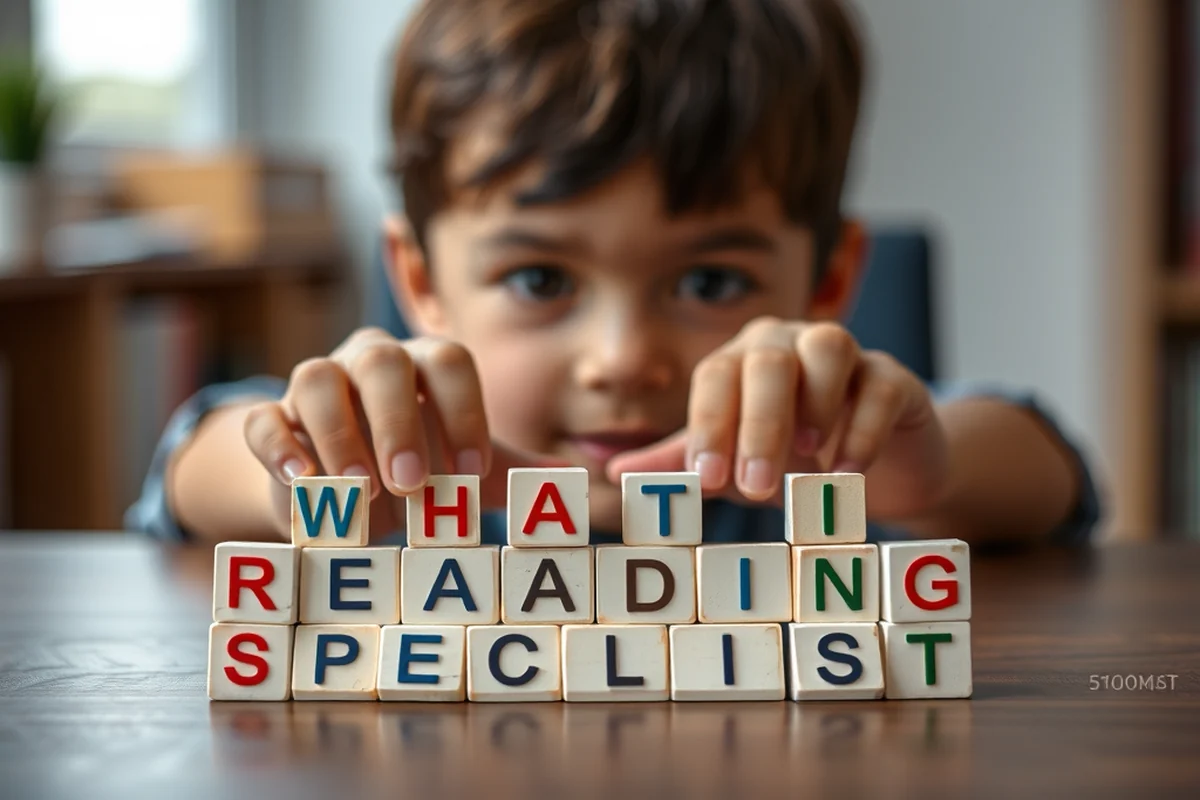
The science of reading is a body of knowledge that shows how children learn to read. It includes everything from phonemic awareness to decoding and comprehension. A reading specialist understands this science and uses it to design effective instruction.
For example, I once worked with a reading specialist who used a structured literacy approach to help a group of struggling readers. Over the course of a few months, the students made significant progress. Their teacher credited the specialist’s use of evidence-based strategies with the improvement.
Research shows that children who receive instruction from a reading specialist are more likely to become fluent readers. This is because specialists use targeted, systematic instruction that addresses the specific needs of each child.[3]
The science of reading is the foundation of everything a reading specialist does.
Related: What is reading and writing
The Benefits of Working with a Reading Specialist
One of the biggest benefits of working with a reading specialist is that they provide personalized instruction. Unlike a general classroom teacher, a specialist can focus on the specific needs of each child. This means that instruction is more targeted and effective.
In my experience, children who work with a reading specialist often show faster progress than those who receive general classroom instruction. This is because the specialist can address gaps in knowledge and provide extra support where needed.
Another benefit is that a reading specialist can help parents understand how to support their child’s reading development at home. This creates a partnership between the specialist and the family, which can lead to better outcomes for the child.
Set aside time each day to read together. Ask questions about the story. Encourage your child to make predictions and connections. This helps build comprehension skills.
“The first time I realized the power of a reading specialist was when my son, who had struggled with early reading, began to read independently.”— Teaching Reading to Homeschoolers editors
Related: What is reading terminal market philadelphia
Common Misconceptions About Reading Specialists

One common misconception is that a reading specialist only works with children who have severe reading disabilities. In reality, reading specialists work with a wide range of learners, including those who are just beginning to learn to read.
Another misconception is that a reading specialist replaces the classroom teacher. In truth, a reading specialist works alongside the teacher to support the child’s learning. They collaborate to develop strategies that can be used in the classroom as well as at home.
Some people also think that a reading specialist only focuses on phonics. However, a good reading specialist uses a balanced approach that includes phonics, comprehension, vocabulary, and fluency. This ensures that children develop all the skills they need to become successful readers.
Related: What is reading nook
How to Find a Reading Specialist
If you're looking for a reading specialist, start by asking your child’s school if they have one on staff. Many schools employ reading specialists who work with students in small groups or one-on-one.
If your school doesn’t have a reading specialist, you can look for one in your local community. Many libraries, community centers, and educational organizations offer reading programs that are led by specialists.
You can also look for reading specialists who work independently. These specialists may offer in-home instruction or online support. Be sure to check their qualifications and experience before making a decision.
Related: What is sight reading factory
The Role of a Reading Specialist in Special Education
Children with learning disabilities, such as dyslexia, often benefit from the support of a reading specialist. These specialists are trained to work with children who have special needs and can provide instruction that is tailored to their unique learning style.
For example, I once worked with a reading specialist who helped a child with dyslexia develop a love for reading. The specialist used multisensory techniques that helped the child understand letter-sound relationships in a way that was engaging and effective.
Reading specialists also collaborate with special education teachers to ensure that instruction is aligned with the child’s Individualized Education Program (IEP). This helps ensure that the child receives the support they need to succeed in school.
A reading specialist can make all the difference for a child with special needs.
Related: National reading month
The Long-Term Impact of a Reading Specialist
Children who work with a reading specialist often go on to achieve better academic outcomes. This is because they have developed the reading skills they need to access all areas of the curriculum. I’ve seen this in many of my students over the years.
In addition to academic success, working with a reading specialist can also lead to increased confidence and self-esteem. When a child feels confident in their reading abilities, they are more likely to participate in class and take on new challenges.
The long-term benefits of working with a reading specialist can extend beyond the classroom. Strong reading skills are essential for success in college, careers, and everyday life. A reading specialist helps lay the foundation for a lifetime of learning and growth.
📚 Early Childhood Literacy Support
A variation tailored to help preschoolers and kindergarteners develop foundational reading skills through interactive play and phonics-based activities.
📘 Middle School Reading Intervention
A version designed for older students who are struggling with reading comprehension and fluency, using structured literacy strategies and group instruction.
📝 No-Prep Reading Support
An easy-to-use variation that requires no preparation and is ideal for busy parents who need quick, effective reading support for their child.
👥 Group Reading Sessions
A variation that works well in group settings, such as after-school programs, where multiple children can benefit from the same reading strategies and support.
🔍 Reading Extension Activities
A version that includes extension activities to help reinforce reading skills and encourage independent learning outside of structured sessions.
| The mistake | Why it happens | The fix |
|---|---|---|
| Assuming that a reading specialist is only for children with learning disabilities. | This is a common misunderstanding, but reading specialists work with all learners, including those who are just beginning to develop reading skills. | Recognize that reading specialists can help any child who needs support with reading. They are not limited to students with special needs. |
| Thinking that a reading specialist can replace classroom instruction. | A reading specialist works alongside classroom teachers to support students, not to replace them. Collaboration is key to ensuring that all students receive the support they need. | Work with a reading specialist in partnership with your child’s classroom teacher to ensure that instruction is aligned and effective. |
| Not communicating with the reading specialist about your child’s progress. | Regular communication is essential to ensuring that the reading specialist can adjust their instruction based on your child’s needs. | Stay in touch with the reading specialist and share any observations or concerns you have about your child’s progress. |
| Expecting a reading specialist to fix all of your child’s reading problems overnight. | Reading is a complex skill that takes time to develop. It is unrealistic to expect immediate results from working with a reading specialist. | Be patient and consistent in your child’s instruction. Progress may be slow, but it is often steady and measurable over time. |
What Is Reading Specialist
Common Questions
How long does it take to see results from working with a reading specialist?
Can a reading specialist help children who are not struggling with reading?
What is the difference between a reading specialist and a tutor?
How much does a reading specialist cost?
References
- Victoria Phillips Goon Reading Specialists and ... - UGA Open Scholar (openscholar.uga.edu)
- Science of Reading FAQ - Ohio Department of Education (education.ohio.gov)
- Highly Mobile Students and Reading Instruction (ed.sc.gov)
Cite this guide
Teaching Reading to Homeschoolers (2026). What Is Reading Specialist. https://homeschoolread.com/what-is-reading-specialist/
Feel free to cite or share this guide.
Reading Skills Checklist
Stage-filtered phonics and reading skills checklist for homeschool parents.
Open it free →